
PKP: Pancasila Must Be Embodied in Indonesia's National Way of Life
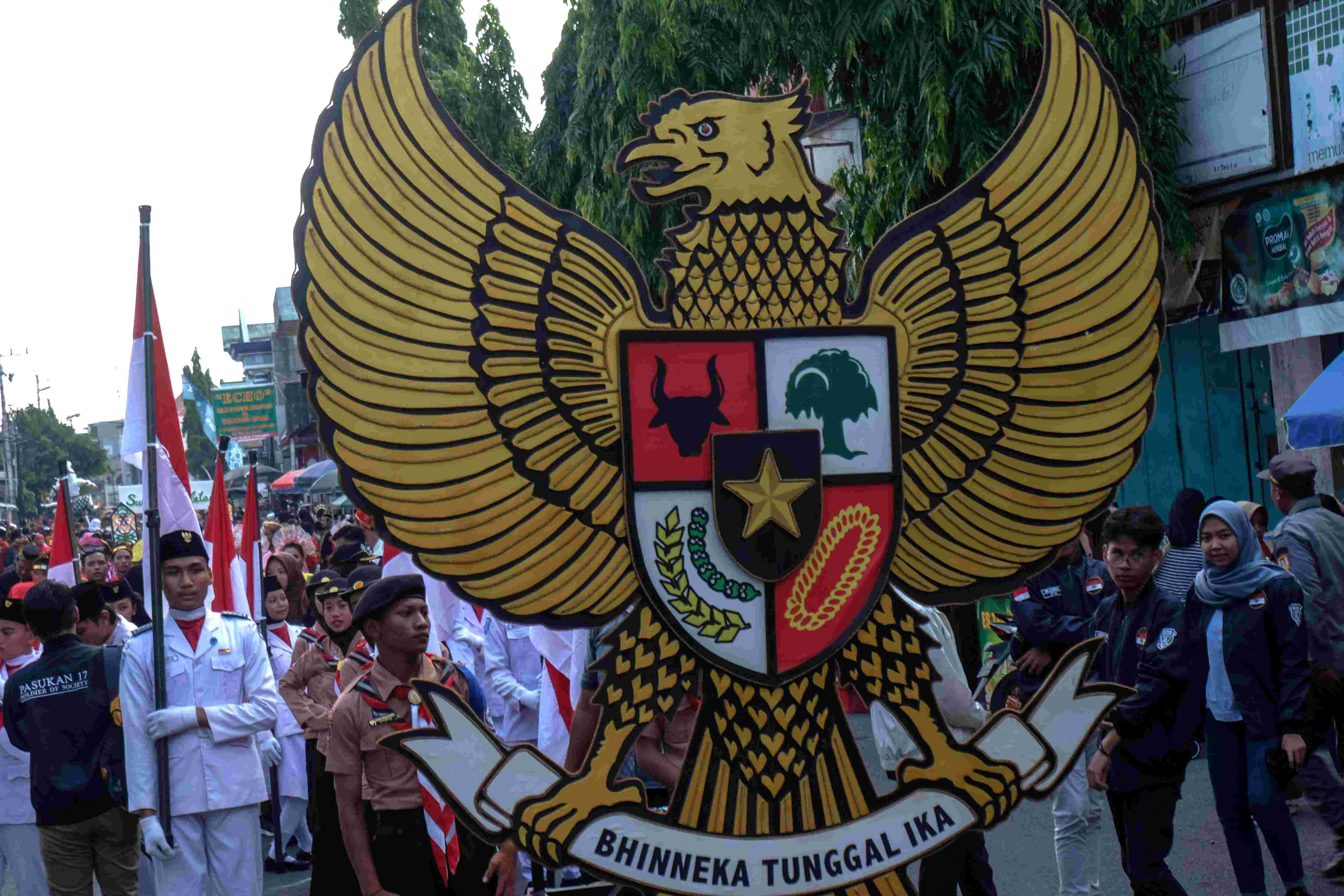
The Justice and Unity Party (PKP) has urged all segments of society to reassess the challenges to Pancasila in contemporary Indonesia. For PKP, the threat to Pancasila today is no longer primarily direct ideological confrontation as in the nation’s history, but rather gradual social and cultural changes that are slowly displacing the values at the heart of Pancasila from Indonesian society’s way of life. On the occasion of Pancasila’s anniversary, PKP Chairman H Isfan Fajar Satryo stated that Indonesia has never lacked references to Pancasila in speeches, state documents, or ceremonial events. However, the issue lies in how deeply Pancasila’s values are embedded in the behaviour of citizens, state governance, and daily social life. ‘For PKP, the nation’s current challenge is not to find Pancasila but to bring it to life within the Indonesian people. Pancasila is not merely the state foundation; it is the bedrock of building Indonesian citizens and the nation’s way of life,’ said Isfan. PKP identifies the greatest challenge as slow but fundamental socio-cultural shifts. Public decorum is eroding, disagreements increasingly turn into hostility, consultation is replaced by mutual criticism, and digital life fuels polarisation and anger as commodities. Meanwhile, global influences are entering without adequate filtering of the values that have shaped Indonesia’s national character. PKP views modernity not as abandoning national identity. Scientific, technological progress and openness to the world must be rooted in Indonesia’s character of mutual cooperation, empathy, respect for others, and balance between rights and responsibilities. Furthermore, PKP stresses the need to maintain harmonious relations between religion, culture, and nationalism. Indonesia was built on centuries of coexisting religious, cultural, ethnic, and traditional diversity. Therefore, religious life should be a source of ethics, brotherhood, and humanity, not a pretext for disregarding local cultural diversity integral to Indonesia’s identity. ‘Pancasila did not emerge in a vacuum. It was born from the lived experiences of the Indonesian nation. Therefore, safeguarding Pancasila means preserving the nation’s character, the culture of mutual cooperation, unity, respect for others, and the balance between religion, culture, and nationalism,’ added Isfan. PKP believes that developing Indonesian citizens is the most tangible manifestation of practising Pancasila. Politics must not focus solely on power struggles but should aim to build characterful, ethical, productive, competitive individuals with strong national consciousness. In this context, PKP prioritises developing the quality of Indonesian citizens as its main struggle. Quality education, equitable healthcare, productive employment opportunities, national character strengthening, healthy public communication, and integrity-driven governance are inseparable from efforts to bring Pancasila’s values to life. PKP also sees the greatest challenge for Indonesian youth not just global economic competition, but preserving national identity amid rapid information flows and cultural changes. ‘If we want to realise Golden Indonesia 2045, building infrastructure, industry, or technology alone is insufficient. We must build Pancasila-driven Indonesians: healthy, intelligent, ethical, cultured, respectful of diversity, and with a spirit of mutual cooperation,’ Isfan stressed. For PKP, Indonesian socio-cultural life is the living space of Pancasila. When social life upholds brotherhood, differences are managed through consultation, religion is a source of collective goodness, local culture is respected, and justice is pursued, Pancasila thrives within national life. Conversely, if social life becomes fragmented, intolerant, individualistic, devoid of decorum, and disconnected from cultural roots, Pancasila risks becoming a formal symbol devoid of vitality in society. On this Pancasila anniversary, PKP calls on all national elements to not just safeguard Pancasila as a state ideology but to bring it to life in education, culture, families, public spaces, governance, national resilience, and human development. ‘Indonesia’s future is determined not just by economic strength but by the quality of its people. And the quality of Indonesians will only be solid if built on Pancasila’s values lived in reality, not merely in documents and speeches,’ Isfan concluded. The warmth between these two national figures is not merely a symbolic gesture but a strong message about the importance of elite unity for Indonesia’s progress. On June 1, Indonesia commemorates Pancasila’s birth. As the nation’s philosophy, foundation, and ideology, it is fitting that Pancasila’s anniversary is observed nationally. Megawati Soekarnoputri’s meeting with President Prabowo Subianto at the height of Pancasila’s anniversary observance exemplifies statesmanship from both national figures. The meeting between President Prabowo Subianto and former President Megawati Soekarnoputri at the Pancasila ceremony was notably warm.