
PKB Secretary General: AI is a Tool, Not a Replacement for Religious Scholars
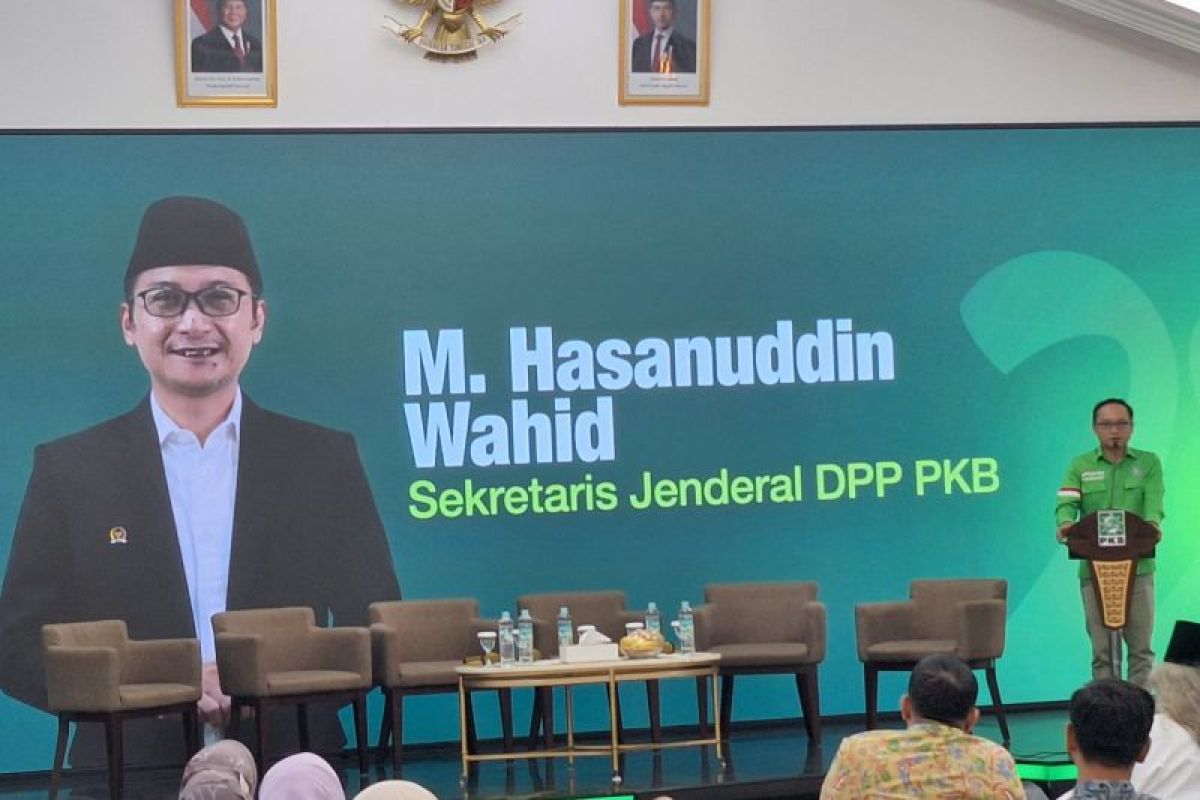
Jakarta (ANTARA) - Hasanuddin Wahid, also known as Cak Udin, Secretary-General of the Central Executive Board (DPP) of the National Awakening Party (PKB), has affirmed that artificial intelligence (AI) is a tool created by humans, whereas religion is a teaching that originates from God.
“AI can present complete references and data. But AI remains only a tool. AI will not be able to replace the role of the people’s teachers, the nation’s teachers, nor the scholars who guide the faithful through their example and scholarly chains of transmission,” said Cak Udin at the PKB DPP office in Jakarta on Wednesday.
He made the remarks during a public discussion titled “AI and Religion: Facing the Future of Religious Life in the Age of Artificial Intelligence”, held as part of the series of events marking the PKB’s 28th anniversary (Harlah).
According to him, the development of AI has prompted a variety of responses among the public and religious figures. Some see AI beginning to take over certain functions long performed by religious leaders, while others reject its use altogether, believing that AI lacks a spiritual dimension and cannot replace the teacher-student relationship within the Islamic scholarly tradition.
“This phenomenon is a shared task in formulating religion’s stance towards AI, as well as how AI can be used responsibly in religious life,” he said.
He also revealed that AI has now entered the pesantren environment. He even cited an example of a santri who challenged a kiai’s explanation by referring to classical texts obtained through AI, presented in a more systematic manner.
According to Cak Udin, this phenomenon raises at least three major challenges. First, the challenge to religious authority. The development of AI raises the question of whether authority over religious knowledge will remain under the guidance of ulama and kiai, or shift instead to machines capable of presenting information instantly.
Second, the challenge of ethics and the essence of humanity. Although AI is a human creation, this technological development is considered to have the potential to influence the way people view ethics, spirituality, and human relations.
The public discussion featured a number of speakers from various backgrounds to examine the relationship between AI and religion comprehensively, namely Member of Commission I of the House of Representatives H. Oleh Soleh, Director-General of the Digital Ecosystem at the Ministry of Communication and Digital Dr Edwin Hidayat A., the head of Pondok Pesantren Minggir in Yogyakarta Gus Muwafiq, and Chairman of the Artificial Intelligence Industry Research and Innovation Collaboration (KORIKA) Prof Hammam Riza.
Through this forum, PKB hopes to foster constructive dialogue between technological development and religious values, so that the use of AI can strengthen the quality of religious life without displacing the central role of humans, ulama, and the scholarly traditions that form the foundation of civilisation.