
PKB Says MK Ruling Ends Discourse on Pilkada via DPRD
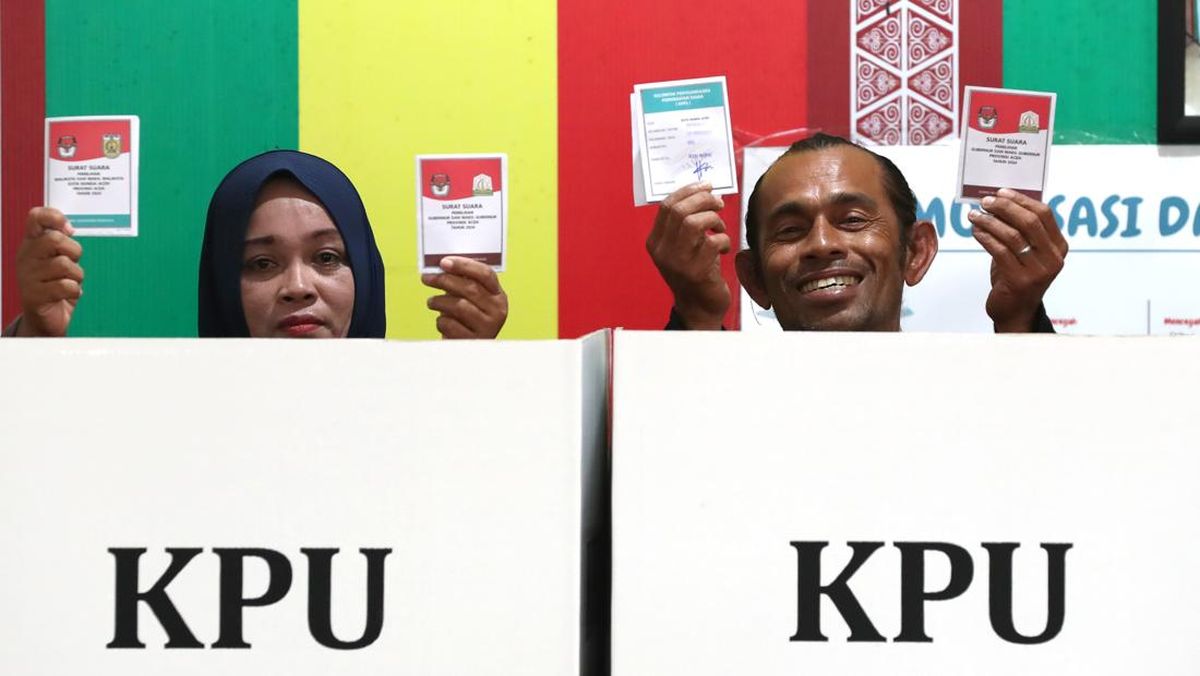
A member of the House of Representatives’ Commission II from the PKB faction, Eka Widodo, has urged that the discourse regarding regional elections via the DPRD must end following the Constitutional Court’s (MK) ruling, which reaffirmed the direct election of regional heads.
According to him, all parties, including the DPR and the current government, must focus on improving the implementation of direct regional elections. “The debate regarding the mechanism for electing regional heads should be concluded. The focus of all parties now must be directed towards increasing the quality of direct regional elections,” said Edo, his common nickname, in a written statement on Wednesday (1/7).
He noted that the Constitutional Court’s decision should serve as a momentum to accelerate the revision of the Election Law and the Regional Election Law. The revision, Edo stated, should aim to reduce political costs, strengthen political party regeneration, ensure transparency in campaign funding, eliminate money politics, and improve the recruitment system for regional head candidates. “The most important thing is no longer debating how to elect regional heads, but ensuring the presence of clean regional governance,” he said.
Nevertheless, Edo added that the previous discourse regarding elections via the DPRD should not be viewed as an anti-democratic idea. In his view, the idea of regional elections via the DPRD was a response to high political costs, money politics, social polarisation, and the high rate of regional head corruption. Furthermore, the idea had undergone constitutional and academic studies, as well as empirical assessments regarding the various issues arising from direct elections. “Therefore, the debate was part of an effort to find the best democratic design for Indonesia,” he said.
PKB was previously among the parties encouraging regional elections via the DPRD. He even mentioned that the proposal had been approved by President Prabowo Subianto.
Meanwhile, in its ruling on Monday (29/6), the Constitutional Court affirmed that the principle of regional elections remains to be held directly. The Court stated that the petition to review Article 1, number 1 of Law Number 8 of 2015 concerning the Election of Governors, Regents, and Mayors (Regional Election Law) could not be accepted.
The lawsuit, filed by several students, essentially requested that the Constitutional Court reaffirm that the mechanism for electing regional heads is conducted directly and democratically by the people. In their petition, the applicants requested that the phrase “directly” in Article 1, number 1 of the Regional Election Law be declared to have no binding legal force, unless interpreted as: “elected through direct voting by the people, except for regions with special or extraordinary status.”
In its considerations, the Court noted that the petitioners challenged the article because they felt there was no explicit affirmation that regional elections are conducted through direct voting by the people. Due to this lack of explicit affirmation, the petitioners feared it would open the door for regional elections via the DPRD, as had recently developed in parliament.
The Constitutional Court cited its considerations in previous rulings (072-073/PUU-II/2004, 69/PUU-XXII/2024, and 110/PUU-XXIII/2025). According to the Court, these rulings have affirmed that the mechanism for electing regional heads to date is carried out directly by the people, guided by general election principles while respecting regions with special or extraordinary status.
On this basis, the Court found that the reason for the loss of constitutional rights claimed by the petitioners was not a direct result of the phrase ‘directly’ in Article 1, number 1 of the Regional Election Law. “Because, to this day, regionally elected heads are still factually elected directly by the people. Therefore, this legal fact proves that the loss of constitutional rights experienced by the Petitioners, which they consider to be specific, whether actual or potential, has in fact not yet occurred or has not occurred,” the Court stated.
Consequently, the Court ruled that the petitioners lacked legal standing and did not consider the petition further. “The same applies to the Petitioners’ desire for certain regions with special or extraordinary status to have their own regional head election procedures; besides the fact that this is not yet a norm with binding legal force under existing positive law, it is also an established position of the Court in previous rulings and the matter in question cannot be used as an object for reviewing the law,” the Court concluded.