
PKB Lawmaker Proposes DPR Inquiry into Gibran’s Diploma
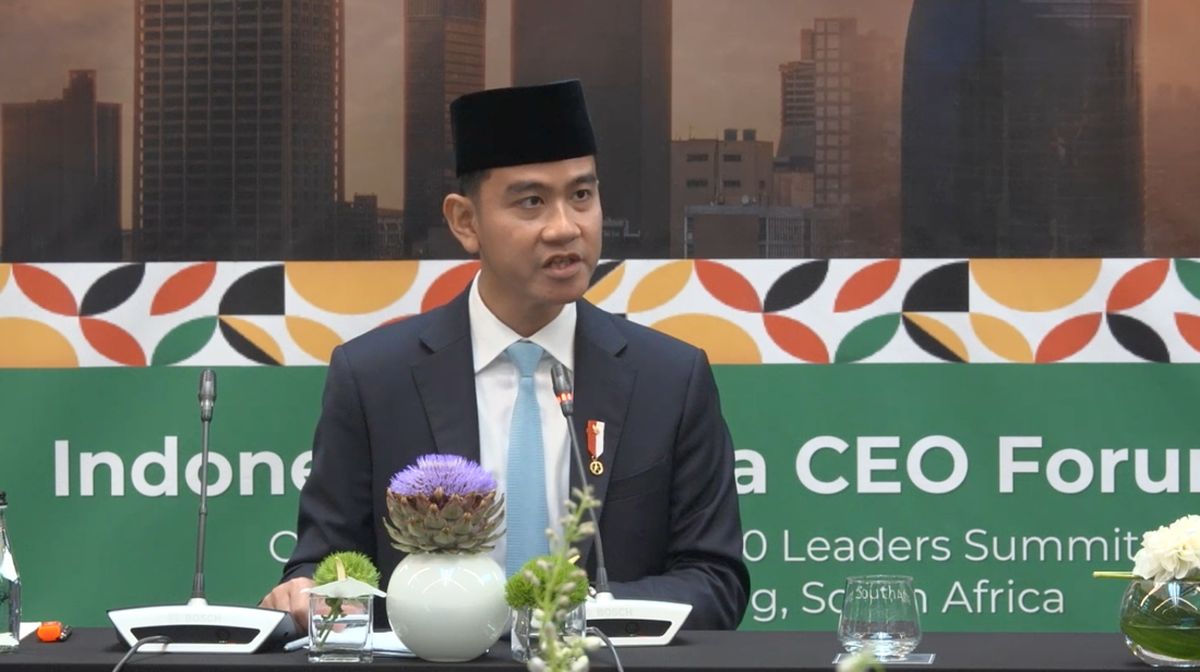
Eka Widodo, a member of the House of Representatives (DPR) Commission II from the National Awakening Party (PKB), has proposed establishing a special committee (Pansus) to follow up on a Constitutional Court (MK) ruling concerning Vice-President Gibran Rakabuming Raka’s diploma.
Widodo, known as Edo, said the court’s considerations in its ruling on the diploma were important for state institutions with constitutional authority to ensure that presidential and vice-presidential requirements had been met.
He stressed that the issue should not be understood as an attempt to disregard or challenge the MK’s ruling. Rather, the DPR should respect the decision while carrying out its constitutional duties if there were sufficient grounds and evidence to pursue the matter.
“The MK’s ruling must be respected. But the Court’s considerations must also be read in full. If there are factual issues that still need to be established, the state institutions with the relevant authority must verify them objectively and transparently, on the basis of evidence,” Edo said in a written statement on Thursday (8 October).
Edo noted that the 1945 Constitution sets out procedures for cases in which a president or vice-president is suspected of no longer meeting the requirements for office.
Article 7A provides for the possible dismissal of the President and/or Vice-President if they are found to have committed specified violations or no longer meet the requirements for office. Article 7B sets out the dismissal process, including the DPR’s role in stating its opinion and the MK’s authority to examine, hear and rule on that opinion before the process proceeds to the People’s Consultative Assembly (MPR).
He said that if strong evidence emerged of a constitutional issue requiring action, the DPR had oversight instruments and could use the mechanisms available under the Constitution.
“One option, if considered necessary, is to establish a special committee to conduct a thorough investigation,” Edo said.
He said a committee’s main task would not be to pass judgement or take over another institution’s authority, but to clarify and establish the facts objectively.
“If a committee is formed, its job must be to establish the facts: whether the educational documents used to meet the requirements actually exist, how their equivalency was determined, who verified them, and whether all procedures complied with the law. Everything must be proven, not based on assumptions,” he said.
Edo said that if DPR oversight and investigation produced sufficient evidence of a constitutional issue concerning the vice-president’s eligibility, the House could invoke the mechanism set out in Article 7B of the 1945 Constitution.
“If the committee’s findings prove that the diploma does not exist, the DPR can recommend and refer the case to the MK for adjudication, after which it can be submitted to the MPR for impeachment proceedings,” he said.
Ahmad Doli Kurnia, a fellow member of Commission II from the Golkar Party, took a different position. He said there was no need for a special committee, an inquiry motion or any other form of investigation into Gibran’s diploma.
“As far as the DPR is concerned, there is no need for an inquiry motion or, what is it, a special committee or anything like that,” Doli told reporters.
Doli said Commission II only needed to summon the election organisers, the General Elections Commission (KPU) and the Election Supervisory Agency (Bawaslu), to follow up on the issue.
“If it is ultimately proven that [the document] really does not exist, then we return to the question of the political party leaders,” he said.
The Constitutional Court delivered its ruling in case No. 01/PHPU.PRES-XXIV/2026, concerning the 2024 presidential and vice-presidential election results, on Tuesday evening (6 October). The court said the applicants lacked legal standing and that it had no authority to disqualify Gibran as Vice-President of the Republic of Indonesia.
The applicants included the Independent Committee for Election Monitoring (KIPP), the Ummat Party, former Deputy Minister of Law and Human Rights Denny Indrayana, six citizens belonging to the Forum of Retired TNI Soldiers, M Subhan, Bonatua Silalahi and Tiurma MS Sihombing.
Based on the evidence presented in court, the MK said it had found no document showing that Gibran held a certificate, diploma or other qualification demonstrating completion abroad of education equivalent to senior high school (SMA) or its equivalent.
Gibran’s response
Gibran has addressed the court’s considerations concerning documents for an educational qualification equivalent to senior high school. He said he respected all stages of the MK process and would continue to focus on his work.
“We respect all the stages and processes at the MK. The most important thing now is that I continue to focus on working for the people and delivering the vision, mission and programmes of Mr President, our leader,” Gibran told reporters on Wednesday (7 October).
He also said he could not have gone on to university without completing senior high school.
“If I hadn’t finished senior high school, I wouldn’t have been able to go to university. I studied up to a bachelor’s degree in Singapore,” he said.
Meanwhile, former president Joko Widodo, Gibran’s father, urged all sides to follow democratic and constitutional procedures amid calls for the vice-president’s impeachment following the MK ruling.
“Please follow the democratic mechanisms available, in accordance with the Constitution and the applicable laws,” Jokowi said in Solo, Central Java, on Thursday (8 October).