
PISA as a Mirror, Not an Educational Goal
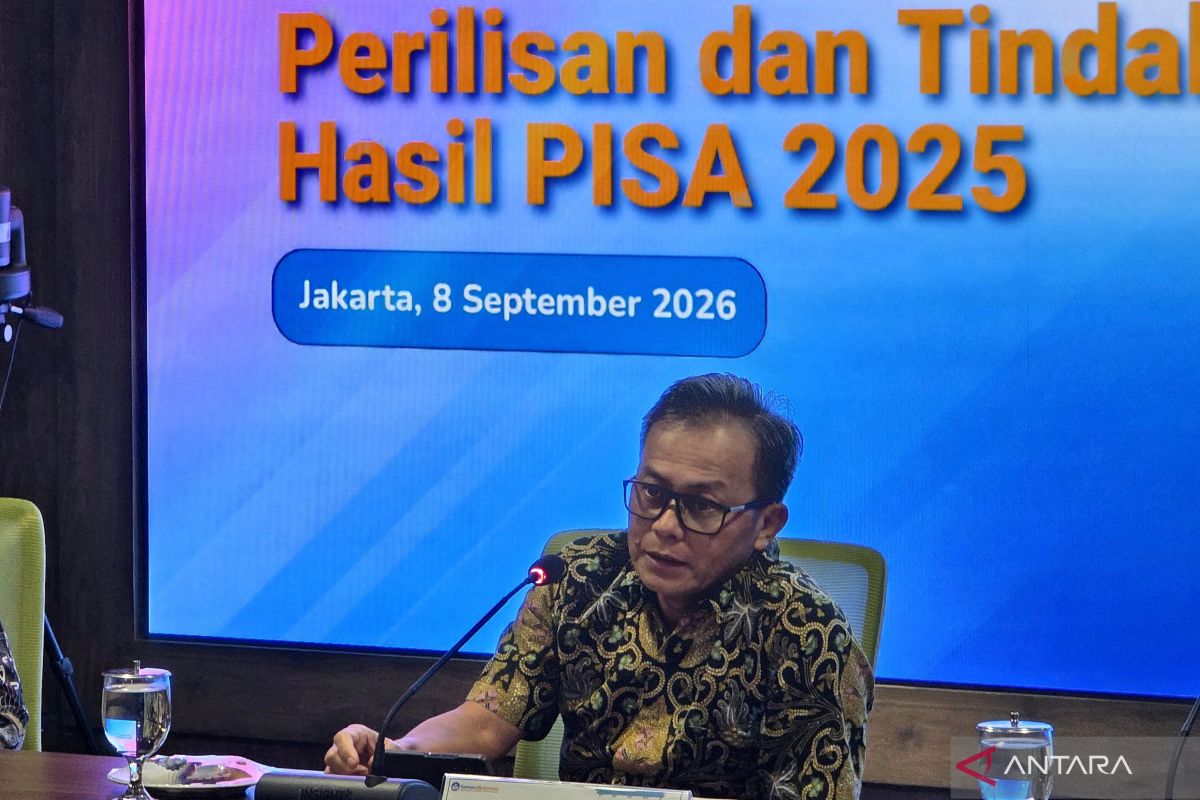
PISA provides Indonesia with an opportunity to view our education from an external perspective.
Every time the results of the Programme for International Student Assessment (PASS) are announced, public attention almost always focuses on the rankings. When Indonesia’s position remains at the bottom, we become concerned and subsequently search for the causes: curriculum, teachers, schools, assessments, facilities, or educational policies.
The 2025 PISA results released by the OECD on 8 September 2026 have once again provided reason for reflection. The achievements of Indonesian students in reading, mathematics, and science remain below the international average. Too many 15-year-old students have not reached the minimum competence required to use these skills functionally.
However, perhaps we are too busy focusing on the numbers appearing in the mirror and paying too little attention to what those numbers actually reflect. PISA should not be treated as an educational goal. PEMA is one of the mirrors used to view the quality of competence produced by our education.
The more important question is not “How can we raise the PISA ranking?” but rather: “What do we need to improve in education after seeing our reflection in that mirror?”
What does PISA reflect? PISA holds significant value because it measures more than just whether a student has studied a particular subject. PISA emphasises the ability to use knowledge and skills when facing problems. The distinction between knowing and being able to use knowledge is what we need to contemplate.
A student might have studied climate change and can explain its definition. But are they able to read data, evaluate scientific evidence, distinguish trustworthy information from misleading information, and use their knowledge to make decisions?
In mathematics, a student might be able to solve routine problems with familiar formats. But can they recognise real-life problems that can be represented mathematically, choose a resolution strategy, use data, and assess whether the answer makes sense?
Thus, PISA provides a mirror to one fundamental issue: Is our education producing usable knowledge? For too long, learning has been judged by whether material has been taught and whether students can answer questions. Yet, the more important question is: What are students truly capable of doing with what they have learned?
Fixing the mirror
Because the PISA results are less than encouraging, we must not make the mistake of merely “fixing the mirror”. Increasing the number of PISA-style practice questions, creating question banks that resemble PEMA, or training students to face certain test formats might help them become more familiar with the assessment. However, such efforts do not constitute true educational improvement. What must be improved is the competence reflected by PISA, not the mirror itself.
There is a fundamental difference between training students to answer PISA questions and building the abilities in reading, reasoning, problem-solving, and applying knowledge that PISA measures. The former risks creating “teaching to the test,” while the latter improves the quality of learning. Therefore, PISA must not become the curriculum.
The mirror metaphor also reminds us of PISA’s limitations. A mirror only shows certain parts of ourselves. Similarly, PISA only measures a portion of the human capabilities intended to be shaped through education. PISA primarily provides information regarding competence in reading, mathematics, and science. Indonesian education has much broader objectives. We also desire graduates who possess faith and piety, citizenship, critical reasoning, creativity, collaboration, independence, health, and communication. Therefore, the 8 Dimensions of the Graduate Profile cannot be reduced to a PISA score.
Indonesian education must remain rooted in national objectives, national values, and the needs of Indonesian society, while simultaneously using international assessment results as a standard to determine whether our students’ competencies are capable of standing equal to the global community.
The next question is: If PISA is a mirror, what should we do after seeing the results? One answer is to strengthen the orientation of learning from material towards usable competence. Knowledge remains important; it is impossible for someone to reason without knowledge. However, knowledge must not be the end goal of learning.
In this context, Deep Learning offers a relevant direction. The learning experience is directed through the steps of understanding, applying, and reflecting. If learning stops at understanding, students may be able to explain a concept, but when presented with a different problem, they may not be able to apply it. Therefore, application serves as the bridge between knowledge and life.
Students need to repeatedly use their knowledge in diverse contexts, including contexts they have never encountered before. Furthermore, reflection enables students to assess their own thinking processes: why an answer is correct or incorrect, what evidence is trustworthy, what strategy is effective, and what knowledge means for life. This type of learning will ultimately build the abilities reflected in PISA without having to make it the primary goal of learning.
Essential competencies
PISA results also demonstrate the importance of strengthening several essential cross-disciplinary competencies. Reading for comprehension is not solely the responsibility of the Indonesian language teacher. This ability is required when students read mathematics problems, understand scientific explanations, interpret social information, or evaluate digital information. Mathematical reasoning is not merely about calculation; it is necessary for reading data, recognising…