
Pinglu Canal and the test of Indonesia's position in the supply chain
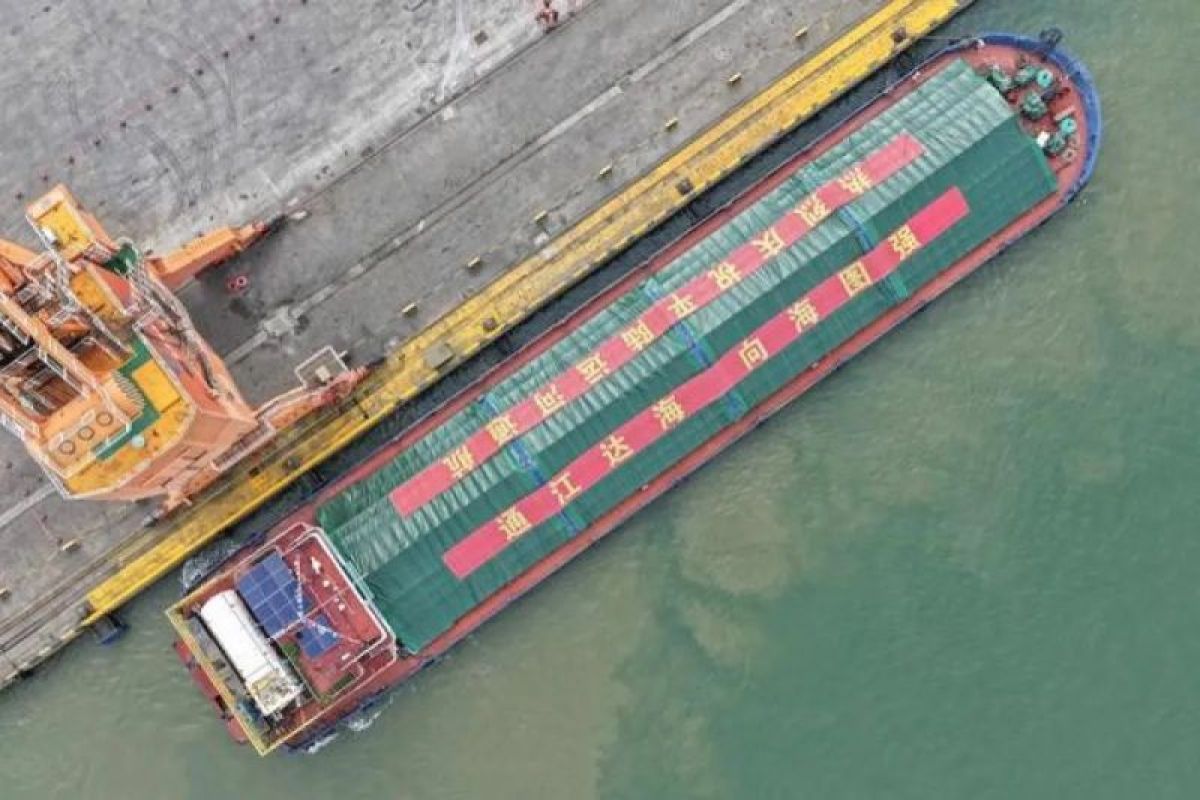
As China and ASEAN become more interconnected, companies have more options to determine the locations for suppliers, processing, and distribution.
Jakarta (ANTARA) - China has recently shortened its economic distance to Southeast Asia. The operation of the 13lag 134.2-kilometre Pinglu Canal on 16 September has cut more than 560 kilometres from the cargo route from southwestern China to the sea.
For Indonesia, this change opens opportunities while expanding choices within the regional supply chain. The canal, which connects the Xijiang River network with the Beibu Gulf, is part of the New International Land-Sea Trade Corridor towards Southeast Asia.
Ships of up to 5,000 tonnes can now move from China’s inland regions to coastal areas via a shorter route, making the connection between production centres, ports, and ASEAN markets more efficient.
Indonesia is already part of the trade flow through this region. Throughout 2025, Indonesian bulk commodities entering China via Qinzhou reached 11.521 million tonnes, valued at 8.26 billion yuan (approximately Rp21.9 trillion). This includes coal, aluminium ore, rubber, and palm oil.
Improved connectivity can smooth the flow of Indonesian commodities to the Chinese market, while simultaneously making Chinese industrial products and inputs easier to reach Indonesia and other ASEAN nations. The impact extends beyond mere transport costs.
As logistical barriers decrease, companies gain more options in determining where raw materials are sourced, where goods are processed, and where products are distributed. In other words, changes in trade routes are beginning to influence larger decisions regarding production locations and supply chain configurations.
Indonesia enters this shift with an already massive trade relationship with China. From January to July 2026, China accounted for 42.38 per cent of Indonesia’s non-oil and gas imports and was the largest source of the non-oil and gas trade deficit, amounting to 17.67 billion US dollars.
These figures do not yet reflect the impact of the Pinglu Canal, as the canal only began operations in September. However, the data indicates an important starting position. The Indonesia-China trade relationship already possessed significant scale before this new connectivity began to function.
Most of Indonesia’s imports are also not consumer goods. Raw materials and auxiliary goods accounted for 71.45 per cent of imports during that period, while capital goods reached 19.88 per cent. Together, these comprise 91.33 per cent of total imports.
PermataBank Chief Economist Josua Pardede noted that the import of machinery, equipment, raw materials, and auxiliary goods could expand production capacity, provided they subsequently generate higher-value domestic production and exports.
At this point, the supply chain issue becomes more concrete. Goods entering from China can become part of Indonesia’s industrialisation process if they are linked to domestic production, local suppliers, technology transfer, and exports.
If this connection remains superficial, the increase in goods flow will merely enlarge transaction volumes without deepening the production base.
Therefore, the Pinglu Canal cannot yet be said to have altered Indonesia’s trade patterns, and data to measure its impact is not yet available. What has changed are the route options and the potential for supply chain configurations, which are now increasingly broader.
As China and ASEAN become more connected, companies have more options to determine the locations for suppliers, processing, and distribution. The question for Indonesia is not merely whether Chinese goods will enter more easily, but whether this new connectivity can also attract more production activities into the country.
Capturing value.
Source: jawawa.id (https://jawawa.id/newsitem/pinglu-canal-and-the-test-of-indonesias-position-in-the-supply-chain-1790049891)
Originally published by Antara (Indonesian) (https://www.antaranews.com/berita/5752191/kanal-pinglu-dan-ujian-posisi-indonesia-di-rantai-pasok), translated from Indonesian