
Pigai reiterates the press as a strategic partner in human rights development
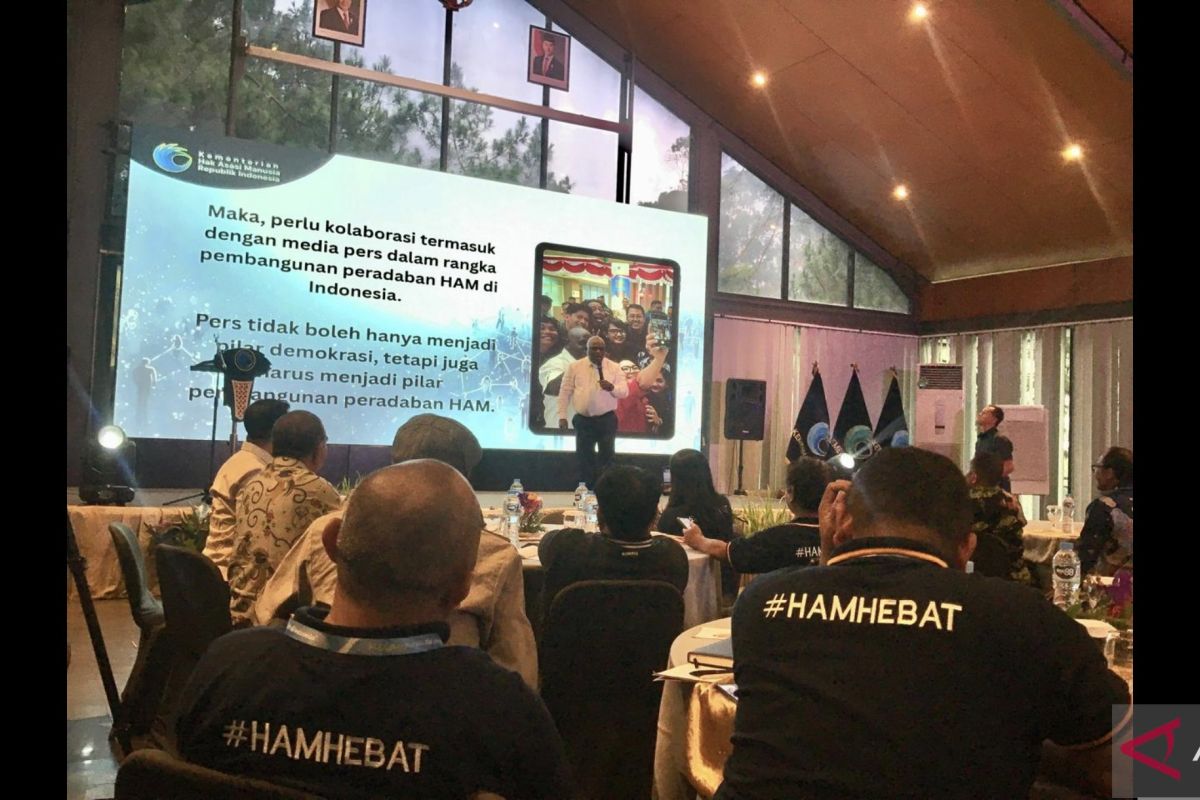
Bandung – Minister of Human Rights Natalius Pigai emphasised that the press is a strategic partner of the government in the development of human rights and a pillar of democracy that must have its independence, freedom, and continuity safeguarded amid pressures from the media industry and developments in information technology.
The Ministry of Human Rights has begun to strengthen partnerships with the media through dialogue with leaders of national media and training on human rights-based journalism to strengthen public participation in protecting human rights.
“The government together with journalists is an important pillar that has made a real contribution to building civilisation, namely public participation as human rights defenders, which are also a pillar of democracy,” Pigai said after the Human Rights Journalists Class event in Bandung, West Java, on Wednesday.
He stressed that the government-media relationship must be built without intervention so that the integrity of each remains safeguarded.
According to him, the media has an important function in conveying criticism, demands, and the aspirations of the people to the government while also accelerating the delivery of public policies to the public.
“The Ministry of Human Rights has committed to forging a strategic partnership that is mutualistic, non-interdependent. So without mutual intervention, but also mutual cooperation,” Pigai said.
Pigai assessed that the existence of the press is an important instrument in the development of civilisation because it can open access to knowledge and broaden public participation in democracy. Therefore, he rejected the practice of press suppression by the state.
“I want the Ministry of Human Rights and the media to keep working together. In other words, I want to give special attention so that at no time there is a accusation of ‘press busting because of the government’. That is something I do not want,” he said.
He also highlighted the challenges faced by journalists amid the development of digital technology and an increasingly competitive media industry. According to him, journalists are among vulnerable groups that often face pressures from various interests.
“Journalists are a vulnerable group to face various pressures, whether from the media industry itself, or from other institutions with vested interests,” he said.
Therefore he believes the government needs to be present to ensure protection of press freedom, the safety of media workers, and the sustainability of a healthy press ecosystem.
“The press must not die. The press must become big. Without the press, the world would be dark. The press lights up the world, lights up the country, lights up the nation,” Pigai said.