
Pigai calls for data-driven reporting on Papua refugees
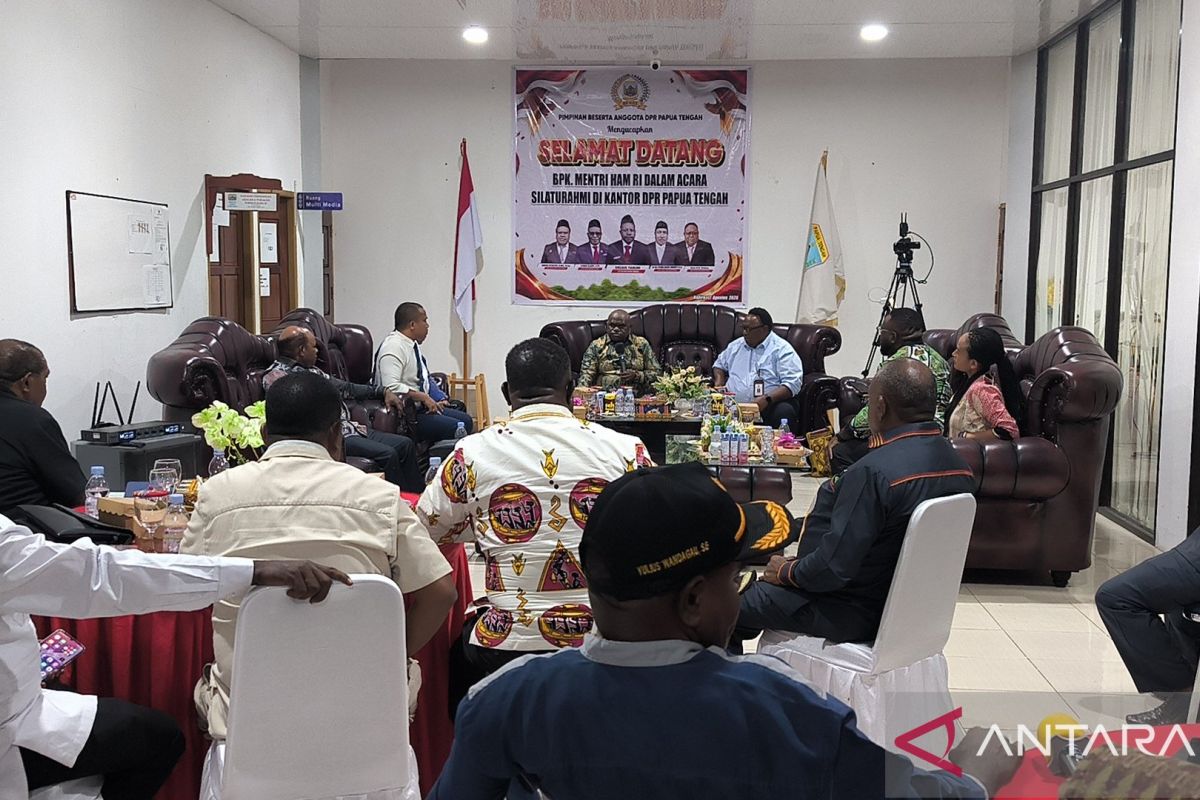
Human Rights Minister Natalius Pigai has asked regional governments, communities, religious institutions and non-governmental organisations in Central Papua to submit accurate data on displaced people so that the central government can promptly carry out humanitarian handling.
Pigai made the statement during a working visit and public aspiration gathering at the Central Papua Provincial Legislative Council (DPRD) in Nabire on Monday.
According to him, data on displaced people must clearly include the number, location, distribution and condition of residents, supported by evidence, so that it can serve as the basis for government intervention.
“Do not just convey suffering verbally. If a church is being occupied, tell us which church. If a primary school or community health centre is being occupied, which school is it? Include photos! Attach all the evidence,” said Pigai.
He said information on the number of displaced people in Papua has so far varied and lacks a verifiable database.
The information, he said, comes from NGOs, church groups, observers and various elements of society, with differing figures.
Pigai believes the central government has the capacity to handle the displaced people issue, including through housing construction, resettlement planning and the provision of living allowances.
However, all these policies require valid data as the basis for planning and aid distribution.
“The problem is, where is the data? NGOs say there are several hundred thousand displaced people, the church says another figure — all of it is just statements. If I had that data, I would simply communicate it and deploy teams from everywhere. I would just invite the Minister of Public Housing and the Minister of Social Affairs to deal with village matters. This is small, very small indeed,” said Pigai.
He said the Ministry of Human Rights has coordinated with the Ministry of Social Affairs and other relevant ministries to prepare handling measures.
Therefore, Pigai asked for data collection to be carried out in stages, involving communities, villages, sub-districts, regional governments and other stakeholders.
“The data must be proactively provided by local communities, then by villages, sub-districts, regional governments and various stakeholders,” he said.
Pigai said accurate data will allow the government to map residents who need to be returned to their home villages, have their settlements reorganised, and receive basic needs support in a targeted manner.