
Pigai Asserts Indonesia-Timor Leste Business Must Align with Prabowo's Policies
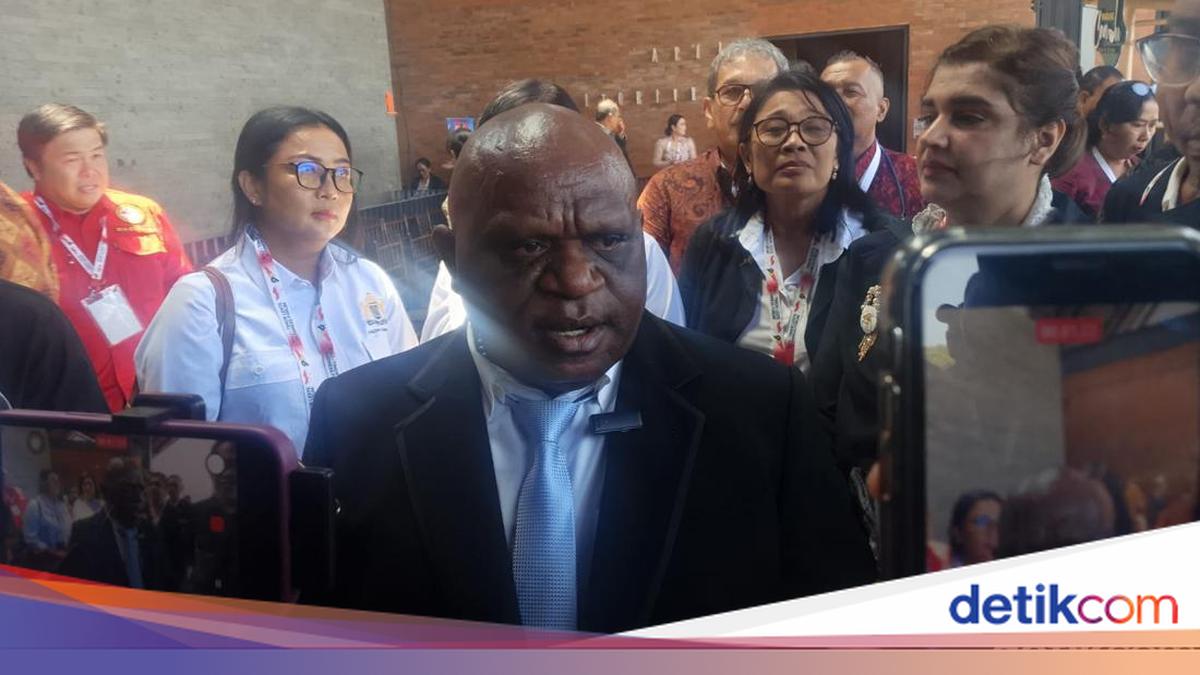
Human Rights Minister Natalius Pigai has requested that Indonesian-Timor Leste business actors adjust their business direction to align with the policies of President Prabowo Subianto. He stated that such alignment is crucial to facilitate easier regulatory and government policy support.
Pigai made these remarks during the Bali-Timor Leste Business Forum 2026 held at the Kura Kura Bali SEZ on Friday (2/10/2026). He noted that entrepreneurs need to observe the direction of government policy if they wish to develop businesses for the long term.
“If you are developing a business for the next 5-10 years, it is best that your business development efforts are inherent with government policy, specifically Prabowo’s policies,” said Pigai.
He cited several government programmes that he believes intersect with business opportunities, including downstreaming, the Free Nutritious Meal (MBG) programme, People’s Schools, Fishing Villages, and the Merah Putih Cooperatives.
“For example, downstreaming, and the President’s populist programmes: free nutritious meals, people’s schools, then fishing villages, and the Merah Putih cooperatives. All of these have business intersections,” he said.
Pigai highlighted the MBG programme, which he believes can drive the community economy. He noted that the impact extends beyond food provision to include small businesses, as well as the agricultural and livestock sectors.
“For instance, the free nutritious meal programme has a significant economic impact. This includes moving income and profits, and the movement of small businesses in villages,” said Pigai.
“For example, agriculture and farmers will develop. Similarly, livestock farmers in villages will grow. This constitutes a business strength in itself,” he added.
He also identified the Merah Putih Cooperatives and Fishing Villages as sectors that possess an economic base at the community level.
Consequently, Pigai requested that economic cooperation between Indonesia and Timor-Leste be directed to align with government policy.
“Economic cooperation between Indonesia and Timor Leste must be inherent in official government policy. Therefore, it must be adjusted and directed towards the policies of President Prabowo Subianto,” he stated.
According to Pigai, alignment with the national development plan is also linked to regulatory support. He noted that businesses that do not align with government policy may face certain obstacles.
“If it is not inherent with the national development plan set by the President and the government, there are usually certain obstacles, particularly regarding regulation and policy,” said Pigative.
Bali-Timor Leste Business Forum
The Bali-Timor Leste Business Forum 2026 brings together the government, investors, business actors, financial institutions, and stakeholders from Indonesia and Timor-Leste. As part of the Bali International Business & Investment Forum (BIBIF) 2026, the forum was held at the Awan Auditorium 3, Tsinghua Southeast Asia Centre, Kura Kura Bali SEZ.
The forum operates under the concept “From Dialogue to Deal,” focusing on four sectors: tourism, arts, culture, and the creative economy; the Gold Economy; the Blue Economy; and the Green Economy.
Subadram, Chairman of the Bali-Timor Leste Business Forum 2026, stated that the maritime sector represents a significant shared opportunity for development.
“The blue economy is the economy of the future. This includes the maritime economy, sustainable business, shipping, marine energy, and marine tourism,” said Subadram.
He noted that Bali possesses the experience, market access, and global networks that can be integrated with the potential of Timor-Leste.
“Timor Leste serves as the soul of this endeavour, while Bali provides the experience, the market, and the global network,” he said.
Through the forum, organisers aim to create opportunities for B2B, B2G, and Investment-to-Project Matching. Investment opportunities will also be compiled into a Project Investment List for follow-up after the forum.
Beyond investment, the targets include MoUs or LoIs, Joint Business Declarations, realised projects, and long-term business partnerships.
Pigai stated that economic cooperation with Timor-Leste is vital as both nations progress.
“This Bali Business Forum is important because Timor Leste is our neighbour. Our neighbour is our closest neighbour,” said Pigai.
“As Indonesia advances, our neighbour must advance. As Indonesia develops, our neighbour must develop,” he added.
The forum positions Bali as a meeting point for Indonesian and Timor Leste business. Organisers aim for this bilateral agenda to evolve into an annual business forum featuring actionable projects and investments.