
Pidie Jaya Regency Develops Shallots on Flood-Damaged Rice Fields
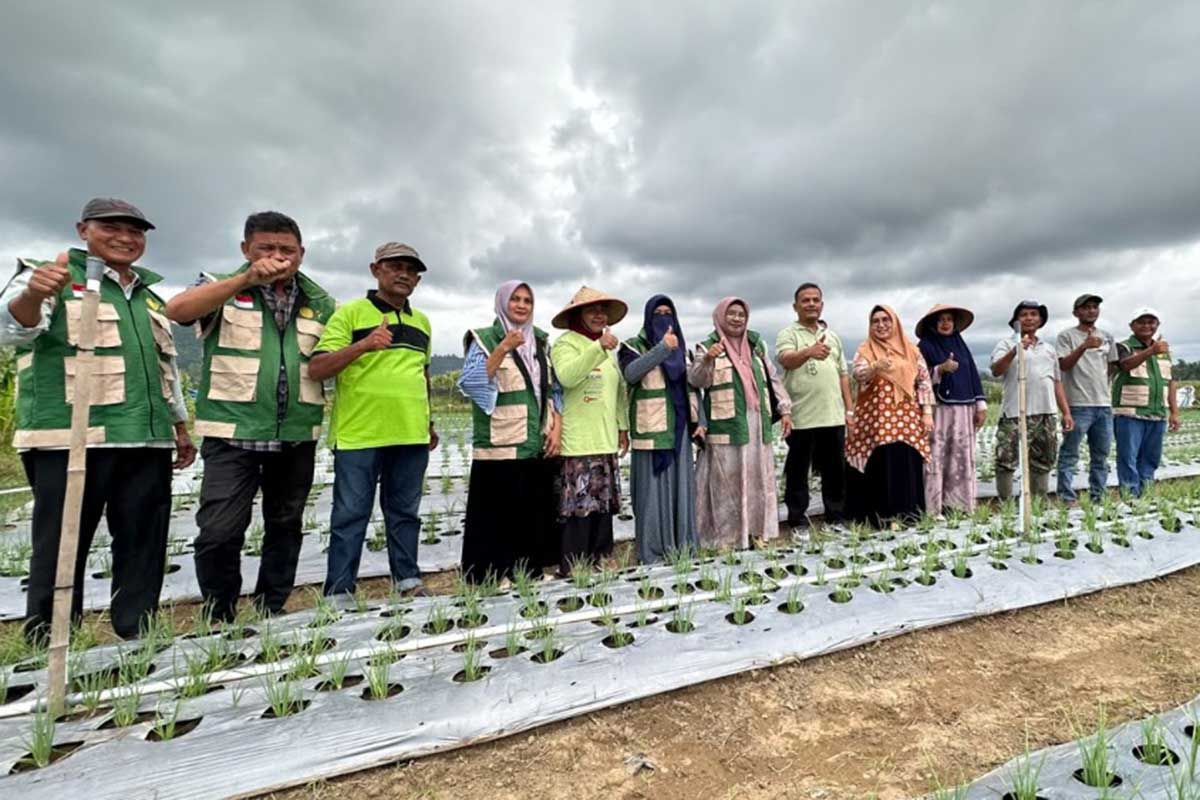
Banda Aceh (ANTARA) – The Pidie Jaya Regency Government in Aceh is developing shallot cultivation on rice fields affected by flash floods in late November 2025, with the aim of making the land productive again.
M Nur Isga, acting head of the Pidie Jaya Agriculture and Food Agency, said in Pidie Jaya on Saturday that cultivating shallots on the flood-damaged fields was intended to restore their productivity.
“We, together with the Pidie Jaya Regency Family Welfare Movement (PKK), planted shallots on two hectares of rice fields that had previously been damaged by the floods,” he said.
He said the development of shallot cultivation was an effort to revive disaster-affected land so it would not remain neglected, while also creating new opportunities for local productivity.
According to location data, shallots have been planted in rice fields in Meunasah Teungoh village, among other places. Planting began in October 2026, with the harvest expected in December 2026.
“The shallots there are currently in the vegetative phase. Shallot cultivation is also under way on one hectare in Teungkluet village, Trienggadeng district,” he said.
Overall, strategic food-crop cultivation in Pidie Jaya covers 549 hectares, including 17 hectares of red chillies, three hectares of shallots, 285 hectares of rice and 244 hectares of maize.
These figures reflect efforts to optimise agricultural potential through a range of commodities amid the challenges of post-disaster recovery, M Nur Isga said.
Asmawati Sibral, chair of the Pidie Jaya Regency PKK, said planting shallots was not merely about replacing the crop on damaged land, but was part of an effort to rebuild the community’s economic strength through agriculture.
“The flood-affected land is expected to become productive again and provide added value for farmers. The next challenge is to ensure the crops grow well until harvest,” she said.
She said the success of post-flood recovery should not be measured only by how quickly land was planted again, but also by how much it could restore people’s incomes and hopes.
“Floods may damage agricultural land, but they must not extinguish farmers’ hopes. That spirit is reflected in the planting of shallots,” Asmawati Sibral said.