
PHR Boss Speaks Candidly on Challenges of Developing Unconventional Oil and Gas Fields
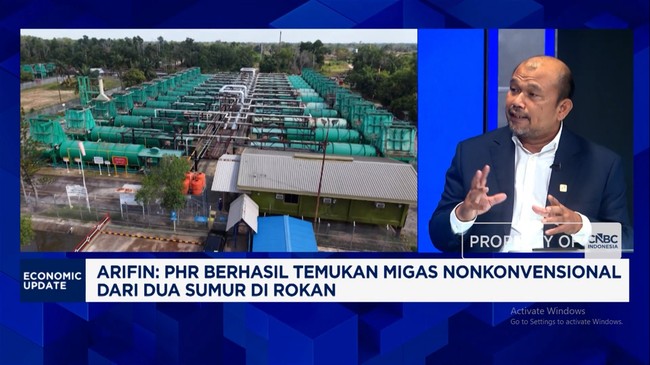
PT Pertamina Hulu Rokan (PHR) has disclosed a number of challenges in developing Unconventional Oil and Gas (MNK) wells in Indonesia, particularly in the Rokan Block, Riau.
Among the challenges are mastery of the technology and the support of an industrial ecosystem, which are currently unavailable both domestically and in the Southeast Asian region.
For context, the MNK wells currently being developed by PHR are the Gulamo DET-1 well and the Kelok DET-1 well, both in the Rokan Block.
PHR Chief Executive Muhammad Arifin explained that the characteristics of MNK differ greatly from the conventional oil reserves the company has hitherto managed. According to him, developing MNK requires complex stages and global support to bring in technology and human resources specific to the field.
“Because MNK is new and we are the pioneer, the main challenge is that the ecosystem has not yet been formed in Indonesia. Because the ecosystem is not supportive, and even if we look at neighbouring countries in Southeast Asia, none of them have it either, we have to go to countries somewhat further away and more advanced to bring in technology and human resources,” he said on the CNBC Indonesia programme Energy Corner, quoted on Wednesday (15 July 2026).
Arifin outlined that the principal challenge in MNK is that the oil is trapped within rock, so it cannot flow automatically once drilled. This condition forces the company to apply multi-stage fracturing technology and directional drilling to crack open the reservoir so the sticky oil can be lifted to the surface.
“It is very different from the reservoirs we currently produce. Why? Because in terms of the petroleum system, in an MNK field the oil is trapped in rock that is quite difficult to lift. We have to apply what we call multi-stage fracturing technology,” he explained.
Beyond the subsurface obstacles, the company faces increasingly difficult drilling locations, ranging from deep-water areas to sites in the middle of forests.
The company currently looks to countries with established industries in this field, such as China, the United States and Canada, as its main reference in developing a national MNK ecosystem.
“And the development process is getting harder as we go. Some drilling has to be done in deep waters, in the middle of forests. God willing, we are entering a new business in one of the reservoirs we have just discovered, which we call unconventional oil and gas,” he added.
To date, PHR has recorded MNK resource discoveries at the Gulamo and Kelok wells, with 2C category findings reaching almost 740 million barrels of oil equivalent.
That figure is recorded as one of the largest discoveries in an Indonesian oil field in the last ten years, projected to be capable of producing up to 50,000 barrels per day (bpd) at its peak.
“We hope that this July we will obtain approval of the plan of development (POD) so that, God willing, in December 2026 we can drill the first appraisal well. At present we still rely heavily on technology from abroad; hopefully, once the ecosystem is formed, everything that used to come from outside can be developed and built in Indonesia,” Arifin concluded.