
Photography Exhibition Serves as Industry Practice Laboratory for Communication Science Students
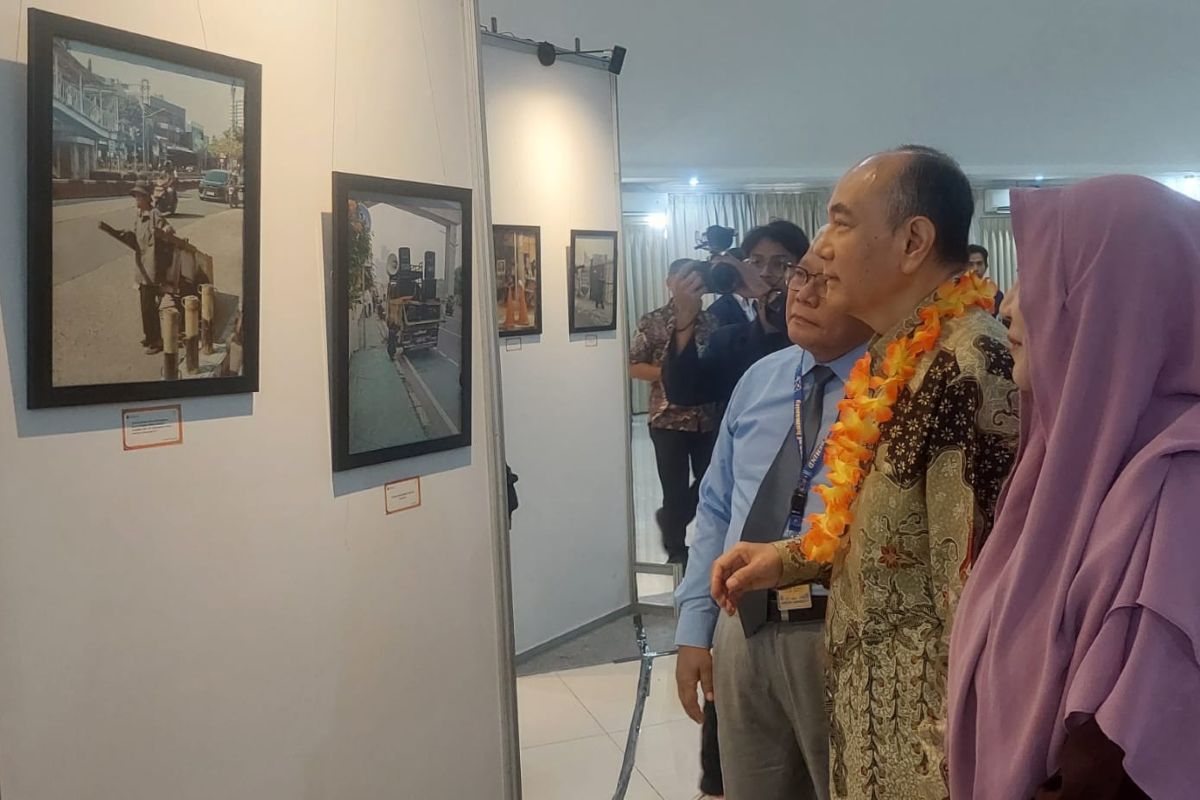
Universitas Dian Nusantara (Undira) continues to strengthen practice-based learning by providing students with simulations of the professional world. Through the Even Semester Photography Exhibition for the 2025/2026 Academic Year, titled ‘Lens of Humanity: Human Interest’, students not only produced visual works but also managed the entire exhibition organisation like a professional project.
Held at the Undira Campus in Tanjung Duren, West Jakarta, on Friday (26/6), the exhibition featured 56 curated photographic works from 54 students of the Visual Photography and Content course. Unlike previous years, this year’s activity involved cross-course collaboration between Visual Photography and Content, Media Relations, and Producing and Programming. Through this collaboration, students were responsible for everything from work production and publication management to press conferences and the creation of audiovisual content as part of the exhibition’s organisation.
The Rector of Universitas Dian Nusantara, Suharyadi, stated that the campus continues to encourage students to produce works that not only demonstrate academic ability but also provide benefits to society. “I strongly support activities such as this and am proud of the students’ creativity. This is in line with the Minister of Education’s directive so that the works of students and lecturers can have an impact on society,” said Suharyadi.
The Exhibition Chairperson and Coordinator of the Visual Photography and Content course, Suswinda Ningsih, explained that the exhibition was designed as a practical laboratory integrating creativity, technical skills, and collaborative work. According to her, students learn not only how to produce good photographs but also how an exhibition is packaged, published, and promoted to the public.
“The Lens of Humanity exhibition is not only a space for appreciating student photography but also a practical laboratory that brings together various communication competencies. Students learn to work professionally, starting from work production and media relations management to the production of audiovisual programmes,” she said.
She explained that every student was required to produce at least three works themed around human interest. All photos underwent a strict curation process until the 50 best works were selected for display. According to Suswinda, students whose photographic results did not meet the standard were asked to return to the field for re-shooting as part of the experiential learning process.
As a form of appreciation for the students’ work, the ten best works this year will be registered for Intellectual Property Rights (IPR). Moving forward, Undira also aims to hold exhibitions in public spaces such as Taman Ismail Marzuki so that student works can reach a wider audience.
She also emphasised that all exhibited works were the result of original photography by the students. Amidst the development of Artificial Intelligence (AI) technology, the campus implemented supervision to prevent image manipulation using AI, although students are permitted to use both DSLR cameras and smartphones.
The Lecturer of the Visual Photography and Content course, Joni Arman Hamid, stated that the human interest theme was chosen to train the students’ social sensitivity as future visual communication practitioners. “Photography is not just about producing beautiful images, but also the ability to see reality, understand humans, and convey meaningful messages to the public,” he said.
Meanwhile, the Lecturer of the Media Relations course, Tri Satria Muhammad, assessed that student involvement in managing press conferences and media relations provides experience very close to actual practice in the communication industry.
The Student Committee Chairperson, Ahmad Fachruddin, added that organising the exhibition is a learning experience that sharpens not only photography skills but also event management, teamwork, and the ability to convey humanitarian messages through visual works. Through this project-based learning model, Undira hopes that students will be better prepared to face the needs of the creative and communication industries, which demand mastery of both technical skills and collaborative abilities.