
Phone Prices Rise, Distributor Relies on Financing and Network Expansion
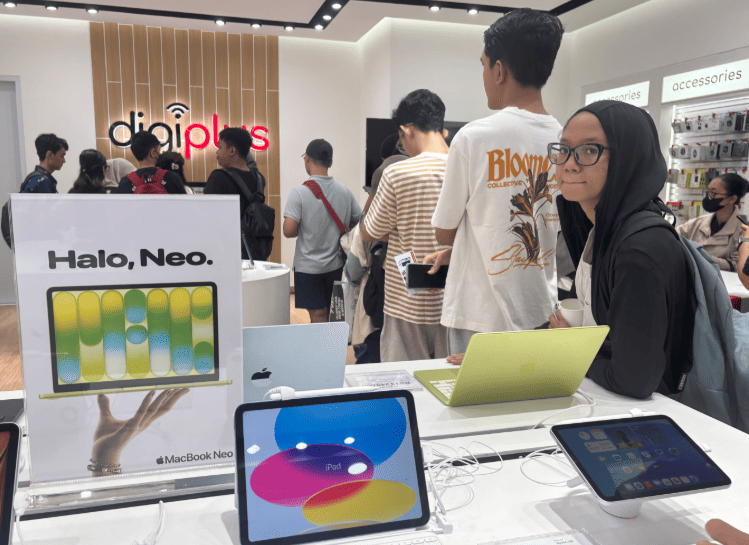
The increase in prices of electronic devices, including smartphones, due to the global chipset shortage is becoming a challenge for the gadget retail industry. This condition is encouraging distributors to strengthen their sales strategies so that consumers can still purchase devices according to their needs and financial capabilities.
Head of Operations Digiplus Erwin Renehan said that price increases for a number of products have occurred since the end of last year and continued into 2026. For some brands, price increases have even reached 30% to 50%.
“It has been happening since the beginning of the year. Some brands also started increasing prices at the end of last year. The increase is quite high, around 30% to 50%,” said Erwin at the opening of Digiplus’s 100th outlet in Terogong, South Jakarta, Friday (28/8).
According to him, the price increase certainly has an impact on sales. However, the company is choosing to focus on measures to maintain product affordability. One strategy being pursued is strengthening cooperation with non-bank financial institutions (NBFI). The company is also optimising buy now pay later (BNPL) schemes, cashback programmes, and trade-in services.
“We are promoting partnerships such as NBFI, BNPL, bank cashback, and trade-in to ensure consumers remain more able to buy products,” said Erwin.
Head of Marketing Digiplus Dwita Satyanti assessed that smartphones have now shifted from being complementary goods to an important part of people’s daily needs. Therefore, the price increase does not necessarily eliminate consumer demand for these devices.
The company provides device options with a wide price range, from around Rp3 million to Rp40 million. With these options, consumers are considered able to adjust their purchases to their needs as well as their available budget.
Consumers are now also increasingly considering their financial capabilities when choosing devices. Various payment schemes and promotions have become instruments that can help consumers obtain devices without having to bear the entire price increase directly.
“Mobile phones have now become a primary need, a daily need. So they are no longer just a secondary or tertiary need,” said Dwita.
Amidst the price challenges, Digiplus is expanding its store network to bring products and services closer to consumers. The latest expansion was marked by the opening of its 100th outlet in Terogong, South Jakarta.
Head of Business Development Digiplus Muhammad Pranoto Utomo said the expansion strategy no longer relies solely on shopping centres. Digiplus is beginning to expand its presence to street-level locations, including shophouses and commercial areas outside malls.
“Digiplus as a multi-brand retailer is more flexible. We are not only opening stores in malls, but also starting to expand to street level,” said Pranoto.
The expansion is planned to continue targeting major cities as well as second- and third-tier city markets. Jakarta, Surabaya, Bali, Medan, and Makassar are among the main markets targeted for network development.
According to Pranoto, store formats will also be varied, ranging from outlets in malls, street level, shop-in-shop (SIS), to commercial areas with a one-stop shopping concept outside shopping centres. The company is targeting 150 outlets by the end of 2026.
By expanding sales points and providing various payment alternatives, the distributor is devising strategies to maintain demand for gadgets that are increasingly embedded in people’s daily activities.
“Going forward, we will add more to reach our customers in second-tier and third-tier city markets,” said Pranoto.