
Philippines Ramps Up Palm Oil Production, Ready to Challenge Indonesia and Malaysia
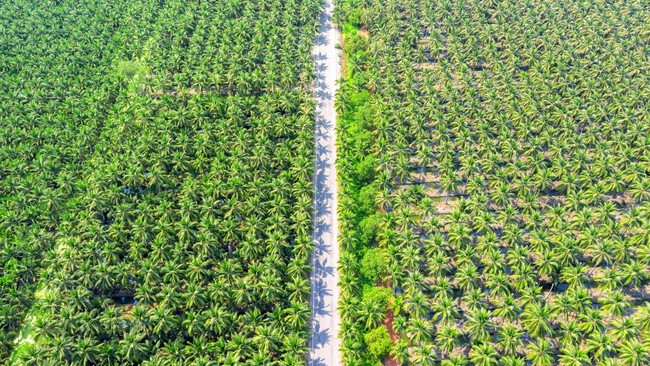
The Philippines is beginning to take its domestic palm oil industry seriously. The country, which has so far depended on imports, particularly from Indonesia and Malaysia, plans to expand plantations to increase domestic production.
According to Philstar Global, the initiative has the backing of Malaysia, the world’s second-largest palm oil producer. The Malaysian Palm Oil Council (MPOC) has said it is ready to assist the Philippines through technology transfer, research and technical support.
For Indonesia, this expansion is a development worth watching. The Philippines is one of South-east Asia’s palm oil markets that remains heavily reliant on supplies from abroad.
However, the scale of the production gap indicates that the Philippines will need a long time to become a major competitor to Indonesia and Malaysia.
Philippines plans 300,000-hectare expansion
The Philippine Department of Agriculture (DA) plans to develop about 300,000 hectares of oil-palm plantations to increase national production and reduce dependence on imports, The Philippine Star reported on Sunday (11 October 2026).
The Philippines currently consumes more than one million tonnes of palm oil each year. Domestic production meets only about 9 per cent of demand, while the remaining 91 per cent is supplied by imports, mainly from Indonesia and Malaysia.
In 2025, Philippine palm oil production was reported at about 140,000 tonnes, with existing plantations covering approximately 63,380 hectares.
United States Department of Agriculture (USDA) data show that the area harvested for oil palm in the Philippines has generally increased over the past decade. It grew from about 60,000 hectares in 2016 to 68,000 hectares in 2025, a rise of approximately 13.3 per cent.
Despite this growth, the increase in harvested area has been relatively limited in recent years. The area fell to about 63,000 hectares in 2024 before rising again in 2025.
To accelerate the industry’s development, the DA has proposed a budget of about 300 million Philippine pesos for 2027. The government estimates that funding of around one billion pesos a year will be needed over the next five years.
The plantation expansion is expected to increase the supply of raw materials for the food and manufacturing industries, as well as biofuel production.
Malaysia’s support includes technical assistance and the sharing of oil-palm cultivation expertise. MPOC chief executive Belvinder Sron said Malaysia had more than a century of experience, dating back to its first commercial planting in 1917.
In addition to technical guidance, Malaysia has also opened the door to cooperation with the Philippine coconut oil industry, including the use of raw materials in the chemical sector.
Indonesia remains the world’s leading palm oil producer
Indonesia and Malaysia continue to dominate global palm oil production as the Philippines pursues its plantation expansion plans.
According to USDA data, Indonesia is forecast to produce 46.7 million tonnes of palm oil in 2025/2026, or 57.3 per cent of global output. Malaysia follows with 20.2 million tonnes, or 24.8 per cent. Together, the two countries account for about 82.1 per cent of global production.
The Philippines ranks 19th, contributing only about 0.15 per cent of global output. This gap suggests that the country’s expansion is aimed more at meeting domestic needs than at directly competing with Indonesia and Malaysia in global markets.
Indonesia also has a far larger harvested area, at 14 million hectares, followed by Malaysia with 5.6 million hectares. By comparison, the Philippines had only about 68,000 hectares harvested in 2025.
Could the Philippines become a competitor to Indonesia and Malaysia?
The Philippines’ ambitions to strengthen its palm oil industry come amid fluctuations in global crude palm oil (CPO) prices. Its reliance on imports leaves the country vulnerable to changes in international prices and shipping costs.
For reference, CPO on the Bursa Malaysia Derivatives closed at 4,682 ringgit a tonne on Tuesday (13 October 2026), according to Refinitiv data.
Meanwhile, Indonesia’s Ministry of Trade set the CPO reference price for October 2026 at US$1,042.15 a tonne, up 3.44 per cent from US$1,007.51 a tonne in September.
Even so, the Philippines’ expansion is not yet a major threat to the dominance of Indonesia and Malaysia. With only about 0.15 per cent of global production, the Philippine palm oil industry remains far smaller.
Even if the 300,000-hectare development target is achieved, that area would amount to only about 2.1 per cent of Indonesia’s 14 million hectares of oil-palm harvest area in 2025/2026.
The more likely impact on Indonesia and Malaysia is a gradual reduction in Philippine import demand as domestic production rises.
The Philippines spends about US$1.5 billion a year on palm oil imports, BusinessMirror reported. This substantial outlay is one reason the country sees developing its domestic industry as important to reducing reliance on global supplies.
Nevertheless, developing the industry will require time and substantial investment, from planting and building processing facilities to improving productivity.
In the short term, therefore, the Philippines is likely to remain an important market for Indonesian and Malaysian palm oil exporters. Competition may intensify only in the longer term if plantation expansion leads to a significant increase in production.
Philippine palm oil expansion faces environmental and social challenges
Alongside its economic opportunities, the expansion of Philippine oil-palm plantations faces challenges involving land management, environmental impacts and farmers’ welfare.
BusinessMirror reported on 16 September 2026 that agricultural workers’ organisation Unyon ng mga Manggagawa sa Agrikultura (UMA) had raised concerns about alleged land conflicts and the low prices farmers receive for fresh fruit bunches (FFB).
In Palawan, for example, UMA said some farmers received only 2.70 to 3 Philippine pesos per kilogram of FFB, well below the minimum price of 6 pesos per kilogram said to be stipulated in an agreement. The organisation also raised concerns about Indigenous people’s rights and potential environmental damage from plantation expansion.
The situation shows that the success of the Philippine palm oil industry will depend not only on expanding land and increasing production, but also on protecting farmers’ rights, managing environmental impacts and ensuring a sustainable supply chain.
Source: jawawa.id (https://jawawa.id/newsitem/philippines-ramps-up-palm-oil-production-ready-to-challenge-indonesia-and-malaysia-1791957033)
Originally published by CNBC Indonesia (https://www.cnbcindonesia.com/research/20261014095815-128-775984/filipina-kejar-produksi-sawit-siap-tantang-ri-malaysia), translated from Indonesian