
Philippines on Alert for Powerful Magnitude 8.5 Earthquake and Tsunami
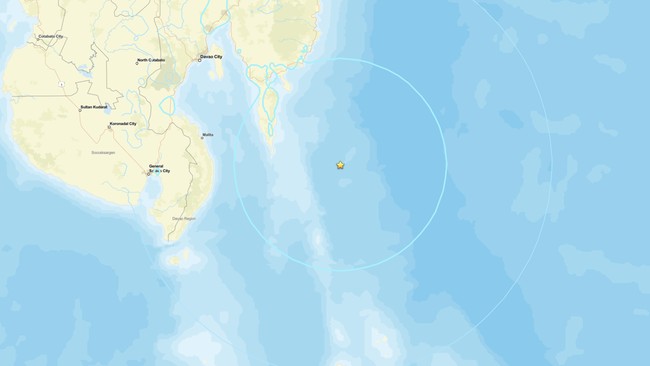
Jakarta — The Philippines, a close neighbour of Indonesia, will test its preparedness for a powerful magnitude 8.5 earthquake and tsunami. A large-scale simulation is scheduled to take place in Cagayan on Thursday (5 November 2026).
The Philippine Office of Civil Defense (OCD), as quoted by The Manila Times, said the exercise would involve emergency responders, local governments and the public. The main simulation will be held in Santa Ana, Cagayan.
The scenario involves an earthquake triggered by movement along the East Luzon Trough, with its epicentre about 180 kilometres south-east of the coastal area. The drill forms part of the fourth-quarter Nationwide Simultaneous Earthquake Drill (NSED).
The exercise aims to assess the readiness of government agencies, emergency responders and the public to deal with a major earthquake and tsunami. The OCD said it would test the implementation of the Santa Ana Earthquake and Tsunami Contingency Plan and the Regional Emergency Response Plan drawn up by the Cagayan Valley Regional Disaster Risk Reduction and Management Council.
Capabilities to be tested include activation of early-warning systems, public evacuation, emergency communications, search-and-rescue operations and mass-casualty management. The exercise will also cover the management of evacuation camps and displaced residents, water-based search and rescue, and the handling of fatalities and missing people.
The simulation will test preparedness for other hazards, including chemical, biological, radiological and nuclear threats, as well as oil spills. The OCD will lead the exercise in coordination with agencies belonging to the Philippine National Disaster Risk Reduction and Management Council and local governments.
The nationwide drill is scheduled to begin at 8am local time. A button-pressing ceremony at 9am will signal the start of the national “Duck, Cover and Hold” procedure, followed by evacuation drills and the large-scale simulation. Similar exercises will be held in other parts of the Philippines under the supervision of OCD regional offices.
Meanwhile, dozens of countries around the world are asking residents to prepare emergency supplies. In total, 33 countries have advised people to stock up on food, water and medicines.
Newsweek reported on Monday that the guidance reflects risks including conflict, extreme weather and cyber-security threats, which could arise at any time. The recommended level of preparedness varies by country.
On average, countries advise residents to keep emergency supplies for three days, although some recommend stocking up for as long as 10 days.
The countries listed by region are:
Europe: the United Kingdom, Ireland, France, Germany, the Netherlands, Denmark, Norway, Sweden, Finland, Estonia, Latvia, Lithuania, Poland, the Czech Republic, Austria, Switzerland and Croatia.
North America: the United States, Canada and Mexico.
South America: Chile, Colombia, Argentina and Brazil.
Africa: South Africa.
Asia: Japan, Taiwan, Israel, India, the Philippines and Singapore.
Oceania: New Zealand and Australia.
This is not a new issue. The same report says the European Commission launched its “Preparedness Union Strategy” in March 2025.
The strategy addresses Europe’s response to rising geopolitical tensions and conflicts, as well as the threat of natural disasters caused by climate change. Although advice on how long people should be prepared to manage with supplies varies, recommendations on what to include in emergency kits are broadly consistent: non-perishable food, water, medicines, batteries, a torch and a radio.
Source: jawawa.id (https://jawawa.id/newsitem/philippines-on-alert-for-powerful-magnitude-8-5-earthquake-and-tsunami-1793854229)
Originally published by CNBC Indonesia (https://www.cnbcindonesia.com/news/20261105094740-4-782513/tetangga-dekat-ri-siaga-gempa-dahsyat-m-85-tsunami), translated from Indonesian