
Philippine Vice President's Impeachment Trial Begins, Deepening Political Divide
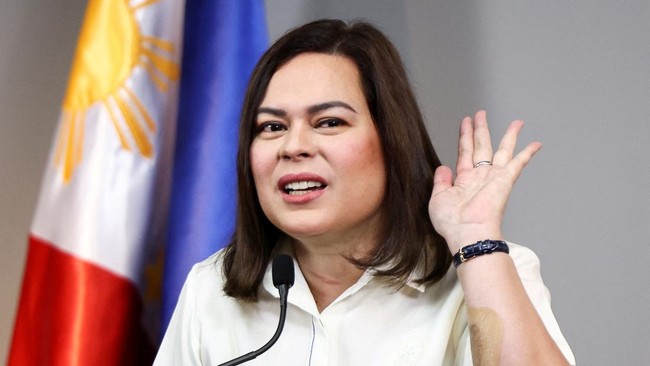
The impeachment trial of Philippine Vice President Sara Duterte began on Monday, in a legal process expected not only to determine her political fate but also to set the direction for the 2028 presidential election. The trial further deepens the divide between the country’s two most influential political dynasties, the Duterte and Marcos families, a feud that has already triggered turmoil in the Senate.
Analysts suggest that regardless of the final verdict, the most critical factor will be whether the public perceives the trial as fair or politically driven. “If this trial is seen as politically motivated or lacking credibility, doubt will continue to overshadow any outcome,” said Ederson Tapia, a professor of public administration at the University of Makati.
It remains uncertain how long the trial will last, as the duration depends on procedural disputes, the number of witnesses presented, and the submission of evidence. For comparison, the impeachment trial of a former Philippine Chief Justice in 2012 lasted four months. A guilty verdict requires the support of at least 16 of the 24 senators.
Various opinion polls indicate that Sara Duterte remains one of the strongest candidates for the 2028 presidential election. However, a conviction could end her presidential ambitions. Conversely, Tapia noted that an acquittal could strengthen her political standing if the public views the process as fair.
This trial marks the first impeachment of a vice president in Philippine history. Sara Duterte faces multiple charges, including misuse of public funds, possession of unexplained wealth, and threatening the safety of President Ferdinand Marcos Jr., the First Lady, and a former Speaker of the House. Duterte, the daughter of former President Rodrigo Duterte, has denied all charges, insisting the impeachment is politically motivated.
Responding to her defence, House prosecution spokesperson Robert “Ace” Barbers said such claims were expected. “We will let the evidence speak for itself,” he stated. Jean Encinas-Franco, a political science professor at the University of the Philippines, argued that public trust can only be maintained if both sides are given equal opportunity to present their arguments. She recalled the 2000 impeachment of President Joseph Estrada, where the Senate’s decision to block key evidence sparked public outrage, halted the trial, and led to mass protests that ultimately ousted Estrada in January 2001.
Sara Duterte’s lawyer, Michael Poa, asserted that the defence team is prepared to prove all charges are baseless. However, he could not confirm whether Duterte would attend the first hearing, as the summons allows her to be represented by legal counsel.
The trial is the culmination of a bitter conflict between President Ferdinand Marcos Jr. and Sara Duterte. The two heirs to the Philippines’ largest political dynasties ran as a ticket in the 2022 elections and won, but their relationship has since deteriorated sharply, particularly after Rodrigo Duterte was arrested and transferred to the International Criminal Court (ICC) detention centre in The Hague in March last year. The former president is awaiting trial on murder charges related to his administration’s “war on drugs” policy. Former Philippine National Police chief Ronald “Bato” dela Rosa, who led the force during much of the operation when thousands of suspects were killed, faces similar charges at the ICC. Both deny any wrongdoing.
The conflict between the Marcos and Duterte camps has also spilled into the Senate, raising questions about how senators will vote in the impeachment trial. In May, as the Senate prepared to receive impeachment documents from the House, Senator dela Rosa, a close ally of Sara Duterte, reappeared in the chamber after a long public absence since November. He cast the deciding vote to make Alan Peter Cayetano the Senate President. Dela Rosa later took refuge in the Senate complex before leaving in the early hours of 14 May, hours after chaos and a shootout occurred at the parliament building. His current whereabouts are unknown. About a month later, a rival group of senators secured enough support to elect Senator Sherwin Gatchalian as the new Senate President. While the leadership struggle reveals political alliances in parliament, analysts caution that it may not necessarily reflect how senators will vote in the impeachment trial.