
Philippine State-Owned Bank Prepares Financing for Halal MSMEs
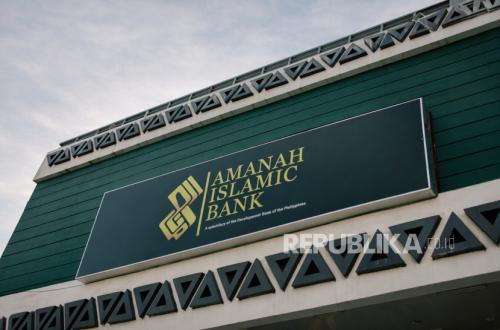
The Philippine state-owned bank, Al-Amanah Investment Bank of the Philippines, is committed to providing financing for micro, small, and medium enterprises (MSMEs) operating in the halal industry.
In a statement on Sunday (19/09/2026), Al-Amanah noted that this commitment was conveyed by the Chairperson and Chief Executive Officer of Al-Amanah Bank, Amenah Pangandaman, during the Philippine Halal Industry Summit.
Pangandaman stated that the bank is currently calculating the total funds to be allocated to support MSMEs. Al-Ameah is expected to expand access to financing for entrepreneurs who struggle to obtain capital due to failing to meet general banking requirements.
“The demand is already there, our human resources are ready to work, and a massive market awaits. However, without capital or financing, the halal industry will always struggle to escape the perception of being a niche market,” said Pangandaman, as quoted from the Philippines News Agency on Monday (21/09/2026).
MSMEs currently account for approximately 99.5 per cent of all business units in the Philippines. Nevertheless, Pangandaman noted that MSME operators still face difficulties in financing various needs required to enter the halal market.
According to her, financial support should not stop at the production stage. Financing must reach the entire value chain of the halal industry.
“Financing for MSMEs must support the entire value chain. It is not enough to only provide production capital because their journey is long, starting from certification, logistics, and scaling up businesses, to finally engaging in exports,” she said.
Al-Amanah will collaborate with the Philippine Department of Trade and Industry to provide financing for the development of halal businesses. This support includes financing for accreditation costs and the construction of halal slaughterhouse facilities.
The bank will also partner with the Cooperative Development Authority to support the expansion of cooperatives operating within the halal industry.
Furthermore, Al-Amanah and the National Commission on Muslim Filipinos have agreed to follow up on the drafting of a memorandum of understanding regarding the provision of Sharia-compliant financing for MSMEs and halal certification bodies.
“It cannot be denied that halal certification in the Philippines and other countries can be a difficult, long, and expensive process for MSMEs. However, the benefits gained by both consumers and businesses are immense,” Pangandaman admitted.
She added that efforts to make the halal certification process more accessible and understandable must continue. Halal certification should not become an unnecessary barrier for MSME operators.
The global halal industry value is projected to reach US$10 trillion by 2030, up from the current estimate of US$4 trillion. This growth is primarily driven by the increasing Muslim population and trends in ethical consumption.
Halal products are also increasingly in demand among non-Muslim consumers as they are perceived to adhere to strict quality and health standards.
Through the Philippine Halal Industry Development Strategic Plan, the Philippine government targets investments of 230 billion Philippine pesos by 2028. The government also aims to double the number of halal-certified products and services from 3,000 to 6,000, and to create 120,000 jobs.