
Philanthropic Forum Forms MSF to Tackle Extreme Poverty in Villages
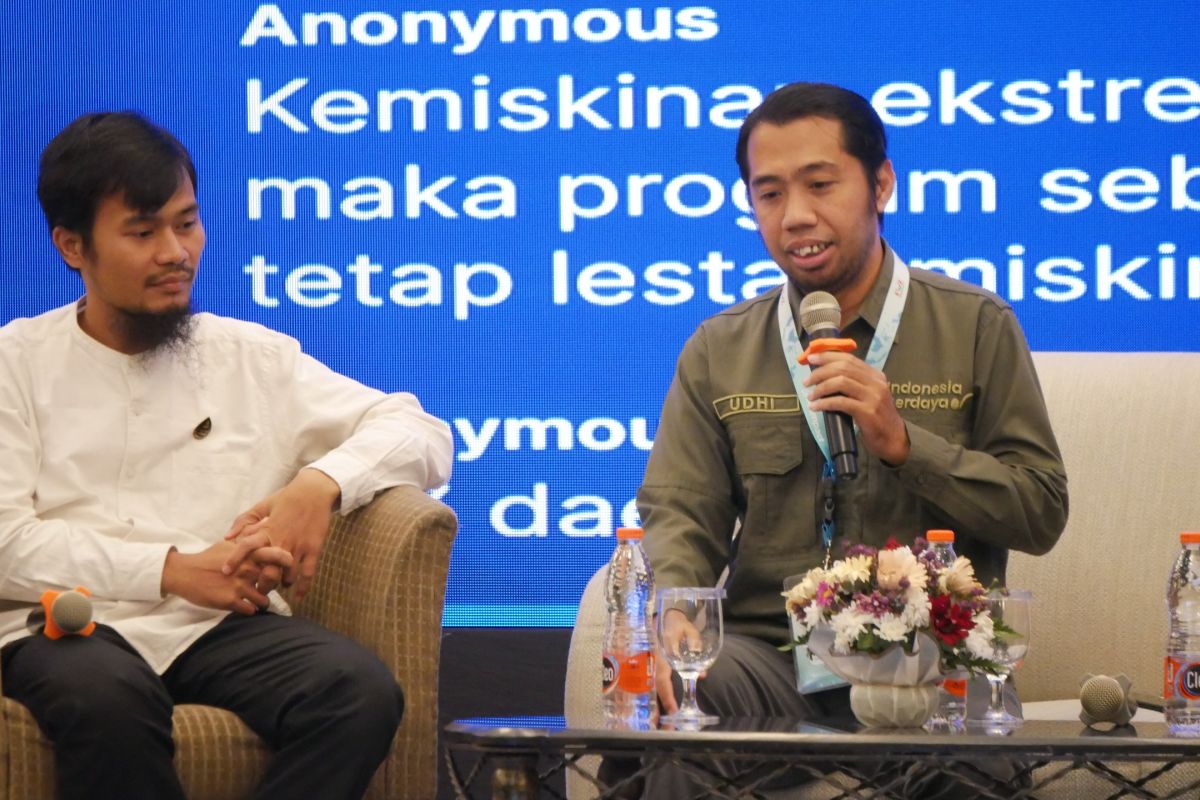
Jakarta (ANTARA) - A number of philanthropic organisations, such as Forum Zakat (FoZ), the Indonesian Philanthropy Association (PFI), and the Humanitarian Forum Indonesia (HFI), have formed a Multi-Stakeholder Forum (MSF) focused on creating programmes to reduce extreme poverty rates in villages.
“The MSF is initiating a scheme that is not easy, but one we must undertake and implement. Given the current conditions, the issue of poverty must not merely be a discussion on paper, but must involve concrete solutions,” said FoZ Secretary General Udhi Tri Kurnlariawan in Jakarta on Friday.
Udhi stated that efforts to reduce extreme poverty in Indonesia are a national priority agenda. This platform unites philanthropic actors, the government, the private sector, academics, and civil society to ensure they no longer work in isolation to lift communities out of poverty.
As a significant milestone in the transition from planning to real action, the MSF is organising a Workshop on the Transition Towards the Implementation of Poverty Alleviation Programmes. This series is a continuation of a long process since early 2024, involving sectoral discussions, Focus Group Discussions (FGDs), field assessments, and village consultations.
Udhi emphasised that the key to successful poverty alleviation lies in the extent to which stakeholders can set aside sectoral egos to produce a real impact that is directly felt by the lower classes. “Therefore, collaboration between various parties and stakeholders is required to produce best practices that do not stop at the planning stage, but reach the stage of active engagement with the community,” said Udhi.
PFI Executive Director Rully Amrullah presented a sociological portrait of Indonesia, which is still facing significant challenges at the grassroots level. Based on macro data, there are approximately 10,467 highly disadvantaged villages, tens of thousands of disaster-prone villages, and a majority of villages that are not yet economically independent or equipped with adequate health facilities.
However, behind these challenges, he noted, villages hold immense potential. The MSF noted that 49 per cent of the population resides in villages, Village Funds (Dana Desa) reach Rp71 trillion, and there are 146,876 small and micro industries. “These great potentials are what we are attempting to weave together through cross-sector collaboration between FoZ, PFI, HFI, PSI Agro, and the Global Compact, covering aspects of funding, research, and implementation,” said Rully.
According to him, the MSF applies a ‘co-creation’ programme strategy based on field findings and aligned with the Sustainable Development Goals (SDGs) indicators.
Amidst the strengthening of collaboration through the MSF, he noted that the zakat movement in Indonesia has taken real steps in the field through various empowerment programmes, such as the Dompet Dhuafa Container Canteen and the Rumah Zakat Cisande Tourism Village. The Cisande Tourism Village programme has transformed Cisande Village in the Cicantayan District, Sukabumi Regency, West Java, into one of the top 50 best tourism villages in Indonesia.
Through the ‘Empowered Village’ programme, philanthropic funds are allocated to finance community-based tourism. Local residents are no longer mere spectators but are the primary actors managing educational tourism. Additionally, there is the incubation of entrepreneurs from vulnerable groups as part of poverty alleviation efforts. The Dompet Dhuafa Container Canteen programme addresses the challenges of high unemployment among educated individuals and poverty among underprivileged students,” he concluded.