
PHE pushes Asri Basin to become regional carbon storage hub
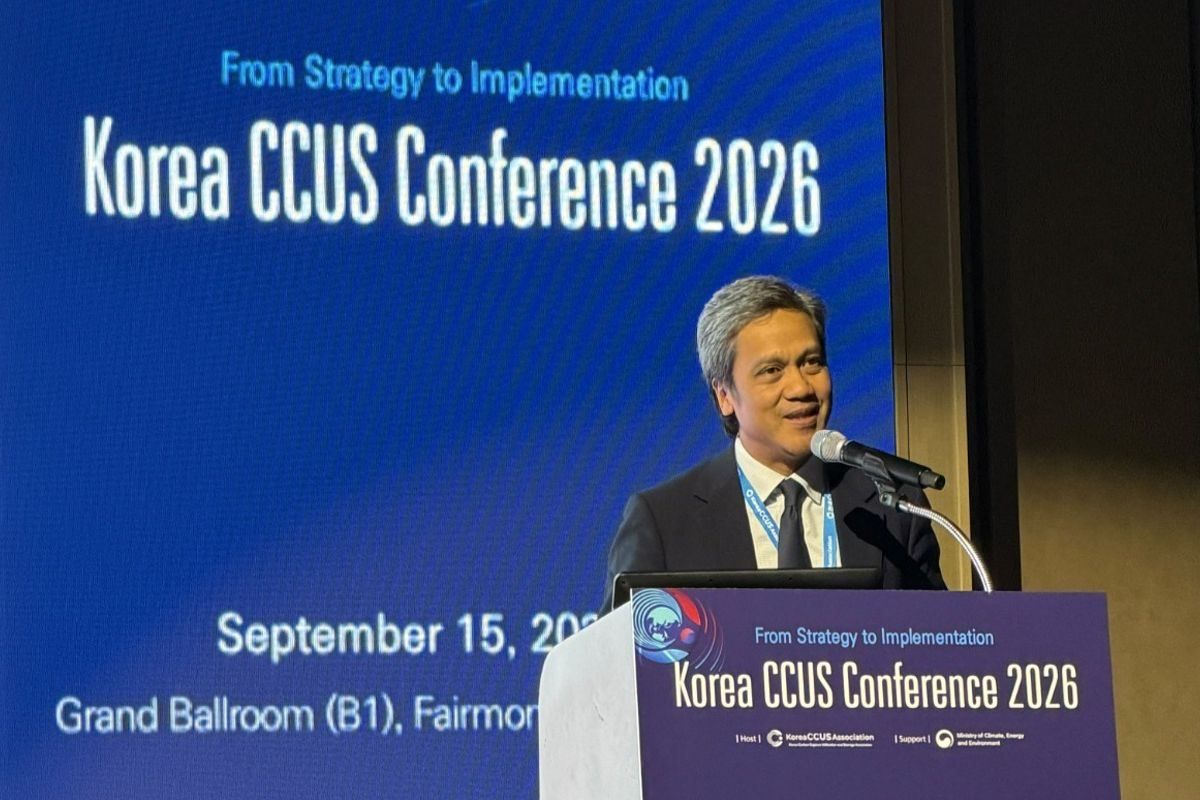
PT Pertamina Hulu Energi (PHE) is pushing to transform the Asri Basin carbon capture and storage (CCS) hub into the first regional-scale carbon storage facility.
Speaking in Jakarta on Wednesday, PHE’s Director of Investment & Business Development, Dannif Utojo Danusaputro, emphasised the company’s commitment to accelerating the implementation of carbon capture, utilisation, and storage (CCUS) and carbon capture and storage (CCS) technologies to support the regional energy transition. According to him, PHE is adopting a measured approach to capturing decarbonisation opportunities.
“Our approach is highly planned, whereby we draw on operational experience through pilot projects while simultaneously preparing the necessary infrastructure and ecosystem for larger-scale CCS/CCUS development,” said Dannif, while speaking at the KCCUS Forum in Seoul, South Korea.
In his presentation titled “Implementing CCUS Projects: Visions, Capabilities, and Best Practices”, Dannif detailed the progress of the CCUS project portfolio in Indonesia. To date, PHE has implemented 10 programmes with a total carbon injection reaching 5,671 tonnes of CO2 equivalent.
A significant milestone includes the successful first CO2 injection at the Sukowati Field, completed in December 2023, which will be followed by interwell CO2 enhanced oil recovery (EOR) trial studies in 2025.
“In addition to pilot-scale projects, PHE, together with ExxonMobil, is developing the first regional-scale CCS hub in the Asri Basin. This project is designed as an integrated system, covering liquid CO2 (LCO2) transport, receiving terminals, offshore pipelines, injection wells, and storage facilities,” he stated.
Furthermore, Dannif explained Indonesia’s immense potential as a regional carbon storage centre. Based on government estimates, Indonesia possesses a national CO2 storage potential of 578 gigatonnes spread across 20 productive basins. Specifically, the Asri Basin’s storage potential is estimated to reach 2.9 gigatonnes.
The offshore location of the Asri Basin, being close to domestic emission centres and possessing strategic shipping access, makes it a top priority for the development of a CO2 injection hub.
“The Asri CCS Hub combines massive storage scale, a strategic location, and a complete transport and storage chain concept. A technically sound storage site must also be commercially viable and institutionally ready. The supporting regulatory framework in Indonesia is already available, and our collective task is to turn it into an implementable and bankable project,” explained Dannif.
Indonesia’s readiness is further supported by maturing regulations. Since 2023, Indonesia has issued various frameworks, including Ministerial Regulation of the ESDM No. 2/2023, Presidential Regulation No. 14/2024 regarding Cross-Border CCS, as well as supporting regulations related to carbon economic value and carbon unit governance.
Through collaboration with stakeholders in South Korea—including emitters, shipping companies, technology providers, and investors—PHE is optimistic that the Asri CCS Hub can become a priority carbon injection platform that provides added value for both nations.