
PHE, PGN and Pupuk Indonesia Collaborate on CCS for Low-Carbon Ammonia
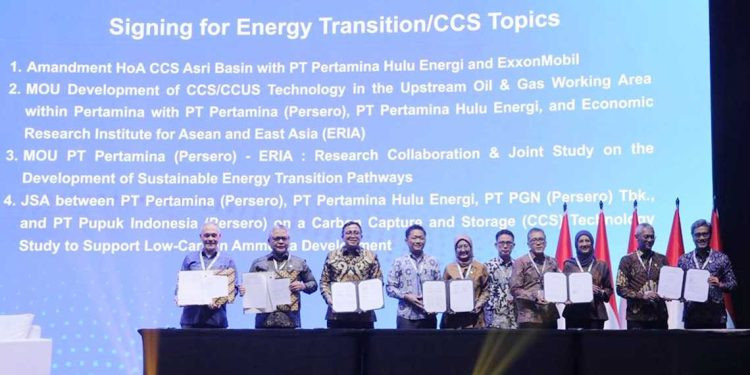
PT Pertamina Hulu Energi (PHE), a Pertamina upstream subsidiary, has reinforced its commitment to supporting the national energy transition agenda. Alongside PT Pertamina (Persero), PT Perusahaan Gas Negara Tbk (PGN), and PT Pupuk Indonesia (Persero), it signed a Joint Study Agreement (JSA) to explore the development of Carbon Capture and Storage (CCS) technology for low-carbon ammonia production in Indonesia.
The agreement was signed during the Indonesia Petroleum Association Convention and Exhibition (IPA Convex). The strategic collaboration aims to integrate emissions reduction efforts in the fertilizer industry with the upstream oil and gas sector’s carbon storage capabilities.
Through this partnership, carbon dioxide emissions from Pupuk Indonesia’s ammonia production facilities and affiliates will be captured. The greenhouse gas will then be transported and safely injected into geological formations within Pertamina’s operational areas, which have potential as permanent carbon storage sites.
The joint study will comprehensively explore the entire CCS value chain. The scope includes technical aspects of emissions capture at plants, efficient carbon transport methods, and injection into subsurface reservoirs.
Additionally, the parties will assess the potential for developing low-carbon ammonia production facilities using existing assets operated by Pupuk Indonesia and its affiliates. Initial plans involve studying excess CO2 volumes from industrial facilities for transport to potential storage sites in West and East Java. Both regions are considered strategic due to their proximity to industrial hubs and geological structures conducive to CCS implementation.
Dannif Utojo Danusaputro, PHE’s Director of Investment and Business Development, described the move as a significant milestone in building an integrated CCS ecosystem in Indonesia.
‘This cross-sector collaboration demonstrates a shared commitment to delivering tangible decarbonisation solutions for national strategic industries. The synergy is expected to unlock broader CCS development opportunities while supporting Indonesia’s net zero emissions target,’ Dannif stated in a release on Friday (22 May).
The agreement was signed by senior executives from each entity. The JSA was signed by Hana Timoti, Senior Vice President of Technology Innovation & Implementation at Pertamina; Dannif Utojo Danusaputro, PHE’s Director of Investment and Business Development; Hery Murahmanta, PGN’s Director of Strategy and Business Development; and Jamsaton Nababan, Pupuk Indonesia’s Director of Technical and Business Development.
The signing was witnessed by Firera, VP of Business Support at SKK Migas; Oki Muraza, Deputy President Director of Pertamina; and Awang Lazuardi, PHE’s President Director. The presence of these executives underscores cross-sector support for national CCS development.
Meanwhile, Hana Timoti, Senior Vice President of Technology Innovation & Implementation at Pertamina, stated that developing CCS for low-carbon ammonia is part of a strategy to expand low-carbon technology implementation in the national industrial sector.
‘This joint study exemplifies synergy within the Pertamina Group and national strategic partners to develop an integrated carbon value chain. Through CCS technology, we aim to support the development of low-carbon products such as ammonia while bolstering national industry competitiveness in the global energy transition,’ Hana said.
Through this partnership, PHE and its collaborators are optimistic that CCS adoption and commercialisation in Indonesia can be accelerated. The move is expected not only to strengthen domestic low-carbon business portfolios but also to position Indonesia as a regional player in providing sustainable energy solutions across Southeast Asia.
As part of its long-term sustainability commitment, PHE confirmed that all upstream oil and gas operations and business developments are conducted in accordance with Environmental, Social, and Governance (ESG) principles. The company also implements a Zero Tolerance on Bribery policy through its certified ISO 37001:2016 Anti-Bribery Management System (SMAP).