
Pharmacists' Role Increasingly Strategic in the Era of Self-Medication
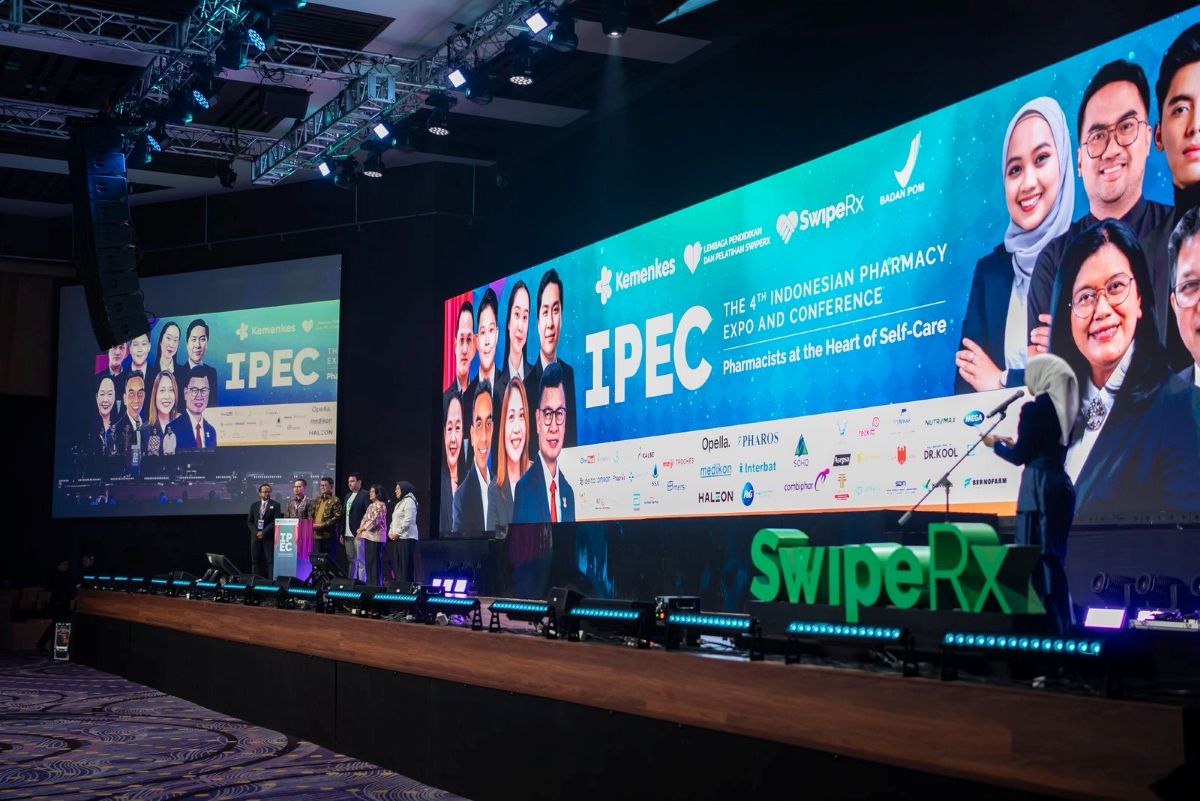
The increasing practice of self-medication within society makes the role of pharmacists ever more critical in maintaining safe, proper, and responsible medicine use. Amidst the torrent of health information and easy access to pharmaceutical products, pharmacy professionals are considered one of the front-line guards in ensuring the public receives quality education and health services. This role was a primary focus of The 4th Indonesian Pharmacy Expo & Conference (IPEC) 2026, held on 6 June 2026 at The Kasablanka Hall, Jakarta. Indonesia’s largest pharmacy conference and exhibition successfully brought together more than 1,500 pharmacists and pharmacy professionals, supported by over 40 pharmaceutical and health companies and featuring more than 15 national and international speakers. Entering its fourth year, IPEC has evolved into a collaborative forum bringing together regulators, professional organisations, academics, industry players, and pharmacy professionals to discuss challenges and the future direction of health services in Indonesia. This year, IPEC carried the theme ‘Pharmacists at the Heart of Self-Care’, highlighting the importance of pharmacists’ role in supporting safe, responsible, and patient-centred self-medication practices. The 2026 IPEC event is also part of the ongoing commitment of the SwipeRx Education and Training Institute (LPP) to improve the competency of Indonesian pharmacy professionals. As an education and training institution accredited by the Ministry of Health, LPP SwipeRx continues to deliver various continuous education programmes relevant to health sector developments. To date, LPP SwipeRx has reached more than 150,000 pharmacy professionals across Indonesia, distributed over 1.5 million Professional Credit Units (SKP), and presented more than 340 health education topics supporting professional competency improvement. The Head of the Food and Drug Supervisory Agency (BPOM), Taruna Ikrar, asserted that the increase in self-medication practices must be balanced by strengthened regulation, health education, and improved competency of pharmacy professionals. ‘The state must be present to ensure that people undertaking self-care obtain pharmaceutical products that are safe, of high quality, and efficacious, as well as accountable information. The regulator’s role is not to restrict, but to build a balance between public protection and support for health innovation,’ he said. According to Taruna, safe self-medication practice requires a strong regulatory foundation to protect the public from irrational drug use, medicine misuse, illegal product distribution, and health misinformation increasingly found in the digital space. He also stressed the importance of collaboration between government, regulators, academics, business actors, and the pharmacist profession in building a safe and sustainable self-medication ecosystem. This message became a main theme in various discussion sessions at IPEC 2026, which addressed the future of primary health services, strengthening self-medication practices, and the role of pharmacy professionals in improving the quality of public health access. The Director of LPP SwipeRx and Chair of the IPEC 2026 Committee, Imanuel Hutagalung, stated that the conference has grown into a national collaboration space for all health stakeholders. ‘IPEC is no longer just a learning forum. IPEC has become a national collaboration platform uniting all health stakeholders to advance the pharmacy profession and the future of Indonesian health. The presence of more than 1,500 pharmacists this year demonstrates the immense role and potential of this profession in creating an impact for society,’ he said. IPEC 2026 received support from various pharmaceutical and health companies, including Opella, Interbat, Haleon, Pharos, Medikon, P&G Health, Combiphar, and several other strategic partners. The success of IPEC 2026 demonstrates that the future of Indonesian health services requires strong cross-sector collaboration, placing the patient at the centre of every innovation and policy. Amidst the increasing role of self-medication in society, pharmacists will continue to be a key profession bridging access, education, and quality of health services. Through various educational and collaborative programmes, SwipeRx is committed to supporting the capacity building of Indonesian pharmacy professionals, while strengthening a more inclusive and sustainable health ecosystem. As the largest professional pharmacy community and platform in Southeast Asia, SwipeRx currently supports over 300,000 pharmacy professionals in Indonesia, Malaysia, the Philippines, Vietnam, Thailand, and Cambodia through various technology services, education, and professional development programmes oriented towards improving the quality of public health services.