
PGRI Launches National Movement to Train One Million Teachers in Coding and AI
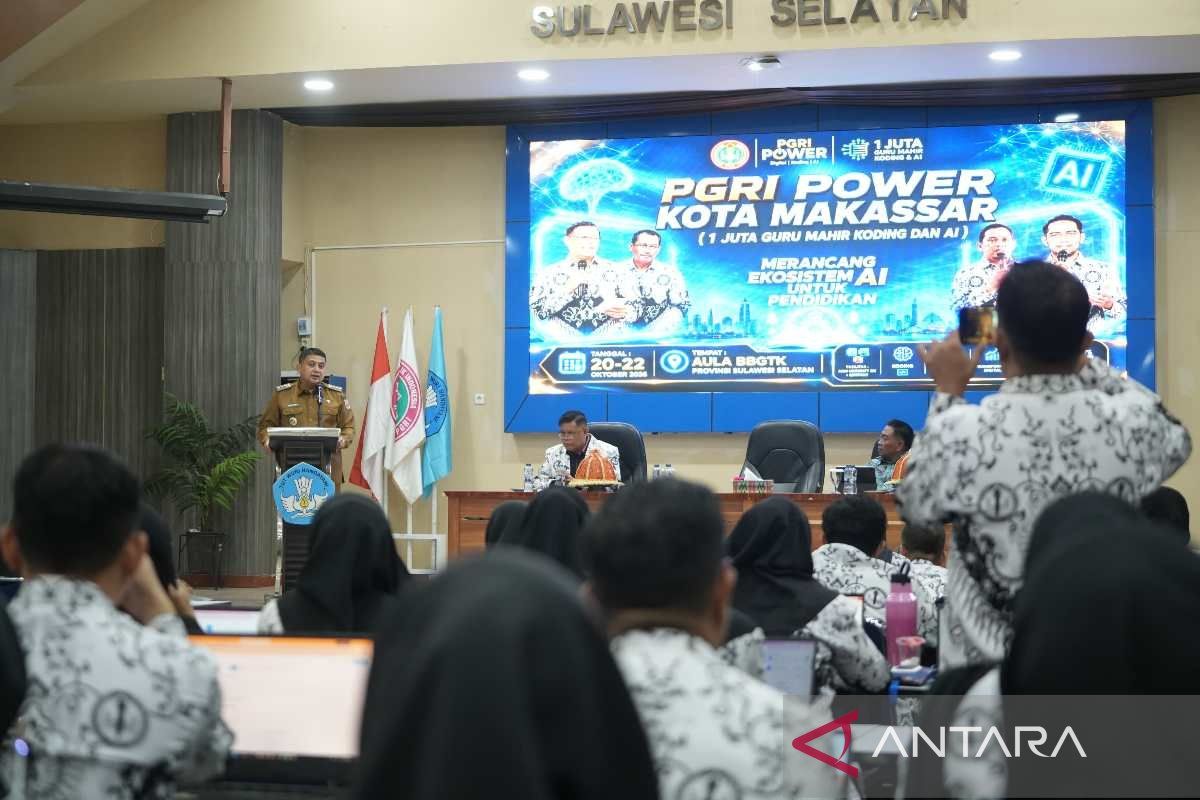
Makassar (ANTARA) – The Makassar branch of the Indonesian Teachers Association (PGRI) has launched the National Movement to Train One Million Teachers in Coding and Artificial Intelligence through its 2026 PGRI Power programme.
Makassar Mayor Munafri Arifuddin, speaking at the launch in Makassar on Tuesday, stressed the importance of teachers’ professionalism and adaptability as digital technology advances, particularly artificial intelligence (AI).
“If we think deeply and in detail about education, we are thinking about the future. A good and successful future must begin with a strong foundation in the present,” he said.
Munafri said teachers must do more than master conventional teaching methods; they also need to keep pace with the times to remain relevant to the characteristics and needs of today’s students.
Technology has changed almost every aspect of human life, he said. Algorithms and AI are now part of everyday life, shaping communication, access to information, and the ways young people learn and interact.
However, amid this rapid development, the mayor said technology could not fully replace teachers in education. Teaching and learning involve more than delivering material and transferring knowledge: empathy, care and spirit are essential to the relationship between teachers and students.
The challenge for teachers, therefore, is not to avoid technological progress but to master it and use it to make learning more effective, engaging and suited to the needs of today’s generation.
“We want teachers to be able to master technology and make it an appropriate tool for delivering a good learning process for our children,” he said.
Munafri also highlighted the differences in student characteristics from one generation to the next. Changes in children’s communication and behaviour, he said, should not be judged solely by the standards of educational experiences in the past.
In the past, teachers’ authority tended to keep pupils at a distance. Today, students are more open to communicating with teachers, asking questions and expressing their views directly. “This change is part of the dynamics of the times that educators need to understand,” he said.
Teachers, he added, need to be adaptable so they can communicate effectively with students and understand the language, ways of thinking and digital environments that shape their lives.
“Our task is to be adaptable teachers. That is the key: being adaptable and able to keep up with developments,” he said.
According to Munafri, adaptability is an important part of teachers’ professionalism. By understanding changes in society, educators can offer more relevant approaches to learning without losing sight of education’s fundamental values.