
PGN Undertakes Study of CCS Ecosystem and Carbon Dioxide Transport
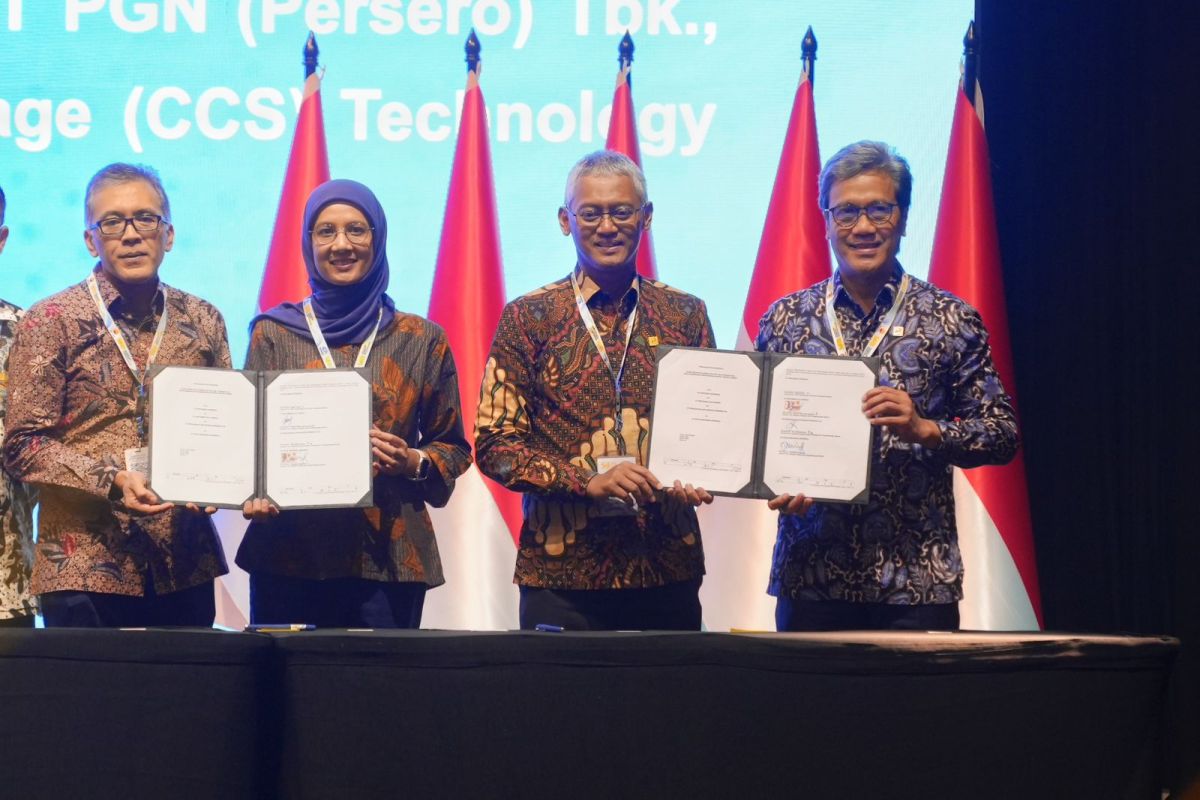
Jakarta (ANTARA) - PT Perusahaan Gas Negara (Persero) Tbk (PGN), as the Gas Subholding of PT Pertamina (Persero), is developing a study of the carbon capture and storage (CCS) ecosystem and carbon dioxide (CO2) transport.
PGN’s Director of Infrastructure and Technology Hery Murahmanta, in a statement in Jakarta on Friday, said the company continues to support the development of low-carbon ammonia.
At the IPA Convex 2026 event in Jakarta, on Thursday (21 May 2026), PGN signed a joint study agreement (JSA) on CCS technology studies.
This strategic collaboration is undertaken with Pertamina’s Upstream Holding, PT Pertamina Hulu Energi (PHE), and PT Pupuk Indonesia (Persero) in order to develop low-carbon ammonia (blue ammonia) in Indonesia.
According to Hery, through this cooperation, the parties will conduct a comprehensive study to examine the technical, legal, economic, and commercial aspects related to developing the CCS ecosystem.
The main focus of this synergy is to create an efficient and sustainable low-carbon ammonia supply chain, from carbon emission capture, CO2 transport, to injecting CO2 into safe underground geological formations.
“In this CCS collaboration, PGN takes the role of providing CO2 transport. This step is one of the pillars in PGN’s step-out strategy to widen its business portfolio into clean energy and decarbonisation,” Hery explained.
To support the initiative, PGN will optimise its assets and resources, including existing natural gas infrastructure and capabilities in developing a pipeline network.
One of the emphasised strategies is the utilisation of the existing gas pipeline right of way (ROW) for developing the CO2 transport network.
“This collaboration is a tangible manifestation of PGN in integrating gas infrastructure with future technology to reduce carbon emissions,” he said.
Utilising the ROW of existing pipelines will speed up the integration of the CCS ecosystem efficiently, while also reinforcing our role as the main CO2 transporter moving forward.
The joint study will map strategic regions with great potential for developing the CCS ecosystem and low-carbon ammonia production.
The initial focus areas within this study corridor include West Java and East Java, which have industrial clusters with large energy needs/intensity.
Additionally, the parties will evaluate other regions deemed strategic from the perspectives of infrastructure and economic viability.
The synergy between Pertamina Group and Pupuk Indonesia is expected to pioneer CCS development in Indonesia.
By combining the upstream expertise of PHE, PGN’s infrastructure strength, and the fertiliser and ammonia industry capabilities of Pupuk Indonesia, the project is targeted to create new economic value while strengthening national energy security in a more environmentally friendly manner, Hery noted.