
PGN Showcases Gas Infrastructure Readiness in Sumatra to Investors
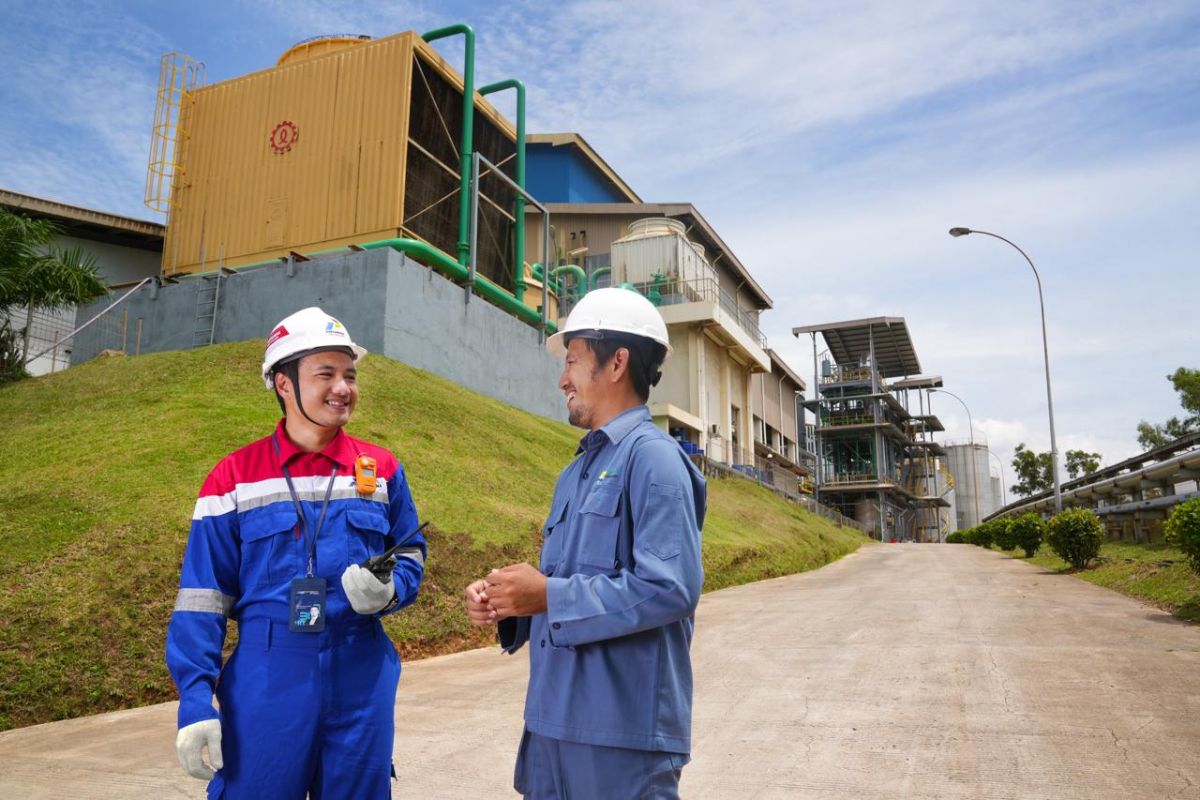
For PGN, the integration of the natural gas network provides greater flexibility in managing supply while opening access to new gas sources.
Jakarta (ANTARA) - PT Perusahaan Gas Negara (Persero) Tbk (PGN) invited the company’s largest retail investors to directly review its natural gas operations facilities in North Sumatra, as part of efforts to strengthen transparency whilst demonstrating infrastructure readiness, which forms the foundation of business growth in the Sumatra region, including the Riau Islands.
PGN’s Director of Infrastructure and Technology, Heri Murahmanta, said in Jakarta on Monday that the review provided a comprehensive picture of infrastructure management, supply reliability, and the potential for natural gas market development, which will be further strengthened through various strategic projects, including support for the construction of the North Sumatra-Riau (Sutri) transmission pipeline being carried out by the Ministry of Energy and Mineral Resources.
The development of this network is expected to further increase supply connectivity whilst opening opportunities for natural gas utilisation in various centres of economic growth.
As of April 2026, PGN’s Sales and Operation Region I (SOR I) distributed 147 BBTUD of natural gas to more than 136,000 customers across Sumatra, including the Riau Islands.
Heri explained that the region has complementary market characteristics, namely high-volume anchor industrial customers in Batam and high-penetration markets in Palembang and Medan.
“The combination of these market characteristics is a strength for PGN in maintaining healthy and sustainable business growth, whilst creating a customer portfolio with a more measurable risk profile,” said Heri.
In terms of infrastructure, PGN’s operations in North Sumatra, as the Gas Subholding of PT Pertamina (Persero), are also supported by a network managed by its subsidiary, PT Pertamina Gas Operation North Sumatera Area (ONSA).
This network is integrated with various domestic supply sources, including the Arun LNG regasification facility and supplies from a number of upstream blocks, which are then distributed to meet the needs of power plants, industrial estates, and the fertiliser sector.
According to Heri, the development of the North Sumatra-Riau transmission pipeline will be a strategic step in strengthening gas network connectivity on the island of Sumatra.
The transmission network will connect the northern, central, and southern parts of Sumatra, thereby expanding the flexibility of natural gas distribution from Aceh to Lampung.
“For PGN, the integration of the natural gas network provides greater flexibility in managing supply whilst opening access to new gas sources. With an increasingly connected system, domestic gas utilisation can be optimised to meet the needs of various economic sectors more reliably and efficiently,” Heri explained.
In addition to strengthening inter-regional connectivity, PGN currently operates a 1,834-kilometre natural gas pipeline network serving household, small, commercial, and industrial customers in the northern Sumatra region.
The presence of offtake stations, such as Pasar IX, also increases distribution flexibility whilst supporting the efficiency of gas network development in the future.
Heri added that strengthening the transmission and distribution networks is part of PGN’s long-term strategy to optimise the utilisation of domestic natural gas.
This strategy is supported by the integration of pipeline and non-pipeline infrastructure, including CNG and LNG, enabling PGN to reach increasingly diverse customer needs across various regions.
“Sumatra and the Riau Islands have very promising industrial growth potential. With an increasingly integrated network, reliable supply, and a continuously developing infrastructure portfolio, PGN is optimistic that it can expand natural gas utilisation, strengthen sustainable business growth, and create long-term added value for shareholders,” said Heri.