
PGN Launches Household Gas Network Project Using CNG Clusters
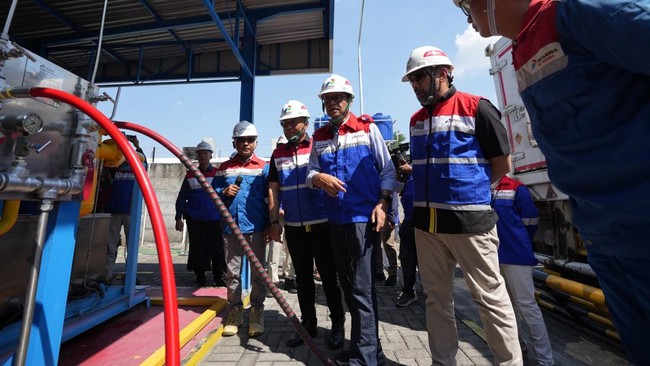
PT Perusahaan Gas Negara Tbk (PGN) is executing a showcase project for household gas networks using a Compressed Natural Gas (CNG) clustering scheme in Sleman Regency, Yogyakarta. PGN President Director Arief K. Risdianto stated that the CNG clustering innovation provides an energy distribution solution without having to wait for the completion of main transmission pipelines in a region. “The public need not worry about safety, because high-pressure CNG at around 200 bar has been adjusted with the cluster system to flow safely into household kitchens,” he explained in a written statement on Monday (22/6/2026). Beyond targeting households, the utilisation of natural gas also delivers efficiency benefits for local businesses in Yogyakarta, including the MSME and restaurant sectors. One commercial customer, Rumah Makan Payakumbuah, reported energy cost savings of up to 33 per cent since switching to PGN’s natural gas, with a usage volume reaching 2,300 m3. “PGN is committed to ensuring that the benefits of natural gas can be felt fairly and sustainably by all levels of society,” he said. To date, the Pertamina Gas Subholding has built more than 4,500 house connections in Sleman, supported by a distribution pipeline network spanning 141 kilometres. PGN recorded that the average natural gas distribution to customers in the area has reached 84 thousand cubic metres per month, equivalent to substituting the use of 64 metric tonnes of LPG. PGN is also synergising infrastructure owned by its subsidiary, PT Gagas Energi Indonesia. Currently, the company, through Gagas, operates 14 CNG filling stations and 4 mobile refueling units to reach consumers in the transportation, commercial, and industrial sectors. Meanwhile, Deputy Minister of Energy and Mineral Resources Yuliot Tanjung appreciated PGN’s readiness to provide cleaner transition energy for the community in Sleman Regency. The government, through the 2026-2029 National Medium-Term Development Plan, has targeted the construction of approximately 350,000 house connections per year to strengthen energy security in various regions. “The use of CNG and household gas networks impacts the efficiency of housewives, being practical and safe. For the Government, it can reduce subsidised LPG consumption and ease the burden of subsidies and LPG imports,” Yuliot said during a field inspection in Sleman, in a written statement on Monday (22/6/2026).