
PGI Chairman Responds to JK's Statement on Poso-Ambon Conflict
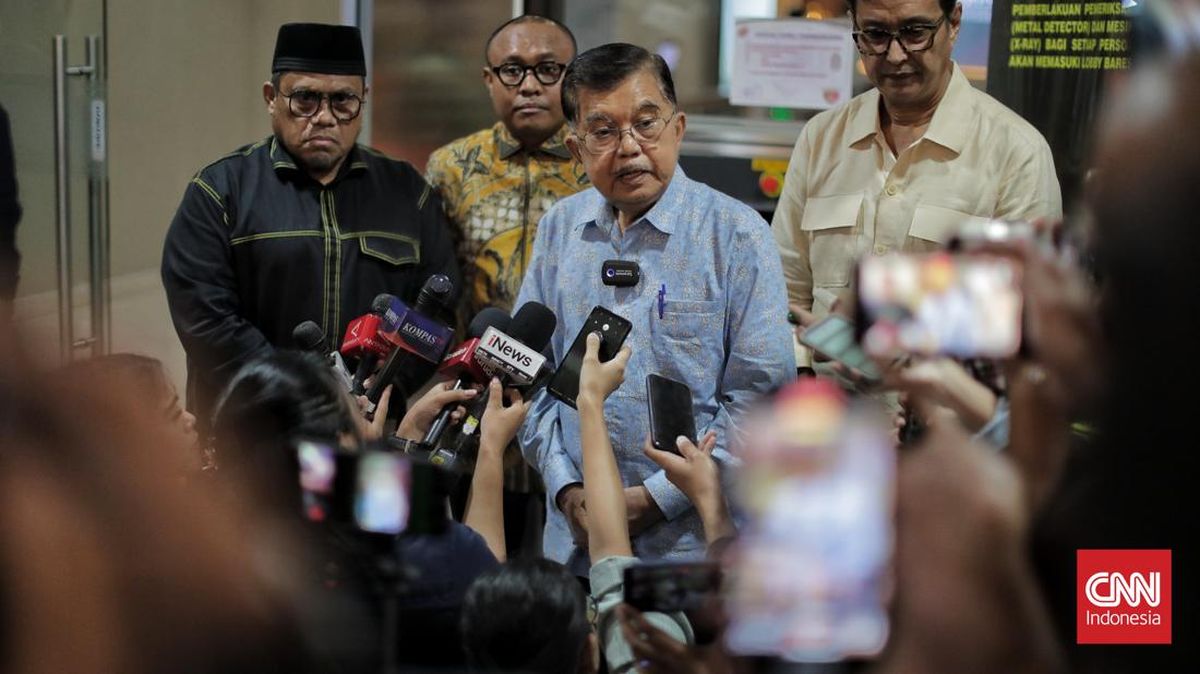
PGI Chairman Rev. Jacky Manuputty opines that Jusuf Kalla’s statement touching on the Poso and Ambon conflicts as examples of religion being an easy pretext to justify violence is not entirely incorrect.
Jusuf Kalla’s statement in a public lecture at UGM on 5 March 2026 was reported to the police for alleged blasphemy against Christian teachings. The report was filed by the Central Executive Board of the Indonesian Christian Youth Movement (GAMKI) and several other organisations.
“This statement, if read in the historical context of the Poso and Maluku conflicts, is not entirely incorrect. We cannot turn a blind eye to the fact that at that time, religion indeed appeared with a distorted face,” said Jacky in his statement, quoted on Wednesday (15/4).
Jacky, who is also a member of the Christian delegation in the Malino II agreement for reconciliation of the Maluku conflict, claims to have directly experienced the dynamics of that conflict.
He personally witnessed how religious legitimacy, prayers, spiritual hymns, and blessings from religious figures often became prerequisites before combatants descended into the field of conflict.
“The word Shalom, meaning peace, was even frequently shouted as encouragement in Christian communities before heading to clash areas,” he said.
He also stated that the conflict, which actually rooted in social and political injustices, was perceived as a ‘religious conflict’, thus giving violence a moral and sacred aura.
Jacky conveyed that the experience of the Poso and Ambon conflicts serves as a lesson that religion can become a victim of deteriorating social-political situations.
According to him, when injustice, fear, and collective trauma meet religious symbols, sacred meanings can shift into destructive justifications.
“Jusuf Kalla’s statement opens up space for reflection that we need to nurture. Not to blame religion, but to understand how religion can be misused in conflict situations,” he said.
Nevertheless, Jacky noted that there is a part of JK’s statement that needs correction, particularly equating the concept of ‘shahid’ in Islam with Christianity as legitimation for mutual killing.
He explained that in Christian tradition, there is no doctrine stating that killing others can result in the status of martyrdom. The term often used in Christian communities is ‘martyr’, which means willingness to suffer and die to defend faith, not dying while carrying out attacks.
“It is true that in the context of the Maluku conflict, the term ‘martyr’ underwent a shift in meaning. A Christian who died in an act of aggression was often called a martyr. This is not church teaching, but a distortion of meaning that emerged in conflict situations,” he stated.
Jacky further opined that this phenomenon shows that when collective identity is threatened, religious language can shift into a tool for justifying violence.
In addition, Jacky also mentioned numerous academic studies that have long warned about the potential corruption of religion in conflict situations.
He believes that from that perspective, JK’s statement about the ease of using religion as a reason for conflict has a strong basis.
However, he still states that equating the concept of martyrdom in Islam and Christianity as legitimation for killing is an inappropriate theological simplification.
“What happened in the field was not religious teachings encouraging violence, but deviations in the meaning of religion by the actors involved in the conflict,” he said.
Separately, JK’s spokesperson, Husain Abdullah, has also refuted the allegations of blasphemy against Christian teachings as filed by the GAMKI Central Executive Board and several other organisations.
Husain stated that the viral video post on social media lacks its full context. The video in question contains JK’s statement referring to both sides in the Poso and Ambon conflicts with the term ‘dying as shahid’.
“After investigation, that accusation is the result of context cutting. We firmly refute that accusation,” said Husain when confirmed via written message on Sunday (12/4) night.
Husain explained that JK’s statement actually emphasised that no religion in the world teaches its followers to kill each other.
“This mistaken view of both sides was what Mr JK first corrected, that no religion allows mutual killing. This was conveyed to the war commanders at that time,” he said.