
PGE Targets 1 GW Capacity by 2028, Aims to Become World's Largest Geothermal Player
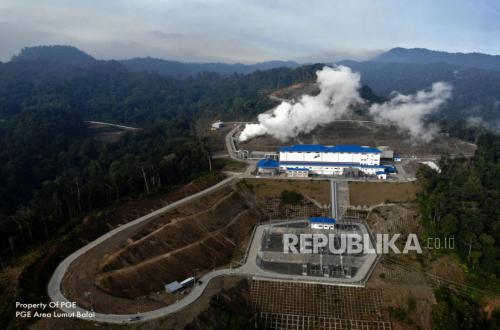
JAKARTA – PT Pertamina Geothermal Energy Tbk (PGE) is targeting an installed geothermal power generation capacity of 1 gigawatt (GW) by 2028, rising to 1.8 GW by 2038. PGE President Director Ahmad Yani said the target forms part of efforts to support the government’s aim of making Indonesia the world’s largest geothermal electricity producer by 2030.
Ahmad said the company has prepared a development roadmap aligned with the 2025-2034 Electricity Supply Business Plan (RUPTL), which allocates a substantial share to new and renewable energy, including geothermal.
“PGE’s installed capacity is currently around 727 megawatts. Our target is to become a company with 1 gigawatt of capacity by 2028 and 1.8 gigawatts by 2038. The potential we are ready to develop is around 3 gigawatts,” Ahmad said during a presentation of the company’s first-half 2026 performance in Jakarta on Tuesday (4/8/2026).
He said Indonesia holds around 40 percent of the world’s geothermal potential, giving it a major opportunity to strengthen national energy security through clean, sustainable domestic energy sources.
Ahmad explained that the government has set around 5.2 GW of geothermal development within the 2025-2034 RUPTL as part of a generation mix dominated by new renewable energy.
Beyond increasing generation capacity, PGE has also begun developing businesses outside electricity sales to maximise the economic value of geothermal resources. One project being prepared is the development of green hydrogen at the Ulubelu field in Lampung.
PGE is targeting the pilot project to begin operations in November 2026 with a production capacity of around 100 kilogrammes of green hydrogen per day. According to Ahmad, the project marks the first step in building a national hydrogen ecosystem before it is developed into a commercial business in the coming years.
“We see the green hydrogen market continuing to grow. This is an opportunity that must be seized because Indonesia has enormous geothermal potential,” he said.
In addition to green hydrogen, PGE is developing green energy supply for data centres (green data centres), direct use of geothermal heat, and FloW2Max technology, which has been marketed to six countries.
He said this diversification is expected to become a new revenue stream that can strengthen the company’s core geothermal business.
This year marks an important moment for Indonesia’s geothermal industry as it marks 100 years since the drilling of the first geothermal well at Kamojang, Garut. The Kamojang-3 well, drilled in 1926, still produces steam today and stands as a historic milestone in national geothermal development.
PGE views the centenary of geothermal energy not merely as a historical record, but also as an opportunity to demonstrate Indonesia’s leadership in geothermal energy development at the global level.
In his presentation, Ahmad Yani noted that geothermal has advantages over other renewable energy sources because it can supply electricity continuously with a capacity factor above 90 percent.
As a baseload power source, geothermal is considered capable of complementing solar power, whose output depends on weather conditions.
“Geothermal can operate 24 hours a day, seven days a week. That is why geothermal is a very important pillar supporting the development of other renewable energy,” he said.
In terms of sustainability, Ahmad Yani said geothermal development delivers three benefits at once: strengthening energy security, protecting the environment through clean energy provision, and improving the welfare of communities around operational areas.
He cited PGE’s operations at Kamojang, which have run for more than four decades and earned 15 Company Performance Rating Programme (PROPER) awards as recognition for environmental management and community empowerment.
Meanwhile, operationally, PGE recorded positive performance throughout the first half of 2026. Ahmad Yani said electricity production reached around 5,530 gigawatt-hours (GWh) with a plant availability rate of 99.15 percent.
He said the company has also maintained strong financial fundamentals through operational efficiency and competitive financing costs, leaving it ready to support the development of new projects, including projects financed through green bond schemes.
He added that a number of expansion projects that already have power purchase agreements (PPA) are continuing, to accelerate the increase in generation capacity towards the company’s target of becoming a global geothermal centre of excellence.