
PGE strengthens Indonesia's energy sovereignty through geothermal power
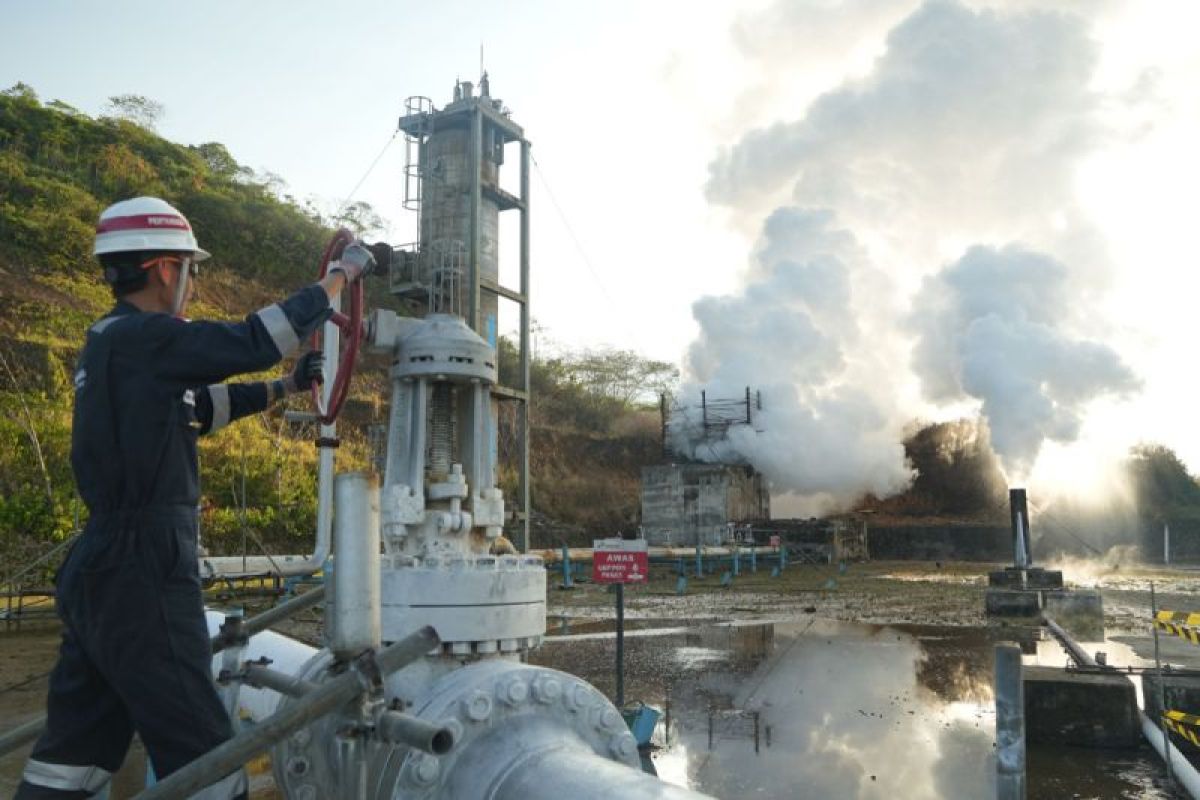
PT Pertamina Geothermal Energy Tbk (PGE) has affirmed its commitment to supporting the government’s agenda to accelerate the energy transition, thereby strengthening energy security and safeguarding national energy sovereignty, particularly in the lead-up to the 81st anniversary of the Republic of Indonesia.
“Energy sovereignty begins with our ability to rely on our own strengths. Indonesia is blessed with enormous geothermal potential, and our task is to transform that blessing into tangible benefits for society,” said PGE President Director Ahmad Yani in a statement in Jakarta on Monday.
Ahmad Yani said Pertamina Geothermal continues to optimise geothermal energy potential as a clean and reliable local energy source.
This commitment is becoming increasingly relevant amid geopolitical dynamics and global energy uncertainty, where geothermal energy is one of the strategic resources that can strengthen that foundation.
Currently, he said, Indonesia has geothermal potential of around 24 gigawatts (GW), yet its utilisation remains below 12 percent. Of that total, PGE itself currently holds around 3 GW of geothermal potential within the company’s geothermal working areas, with independently operated installed capacity reaching 727 megawatts (MW).
He said energy sovereignty is not merely about meeting energy demand. Energy sovereignty means ensuring Indonesia has reliable domestic energy sources capable of supporting economic growth and public welfare.
“Geothermal energy is a local energy source that can operate 24 hours a day, does not depend on imported fuel, and is not directly affected by weather changes. Therefore, geothermal energy is not only important in the clean energy transition, but also part of Indonesia’s journey towards energy sovereignty,” said Ahmad Yani.
This commitment is reflected in the operational reliability PGE has built over more than four decades.
Throughout the first half of 2026, according to Ahmad Yani, PGE’s electricity production reached 2,745 gigawatt-hours (GWh), growing 13.62 percent year-on-year. The company also recorded an availability factor of 99.71 percent and a capacity factor of 90.42 percent, demonstrating geothermal energy’s consistency as a source capable of supplying electricity stably.
However, geothermal energy’s contribution does not stop at these operational figures. Beyond simply delivering clean energy-based electricity to people’s homes, geothermal energy also provides added value through direct utilisation that has been felt by communities across PGE’s various working areas.
According to him, in Ulubelu, Lampung, for example, PGE has developed the Melon Geothermal innovation, which combines geothermal potential with knowledge transfer to local farmers.
A similar collaborative model has also been applied in Lahendong, where PGE is working with Gadjah Mada University to develop the Katrili booster fertiliser from geothermal silica, which has been proven to increase crop yields, plant resilience, and fertiliser cost efficiency for surrounding farmers.
A similar approach, he said, continues in Karaha through the Eco Eduwisata Kampung Kopi programme, which produces COMBINE fertiliser based on geothermal brine and local organic materials.
Meanwhile, in Kamojang, PGE has been working with farmers since 2018 to develop a Geothermal Dry House that utilises waste steam from geothermal steam traps.
This technology serves as an alternative heat source to accelerate coffee drying efficiently and in an environmentally friendly manner. This series of innovations proves that geothermal benefits can contribute positively to driving the local economy.