
PGAS Responds to Industrial LNG Price Adjustment
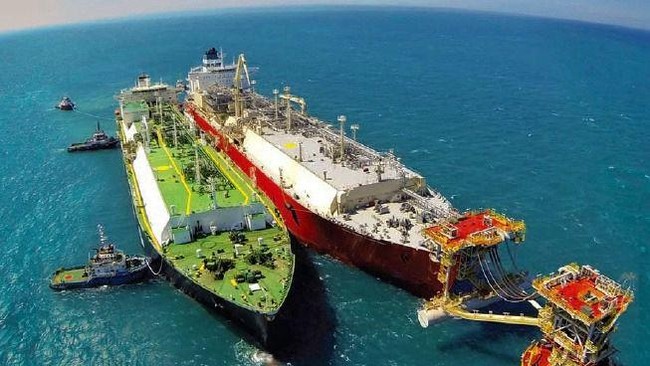
PT Perusahaan Gas Negara (Persero) Tbk (PGAS) has spoken out regarding the government’s policy to lower Liquefiente Natural Gas (LNG) prices for the industrial sector.
PGAS explained that previous increases in industrial LNG prices were driven by surges in global energy prices and a decline in domestic energy supply production. Furthermore, the company noted that LNG pricing components cannot be equated with piped gas due to additional costs such as liquefaction, transportation, storage, procurement, and the regasification process.
In response to these price hikes, the government, through the Ministry of Energy and Mineral Resources (ESDM), has established a policy to reduce industrial LNG prices to maintain the competitiveness of national industries. This policy is being implemented through the optimisation of cost structures and increased efficiency across the entire LNG supply chain, ranging from upstream gas prices and processing costs to infrastructure and trading components.
“As a form of support for the Government’s policy, the Company is ready to implement said policy while maintaining the profitability of the gas trading business and the Company’s overall business,” the company stated in a disclosure to the Indonesia Stock Exchange (BEI).
The company is also committed to ensuring that the natural gas supply remains reliable, safe, and sustainable to support industrial competitiveness, strengthen national energy security, and provide benefits to the economy, society, and relevant stakeholders.
“As of this Information Disclosure, the policy to reduce industrial LNG prices has no impact on operations. For other impacts, including the Company’s financial condition, studies/analyses will be conducted in accordance with the implementing regulations to be established by the Government,” it explained.
For context, the government has established three categories of natural gas prices. First, the Specific Natural Gas Price (HGBT), which remains in the range of US$ 6.5 to US$ 7 per MMBTU for seven priority industrial sectors.
Second, non-HGBT piped gas prices in the West Java region are confirmed to experience no increase, remaining at an average of US$ 9.6 per MMBTU. Third, non-HGBT LNG prices for the West Java, Banten, and Jakarta regions have been reduced from the previous US$ 20.57 to US$ 13 per MMBTU.
Previously, the Minister of Energy and Mineral Resources, Bahlil Lahadalia, stated that the adjustment of LNG prices to US$ 13 per MMBTU was achieved by reducing the government’s share of revenue and improving operational cost efficiencies in several state-owned enterprises. This step was taken after the government coordinated with production sharing contract contractors (KKKS), PT Pertamina (Persero), and PGAS.
“Everything is affected. There is the government’s share in the upstream sector. Then in the downstream, we also asked them to reduce costs. We also asked Pertamina to reduce theirs. So, from the KKKS, the government, and PGN, there are reductions,” said Bahlil following a press conference at the DPR RI Building, Jakarta, on Monday (29/06/2026).
According to Bahlil, the policy was adopted after international LNG prices surged sharply, briefly reaching US$ 23 per MMBTU. The government intervened to suppress energy procurement costs for domestic industries without altering the HGBT prices, which remain in the US$ 6.5 to US$ 7 per MMBTU range.