
PEVC 2026 to Discuss Fleet Electrification and Green Logistics
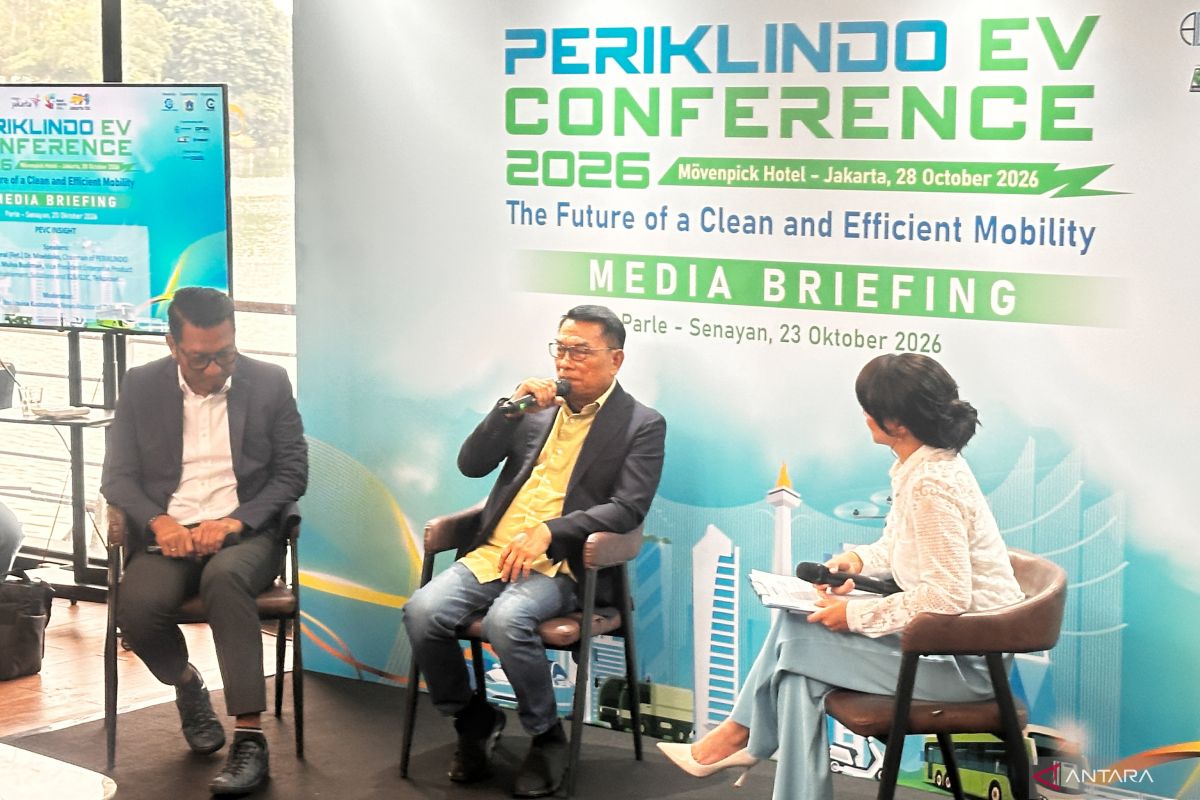
Jakarta (ANTARA) – The Indonesian Electric Vehicle Industry Association (Periklindo) will hold the Periklindo Electric Vehicle Conference (PEVC) 2026 on 28 October 2026 at the Movenpick Hotel Jakarta, focusing on the electrification of commercial fleets and the development of a green logistics ecosystem.
The conference will adopt the theme “The Future of Clean and Efficient Mobility”, covering opportunities, challenges and strategies for electrification across the transport and logistics sectors.
“People from different communities, universities, research institutions, industry and other fields will gather to discuss the future of EVs [electric vehicles],” Periklindo chairman Moeldoko said at a press conference in Jakarta on Friday.
PEVC 2026 is designed as an international forum bringing together the government, regulators, industry players, investors, academics, researchers and technology companies to discuss the development of mobility, investment and technology in support of a low-carbon economy.
This year’s conference will be divided into two sub-themes: “Green Commercial Fleet: Transforming Logistics with Electric Vehicles” and “Beyond Roads & Last-Mile: Optimising Urban Delivery, Maritime, and Industrial Electrification”.
The first sub-theme will examine accelerating the adoption of electric vehicles in commercial fleets. Topics include the need for clear electricity tariff arrangements for commercial users, more reliable power networks along key logistics routes, and incentives for converting and procuring environmentally friendly fleets.
Alongside infrastructure readiness and policy support, understanding the total cost of ownership (TCO) is an important factor in assessing the investment viability of electric vehicles for business operations.
The conference will also discuss the readiness of power-management systems for cold-chain operations and lessons from logistics companies’ experience in electrifying their fleets, with the aim of encouraging wider EV adoption.
Developing a green logistics ecosystem will also require collaboration among business-to-business (B2B) electric vehicle providers, telematics and Internet of Things (IoT) solution providers, energy suppliers such as state electricity company PT PLN (Persero), and supply-chain companies.
The second sub-theme will address expanding electrification beyond road transport and last-mile delivery, including the integration of electric transport modes, the maritime and aviation sectors, and the standardisation of charging infrastructure for industrial needs.
Technology will also be a focus in efforts to optimise logistics operations. The use of artificial intelligence (AI) in fleet management is seen as a way to support data-based decision-making and improve operational efficiency.
Meanwhile, reusing batteries as energy storage systems (ESS) could support circular-economy principles while broadening the use of energy resources.
Implementing these solutions will require cross-sector collaboration, including among regulators such as the Ministry of Transportation, developers of electric vertical take-off and landing (eVTOL) aircraft, energy companies and logistics associations.
Such collaboration is expected to align policy direction, technology development, infrastructure readiness and industry needs, accelerating the transformation of the transport and logistics sectors.
Through PEVC 2026, the organisers hope the discussions will produce relevant policy recommendations, strengthen industry participants’ practical knowledge and create strategic partnership opportunities to accelerate transport electrification and develop a green logistics ecosystem in Indonesia.
These efforts are expected not only to help reduce emissions, but also to improve operational efficiency, strengthen industrial competitiveness and support a more integrated and sustainable transport and logistics system.