
Petrol Station Attendant Involved in Bali Pertalite Hoarding Syndicate
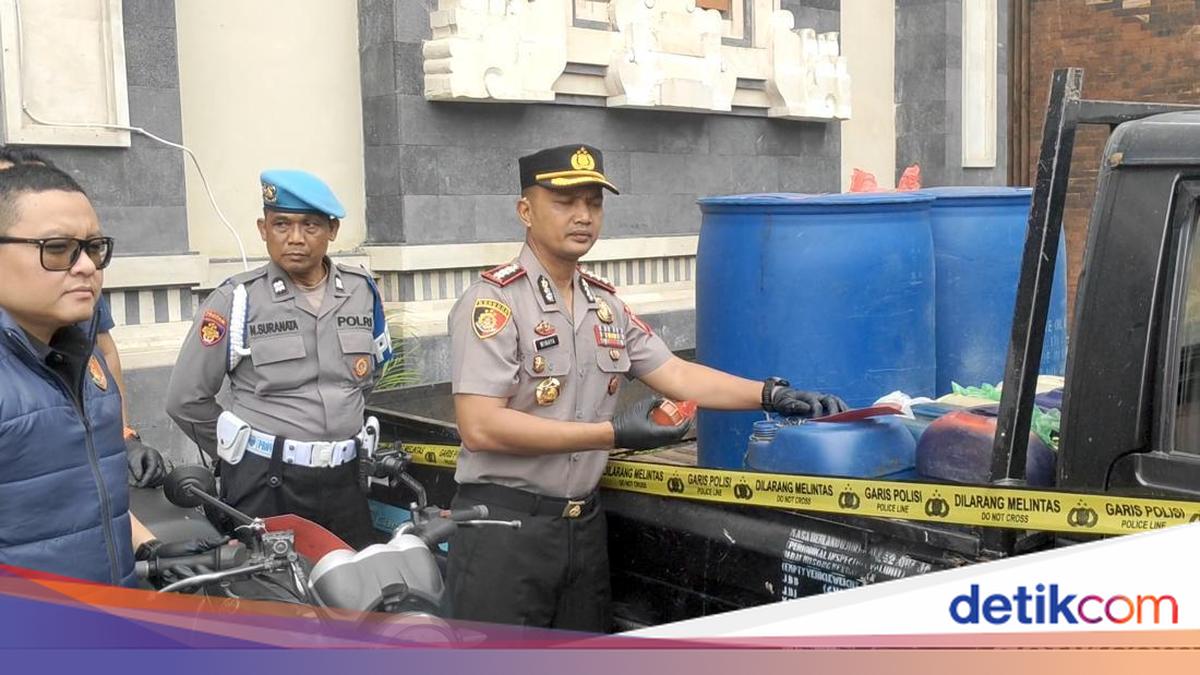
A Pertalite hoarding syndicate in Bali has been uncovered, with a rogue petrol station employee allegedly involved in the misuse of subsidised fuel. The syndicate used dozens of consumers’ barcodes to buy Pertalite, which was then stockpiled and resold.
Police exposed the case on Jalan Trengguli, Penatih sub-district, on Thursday (22 October 2026). Four people were detained: AS, 25; ANR, 30; IN; and IPS, 38.
“We detained these four people, each of whom had a role as a financier, or as a motorbike or pick-up driver used to transport the fuel. The fuel was Pertalite,” Denpasar Police Chief Commissioner I Wayan Winaya said at a press conference at Denpasar Police Headquarters on Sunday (25 October 2026).
Sold to small shops
Winaya said the syndicate had carried out the scheme repeatedly. AS acted as financier and managed the storage and distribution of Pertalite to small shops. IPS was an operator at the petrol station on Jalan Padma, Penatih sub-district, East Denpasar, and allegedly helped transactions using barcodes to go through.
ANR and IN were responsible for buying Pertalite using a pick-up and a motorbike. The accumulated fuel was then siphoned from the vehicles’ tanks with a special pump and transferred into drums and jerrycans.
“One jerrycan, as you can see here, holds 30 to 35 litres. In total, we seized almost 750 litres. They bought the fuel, while the person identified as PS waited with the barcodes. Around 57 barcodes were used to make at least five to 10 round trips to the petrol station each day,” Winaya said.
Denpasar Police Criminal Investigation Unit chief Commissioner Agus Riwayanto Diputra said the barcodes had come from petrol station customers. An operator is suspected of photographing them without the owners’ knowledge.
“This was their own scheme. The petrol station employee obtained the barcode from customers when they presented it at the station. They usually show it on a phone or display the barcode, and the employee secretly photographs it so it can be used,” Agus added.
Police seize 795 litres of Pertalite
At the storage site on Jalan Trengguli, police seized 795 litres of Pertalite: two 210-litre plastic drums, 12 30-litre jerrycans and one 15-litre container. Other evidence included a pump and hose, five purchase receipts, 39 barcode sheets and Rp3.2 million in cash.
The Pertalite, purchased using subsidised fuel allocations, was resold to small shops and Pertamini outlets. The suspects charged Rp350,000 per jerrycan if buyers collected it themselves, or Rp400,000 if it was delivered.
The illegal business generated revenue of up to Rp75 million a month. Police said the operation had been running for a month, including during a period of fuel supply shortages experienced by the public several weeks earlier.
“It made it appear as though the people filling up were the actual customers, when they were not. That is why a petrol station operator was also involved. The public’s quotas were being used. We will investigate the roles of each of these four people further,” said Winaya, a former Kuta police chief.
The suspects are accused under Article 55 of Law No. 22 of 2001 on Oil and Gas, as amended by Law No. 6 of 2023 on Job Creation. They face a maximum prison sentence of six years and a fine of up to Rp60 billion.
Police urged the public to keep their subsidised-fuel barcodes or QR codes confidential. Investigators are also examining whether sanctions may be imposed on the petrol station’s management.
Source: jawawa.id (https://jawawa.id/newsitem/petrol-station-attendant-involved-in-bali-pertalite-hoarding-syndicate-1792986626)
Originally published by detikBali (https://www.detik.com/bali/hukum-dan-kriminal/d-8724056/petugas-spbu-terlibat-sindikat-penimbunan-pertalite-di-bali), translated from Indonesian