
Petrol Car Sales Fall, BEVs Rise — Toyota Boss Has This to Say
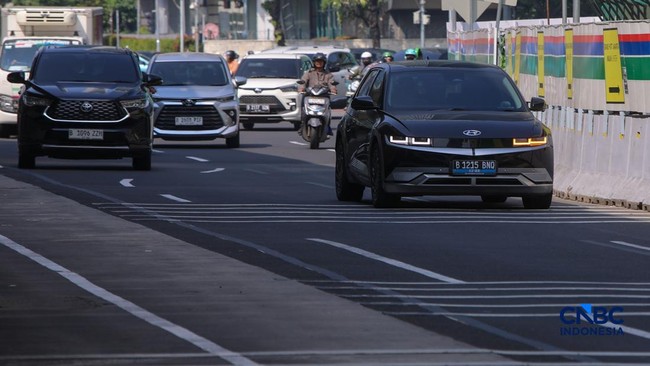
Sales of battery electric vehicles (BEVs) in Indonesia continue to show growth. On the other hand, the distribution of petrol-fuelled vehicles declined month-on-month in August 2026. Toyota-Astra Motor (TAM) views this development as both a challenge and an opportunity for the national automotive industry.
Based on data from the Indonesian Automotive Industry Association (Gaikindo), wholesale sales of the petrol-fuelled vehicle segment — comprising LCGC, non-LCGC ICE passenger cars, and commercial vehicles — reached 54,683 units in August 2026. This figure fell 4.34% compared to July, when it reached 57,166 units.
Over the same period, sales of purely electric cars actually recorded a surge. BEV distribution from factories to dealers rose from 13,972 units in July to 17,413 units in August 2026, growing 24.63% in just one month.
However, Bansar Maduma, Marketing Director of PT Toyota-Astra Motor, said the situation does not yet indicate that Indonesian consumers have fully abandoned internal combustion engine (ICE) vehicles.
“This is indeed a challenge. Not only for Toyota, but also for the national automotive world,” said Bansar during the 2026 Toyota Journalist Test Drive on Tuesday (15/9/2026).
ICE vehicles remain the majority choice among the Indonesian public. For this reason, Toyota believes market needs cannot be answered through only one type of vehicle technology.
“As you may know, the majority is still ICE compared to BEV. And it is certainly still very much needed by the Indonesian people,” he said.
Amid the changing trend, Toyota sees hybrid technology as one solution for consumers who want greater efficiency without switching directly to fully electric vehicles.
Bansar said hybrid technology can help consumers reduce fuel consumption. This becomes increasingly relevant given the challenges consumers face in obtaining fuel.
“However, with its hybrids, Toyota can help our customers by offering hybrid technology that is more fuel-efficient,” said Bansar.
This strategy is reflected in the growth of Toyota’s hybrid sales. Bansar said Toyota’s hybrid vehicle sales have grown by more than 80% compared to the previous year.
“As we informed you earlier, the increase compared to last year is more than 80%,” he said.
Although electrification is growing rapidly, electrified vehicles currently contribute only around 21% of Toyota’s overall sales. This means ICE vehicles still account for approximately 79% of Toyota’s sales.
“Looking at our electrification, composition-wise it is still 21%. If it is still 21%, that means 79% is still ICE,” said Bansar.
The three hybrid models that serve as the main pillars of Toyota’s electrification at present are the Kijang Innova Zenix Hybrid, Veloz Hybrid EV, and Yaris Cross Hybrid. The Veloz Hybrid EV has even recorded sales of around 2,000 units per month.
Meanwhile, Gaikindo data shows that not all electrified vehicles experienced growth in August. Hybrid sales actually fell 4.21% month-on-month, from 8,004 units in July to 7,667 units in August. Meanwhile, plug-in hybrid electric vehicle (PHEV) sales rose only slightly, by 1.01%, from 1,973 units to 1,993 units.
Source: jawawa.id (https://jawawa.id/newsitem/petrol-car-sales-fall-bevs-rise-toyota-boss-has-this-to-say-1789458778)
Originally published by CNBC Indonesia (https://www.cnbcindonesia.com/news/20260915130547-4-768045/penjualan-mobil-bensin-turun-bev-naik-bos-toyota-cuma-bilang-gini), translated from Indonesian