
Petrol Car Era Nears End as Global Signs Mount
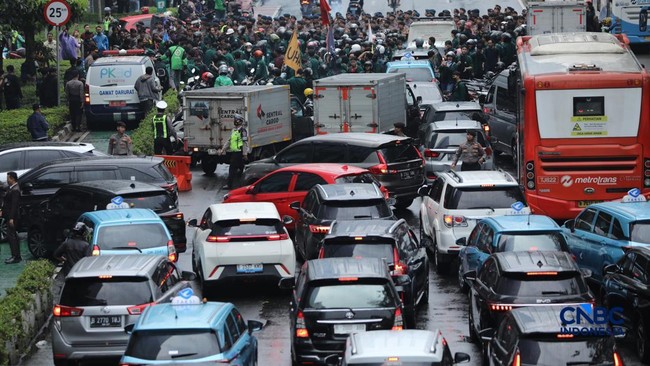
Jakarta, CNBC Indonesia – Signs that the era of the petrol car is drawing to a close are becoming increasingly visible, as global oil prices rise due to the war in the Middle East, pushing up fuel prices. Communities in several regions appear ever more eager to switch to the replacement alternative, namely the electric vehicle (EV).
Earlier, a Reuters report said the use of taxis and ride-hailing services surged sharply across China throughout May 2026. According to China’s Ministry of Transport, around half of the total 1.3 million taxi fleet in China has switched to EVs, and in major cities the figure is approaching 100%.
Across various cities, Chinese residents completed 3.05 billion journeys using online transport services. Government data shows ride-hailing journeys grew 6% since the Iran war began in late February, compared with the March–May period in 2025.
Didi, the leading ride-hailing app, recorded the addition of 2 million hybrid or electric cars last year, bringing its total non-fossil-fuel fleet to 8 million units, with electric vehicles accounting for 75% of the total distance travelled.
As a result, petrol and diesel consumption in China in May fell 10% and 14% respectively compared with the previous year, even though road freight volume rose 2% and land travel during the long May Day holiday hit a record high.
Greenpeace projects that by 2035, 90% of the total distance travelled by taxis and ride-hailing services will be done using electric vehicles.
“As fuel prices rise, people are increasingly rarely using their own petrol-fuelled private cars,” said Daizong Liu, East Asia Director at the Institute for Transportation & Development Policy in China.
This trend explains how China managed to cut oil imports, which fell 41% in June 2026 compared with last year, without heavily drawing on its reserves. In doing so, China has freed up oil cargoes in a global market constrained by war and helped push down oil prices.
“The conflict may have accelerated behavioural changes that were already under way, making China structurally less oil-dependent than the market has historically assumed,” said J.P. Morgan analyst Natasha Kaneva in a note on 2 July.
Petrol Car Sales Plunge as Electric Cars Soar in Europe
A similar phenomenon is occurring in Europe. Demand for EVs continued to grow and supported the automotive industry’s growth throughout June 2026. At the same time, sales of petrol and diesel cars plummeted sharply, according to data from the European Automobile Manufacturers’ Association (ACEA) on Thursday (23/7/2026).
The growth in car registrations, an indicator of sales, also helped Chinese brands expand their reach further across the European Union, the United Kingdom, and the European Free Trade Association (EFTA).
Total car registrations rose 13.1% to 1,407,332 units. Registrations of battery-electric cars, plug-in hybrids, and hybrids increased by 51%, 22.7%, and 17.1% respectively, together accounting for nearly 70% of all new vehicles throughout June 2026.
Meanwhile, registrations of petrol and diesel cars plunged 12.2% and 16.9% respectively.
Chinese car manufacturers such as BYD, Chery, and Leapmotor recorded significant growth, with sales rising three- to six-fold compared with last year. SAIC and Geely recorded positive sales growth of 50% and 11% respectively.
Source: jawawa.id (https://jawawa.id/newsitem/petrol-car-era-nears-end-as-global-signs-mount-1784854258)
Originally published by CNBC Indonesia (https://www.cnbcindonesia.com/tech/20260723152431-37-753295/mobil-bensin-bakal-tamat-tandanya-sudah-muncul-di-mana-mana), translated from Indonesian