
Petitioners Challenge P2SK Law Article, Citing Threats to Law Enforcement and Equality
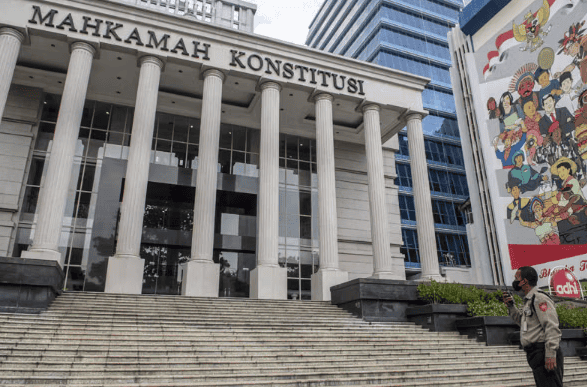
A legal team head and two entrepreneurs have petitioned the Constitutional Court (MK) to review Article 50A, paragraphs (5) and (6), of Law Number 4 of 2026 concerning Financial Sector Development and Strengthening (UU P2SK). The petitioners argue that the provisions could be interpreted as providing overly broad protection, potentially obstructing law enforcement processes if not clearly restricted. They contend that granting authority to issue debt instruments must be accompanied by norms ensuring transparency, accountability, and supervision of investor fund origins. Without strict regulations applying anti-money laundering and counter-terrorism financing principles, the instrument risks being used to conceal the proceeds of crime.
The petitioners claim the article grants special protection to a specific group of investors, resulting in unequal treatment before the law and diminishing the principle of equality, which they argue contravenes Article 27, paragraph (1) of the 1945 Constitution. Specifically, Article 50A paragraph (5) guarantees protection from criminal prosecution, including tax offences, and civil lawsuits for purchasers of special debt instruments. Paragraph (6) stipulates that data and information from such activities cannot be used as a basis for taxation or as legal evidence in court. The petitioners, who hold positions in the Pemuda Bulan Bintang organisation, assert that this could complicate efforts to prevent and prove money laundering crimes if adequate oversight mechanisms are absent. They argue that preventing law enforcement officials from using transaction data as evidence could hinder investigations and prosecutions, thereby reducing the effectiveness of the legal system.
In their petition, they request the court to declare the two paragraphs contrary to the 1945 Constitution and lacking binding legal force. They propose alternative wording, suggesting that state guarantees should protect transactions conducted in good faith without eliminating criminal, civil, or administrative liability where violations are suspected. They also propose that transaction data confidentiality be maintained in accordance with the law, but that the data may still be used as evidence and a basis for law enforcement when mandated by legislation. The panel of judges, led by Deputy Chief Justice Saldi Isra, advised the petitioners to elaborate on the specific constitutional harm suffered and to clarify the conflict between the impugned articles and the Constitution. The petitioners were given 14 days to revise their application.