
Pesantren's Future Assessed as Needing to Become the Global Benchmark for Holistic Education
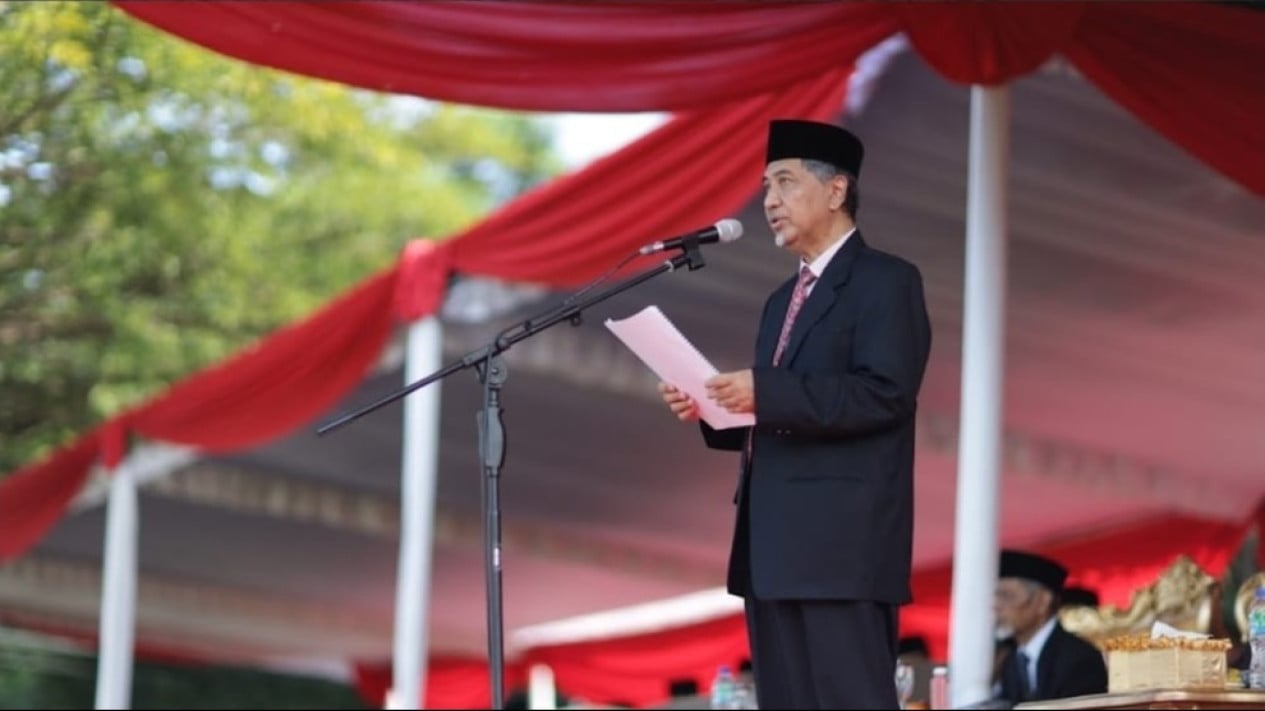
Ahead of the 100th anniversary of Pondok Modern Darussalam Gontor (1926–2026), a grand vision to overhaul the global education paradigm has been launched through the Global Islamic Holistic Education Summit (GIHES) 2026.
Prof. Hamid Fahmy Zarkasyi, Rector of UNIDA Gontor and Chairman of the Gontor Centenary Committee, asserted that GIHES is a strategic response to the increasingly alarming crisis in modern education.
In his statement, Prof. Hamid highlighted data from WHO and UNICEF (2024) indicating that one in seven adolescents worldwide experiences mental health problems. He also cited World Economic Forum projections that 39 percent of current core skills will be obsolete by 2030.
“Education is at a crossroads. Future challenges such as analytical thinking, resilience, leadership, and empathy are non-technical competencies rooted in character education. GIHES is here to formulate a holistic future for education—balancing the intellectual, spiritual, and moral,” said Prof. Hamid in his statement, quoted on Sunday, 16 August 2026.
The international symposium, to be held on 5–6 September 2026 at Hotel Borobudur in Jakarta, carries the theme “Exploring and Revealing the Pesantren Education System”.
The forum is serious about presenting global perspectives by inviting prominent speakers from five continents, all focused on strengthening holistic education.
From Asia and the Middle East, experts such as Prof. Nuri Tinaz from Marmara University (Turkey), Mahamood Shihab, Principal of Anshar Training College for Women (India), and Prof. Norazah Mohd. Nordin from Universiti Kebangsaan Malaysia (Malaysia) will be present.
Also attending is Prof. Ryoko Tsuneyoshi from Bunkyo Gakuin University (Japan), who will compare Japan’s Tokkatsu concept with the Islamic boarding school education system.
Domestically, the symposium is fully supported by key government figures and academics, including the Speaker of the MPR RI, Ahmad Muzani, the Minister of Primary and Secondary Education, Abdul Mu’ti, the Minister of Religious Affairs, Nasaruddin Umar, and Prof. Amin Abdullah (UIN Sunan Kalijaga).
“All these speakers bring one uniform message: we need an education system that touches the ‘head, heart, and hands’ simultaneously. This is a global consensus that education must not merely produce workers, but must shape complete human beings,” added Prof. Hamid.