
Perumda Pasar Suggests Affirmative Policy for BGN to Involve MSMEs in SPPG
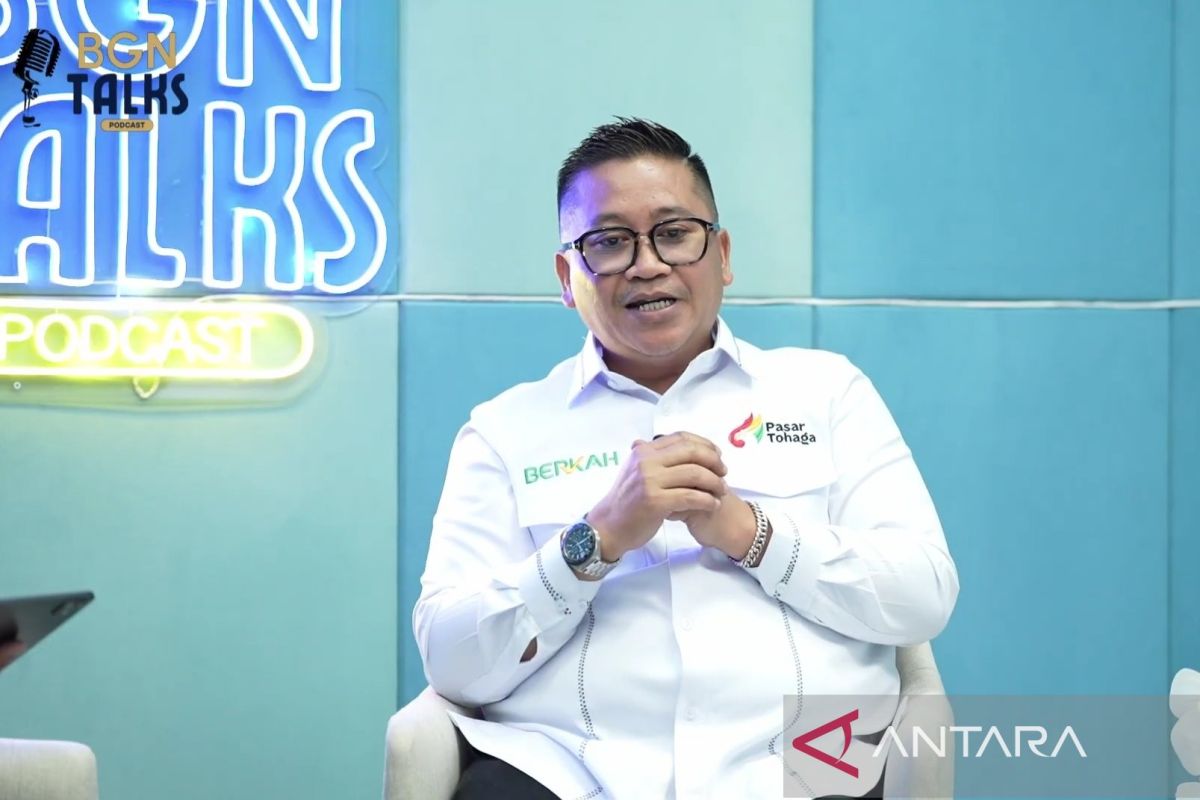
Jakarta (ANTARA) - Hari Setiawan, director of Perumda Pasar Tohaga in Bogor Regency, has suggested that the National Nutrition Agency (BGN) introduce an affirmative policy obliging regional governments to involve small traders and SMEs in the Nutrition Fulfilment Service Units (SPPG).
“As an evaluation, would it be possible for BGN to have an affirmative policy involving SMEs, traders, or economic actors? Because whenever the question arises of whether traditional traders can run SPPGs, the response is unclear. In Bogor alone, there are six million residents served by our markets, so why can these traders not become direct business actors, instead of merely being spectators or a second layer?” he said during a BGN podcast monitored in Jakarta on Monday.
According to him, a government affirmative policy requiring products to be sourced through traditional markets would allow the grassroots economy to flourish more abundantly, rather than market traders simply being spectators.
“So there needs to be a local food ecosystem supporting the Free Nutritious Meal programme, ensuring this grassroots economy can keep rolling,” he said.
Hari outlined several challenges facing traditional market traders that have prevented them from gaining direct access to SPPGs, one of which is that BGN has yet to establish price standards or transparency.
“This needs to be clarified, because as I see it, SPPG prices vary. Traders are not yet aggregated — imagine, a single market may have thousands of traders, and across our 20 markets there could be tens of thousands. It is impossible for an SPPG to deal with 15,000 traders, so aggregation is needed; there must be credible aggregators, for instance regional-owned enterprises (BUMD) across Indonesia could act as aggregators, as we do at Pasar Tohaga,” he explained.
He stressed the importance of sound governance regarding fair pricing policies set by BGN as a solution, so that traditional market traders can also grow and work alongside the SPPGs to ensure the success of the Free Nutritious Meal (MBG) programme.
“The Highest Retail Price (HET) set at SPPGs has no standard, except perhaps for goods with existing HETs like cooking oil and sugar, which are limited. But there is indeed no reference price for staple foods, and that is what perhaps needs to be agreed upon, even though it may vary from region to region,” he said.