
Pertamina’s Independent Energy Villages Generate Rp26 Billion in Annual Economic Value
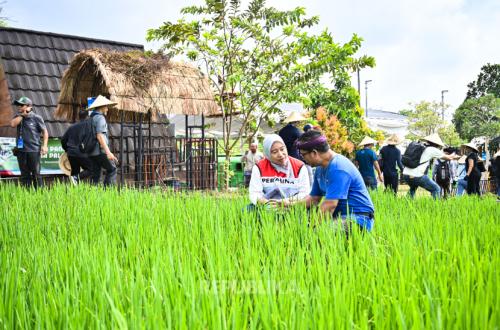
JAKARTA — PT Pertamina (Persero) says its Independent Energy Village (Desa Energi Berdikari, or DEB) programme generates around Rp26 billion in additional economic value each year. The programme integrates renewable energy use with community economic empowerment and benefits approximately 283,000 people, both directly and indirectly.
Pertamina’s Vice-President for CSR and SMEPP Management, Rudi Ariffianto, said DEB’s development focused on more than building renewable energy infrastructure. Pertamina also encourages the use of energy to boost business productivity and community incomes, while strengthening economic resilience in rural areas.
“The most important thing is for DEB’s development to have a significant impact on communities. Farmers can increase their production capacity, micro, small and medium-sized enterprises can earn additional income, and various economic activities can operate effectively so that people can meet their needs,” Rudi said at the DETalk event, entitled ‘Empowered Villages, Secure Energy: A Blueprint for the Energy Transition of the Future’, on Monday (2 November 2026).
He said Pertamina had developed around 310 Independent Energy Villages across Indonesia by 2026. About 60 per cent of the programme’s recipient villages are outside Java.
DEB projects use different renewable energy sources, depending on each area’s potential. These include solar power, biogas, micro-hydropower, biodiesel and hybrid power plants.
The programme has brought renewable energy generation capacity to around 1.5 MWp and produced approximately 973,000 cubic metres of biogas. Pertamina also said that 166 villages had developed agriculture and food-related activities, producing around 21,000 tonnes of rice and 5,000 tonnes of non-rice commodities in a single harvest, from approximately 2,000 hectares of land.
“The starting point is that we have to listen. The first of the eight CID pillars is to hold in-depth discussions. Through social mapping, we listen to the community’s needs, shortcomings and aspirations,” Rudi said.
One example of the programme’s economic impact can be seen in Tumpak village, Central Lombok, West Nusa Tenggara. Residents have developed livestock farming, ecotourism and small and medium-sized enterprises based on coconut processing.
These economic activities have gone hand in hand with environmental restoration, including the planting of around 30,000 trees across 96 hectares. Tumpak now attracts approximately 800 tourists a year, most of them from overseas. The activities generate an economic turnover of around Rp60 million annually and provide employment opportunities for about 60 residents.
Residents of Bondan hamlet, in Ujung Alang village, Cilacap regency, Central Java, have also benefited. A hybrid power plant (PLTH) provides lighting and supports fish farming and the conversion of seawater into fresh water.
“We do not use this power plant only for lighting. We continue to seek innovations that can help meet the community’s needs,” said Jamaludin, a local leader in Bondan.
The hybrid plant’s electricity powers aerators in fish ponds to increase farming productivity. Residents have also developed a fish-processing business by empowering women’s groups, allowing commodities previously sold as raw materials to generate more value.
To sustain these activities, residents established the Bondan Sukses Sejahtera Consumer Cooperative. They also contribute Rp25,000 per household each month to cover the power plant’s operating and maintenance costs.
Pertamina is also strengthening community skills by certifying village project leaders, or local heroes. So far, 223 people have received Junior Operator certification to support the independent operation and maintenance of renewable energy facilities.
On the environmental front, Pertamina says DEB has helped reduce emissions by around 1.1 million tonnes of carbon dioxide equivalent. The programme also supports the management of approximately 145,000 tonnes of waste a year and the use of more than 23,000 tonnes of animal manure to produce biogas.
Pertamina aims to increase the number of Independent Energy Villages to 732 by 2030. The programme is intended to expand renewable energy use while strengthening productive economic activities through the management of local resources.
Source: jawawa.id (https://jawawa.id/newsitem/pertaminas-independent-energy-villages-generate-rp26-billion-in-annual-economic-value-1793638302)
Originally published by Republika (https://esgnow.republika.co.id/berita/tnvu3f522/desa-energi-berdikari-pertamina-hasilkan-nilai-tambah-ekonomi-rp26-miliar-per-tahun), translated from Indonesian