
Pertamina's 'Desa Energi Berdikari' Programme Strengthens Community Economy
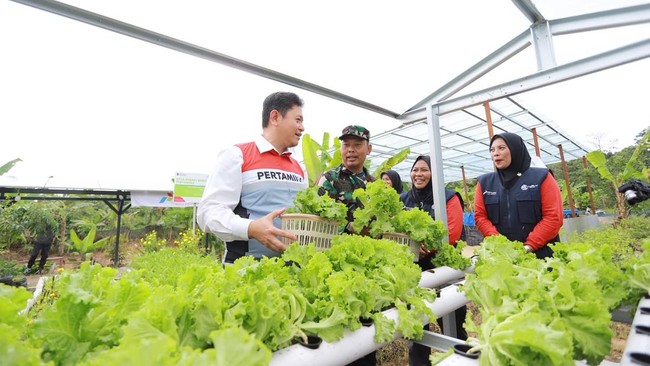
PT Pertamina (Persero) continues to strengthen community empowerment through two complementary approaches: developing clean energy in rural areas via the Desa Energi Berdikari (DEB) Programme and supporting micro, small, and medium enterprises (UMKM). These programmes are part of Pertamina’s efforts to create inclusive and sustainable economic growth.
The DEB Programme supports the government’s Asta Cita vision by building energy self-sufficiency based on renewable sources while driving village economic growth. The renewable energy developed is tailored to local potential, providing direct benefits to the community.
By the end of March 2026, Pertamina had developed the DEB Programme in 262 villages across Indonesia, constructing supporting facilities that include 1,302,700 watt-peak (Wp) of solar power, 959,300 cubic metres per year of biogas and biomethane, and a micro-hydro plant with a capacity of 52,500 watts.
The programme not only promotes community energy independence but also strengthens food security, creates business opportunities, and improves the welfare of rural residents.
Vice President of Corporate Communication at Pertamina, Muhammad Baron, stated that the DEB Programme is designed so that the energy transition not only impacts the environment but also enhances community welfare. ‘Through the Desa Energi Berdikari Programme, Pertamina provides clean energy that creates new economic value for the community. The available energy helps increase productivity, opens up business opportunities, and strengthens food security at the village level,’ Baron said in a written statement on Thursday (2/7/2026).
The utilisation of clean energy creates a multiplier effect. Throughout 2025, the DEB Programme contributed to an increase in food production of up to 21,357 tonnes per year. In various regions, clean energy has also spurred the growth of micro, small, and medium enterprises (UMKM) that drive the village economy.
Beyond economic benefits, the DEB Programme also contributes to reducing greenhouse gas emissions. As of June 2026, the programme has successfully reduced emissions by 72,969 tonnes of CO₂e per year, supporting Pertamina’s commitment to Indonesia’s Net Zero Emission target by 2060.
‘Indonesia has enormous clean energy potential. Pertamina will continue to expand the Desa Energi Berdikari Programme so that more rural communities can benefit, whether in terms of energy access, economic improvement, or food security,’ Baron added.
Overall, the Desa Energi Berdikari Programme has benefited 96,925 people, while Pertamina’s various flagship community empowerment programmes have reached a total of 283,841 beneficiaries. ‘For Pertamina, the energy transition must deliver tangible benefits to the community. Therefore, we will continue to encourage the emergence of new economic growth centres in villages, open business opportunities, create jobs, and improve community welfare in a sustainable manner,’ Baron concluded.