
Pertamina Successfully Produces 5.3 Million Cubic Feet of Gas in Sanga-Sanga
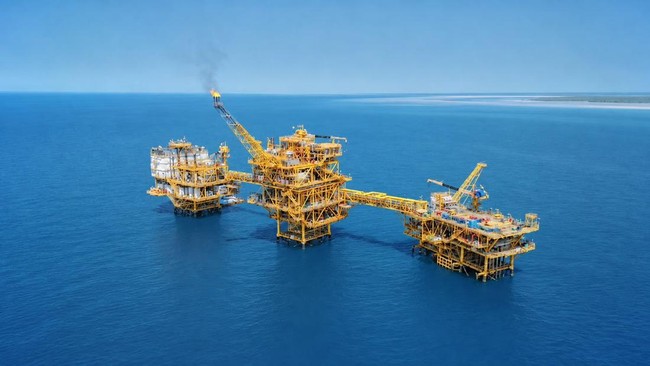
PT Pertamina Hulu Sanga Sanga (PHSS) has recorded positive production test results from two new wells, SEM-206 and SEM-207, in the oil and gas field development project at the Semberah Structure, Sanga-Sanga Working Area, East Kalimantan.
Both new wells successfully produced gas and condensate above the initial targets set.
This success demonstrates PHSS’s outstanding commitment to continuing to support the sustainability of the company’s oil and gas production, which is important for national energy availability and security.
Well SEM-206 completed the production test phase with initial production twice as high as the target, namely 5.3 million standard cubic feet of gas per day (mmscfd) and 706 barrels of condensate per day (bcpd). Meanwhile, Well SEM-207 produced gas of 3.11 mmscfd and condensate of 103 bcpd, four times higher than the initial target.
Both wells flow naturally through an open flow mechanism. Well SEM-206 is supported by three reservoir layers with good pressure conditions, while SEM-207 is supported by one reservoir layer with pressure that also supports production flow.
General Manager of Zone 9 PHSS, Dadang Soewargono, said the successful drilling of the two development wells strengthens the company’s commitment to continue investing in the development of mature oil and gas fields, including through the application of technology and innovation.
“In line with the company’s vision, we continue to invest in exploration and exploitation activities by drilling new wells to add reserves, increase recovery, curb the rate of natural production decline, and maintain oil and gas production levels in mature fields in the Kalimantan region,” Dadang said in a press release on Friday (28/8/2026).
According to Dadang, developing mature oil and gas fields requires the right strategy because each well has different characteristics and technical challenges. Therefore, PHSS conducts thorough and in-depth technical evaluations and risk management from the planning stage through to drilling and production testing.
“In drilling the SEM-206 well, we implemented a drilling strategy, including the use of completion equipment and wellheads with high pressure ratings as well as the application of Casing While Drilling (CWD) technology to support wellbore stability and operational effectiveness. In line with this strategy, the SEM-206 well was drilled further east of the existing structure,” he explained.
Differences in reservoir conditions and challenges in the field resulted in different completion times. Drilling through to production testing on Well SEM-206 was completed in 45 days, while SEM-207 took only 13 days.
“Alhamdulillah, the work on both wells recorded good safety performance with 75,600 and 27,216 safe man-hours respectively up to the production test stage,” he added.
Dadang also highlighted cost efficiency in the drilling of both wells, with actual costs recorded lower than the budget. “The success of drilling, cost efficiency, and excellent safety performance demonstrate that challenges in mature fields can be addressed through careful planning, innovation, technology, and disciplined execution. We continue to seek ways to develop existing potential optimally while prioritising safety and operational reliability,” he concluded.
Source: jawawa.id (https://jawawa.id/newsitem/pertamina-successfully-produces-5-3-million-cubic-feet-of-gas-in-sanga-sanga-1787903455)
Originally published by CNBC Indonesia (https://www.cnbcindonesia.com/news/20260828132124-4-763114/pertamina-berhasil-produksi-53-juta-kaki-kubik-gas-di-sanga-sanga), translated from Indonesian