
Pertamina strengthens sustainable mobility across land, sea and air sectors
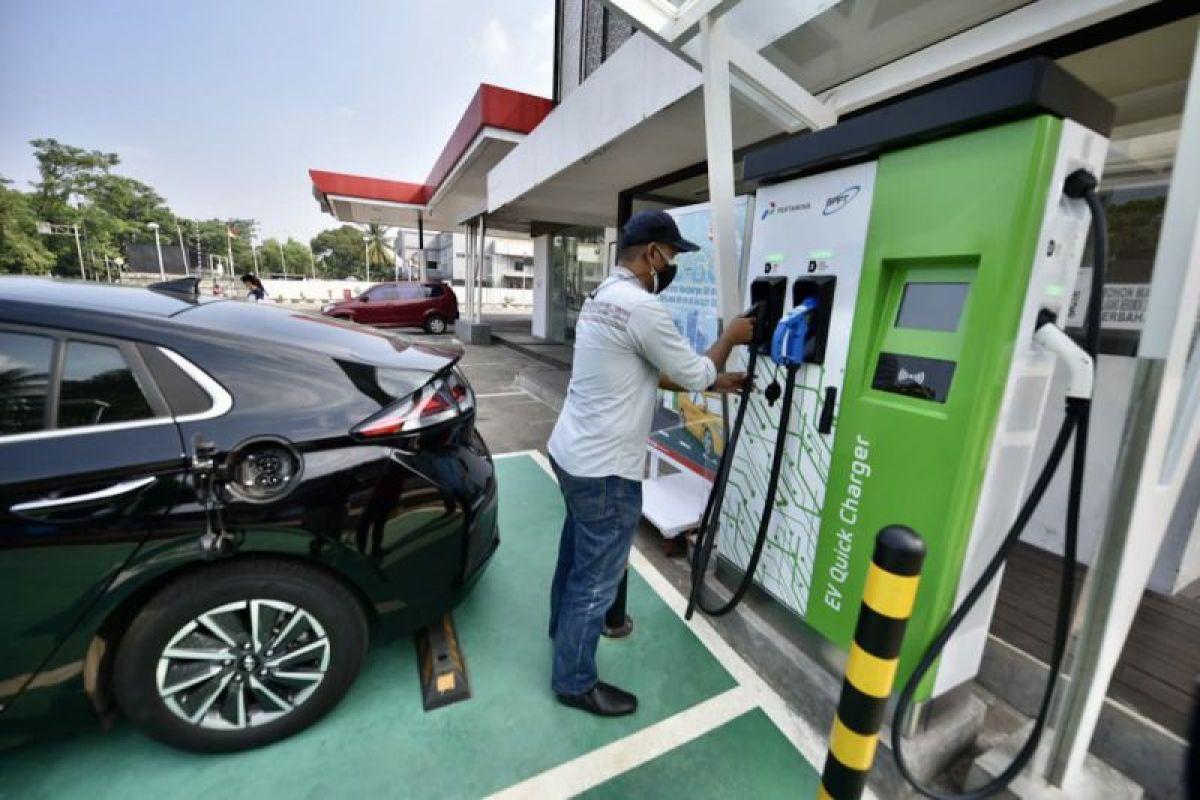
Pertamina (Persero) is strengthening the development of the energy ecosystem and sustainable mobility across the nation’s land, sea, and air transport sectors through a range of integrated energy transition initiatives.
‘This is part of our commitment to support Indonesia’s net-zero emissions target by 2060, as Pertamina continues to accelerate the development of an energy and mobility ecosystem across the entire national transport sector,’ said Agung Wicaksono, Director of Transformation and Sustainability of Pertamina (Persero), in a Jakarta statement on Friday.
He emphasised this at a Studium Generale Sustainability event titled ‘Global Insights for Local Action: Bridging Academia and Industry in Energy Transition’ organised by Universitas Pertamina in Jakarta.
The Studium Generale Sustainability is a public lecture that brings together global academics, industry players and cross-sector stakeholders to strengthen the younger generation’s understanding of the challenges and opportunities of the energy transition.
The forum serves as a platform for collaboration between academia and industry to push the development of real-world solutions toward low-carbon development and sustainable mobility in Indonesia.
Agung explained that the company is taking an active role in the long-term energy transition through technological preparedness, ecosystem strengthening, and cross-sector synergies. The efforts are directed to support the achievement of Indonesia’s 2060 net-zero emissions target, as part of the government’s strong commitment under President Prabowo Subianto.
In the land transport sector, Pertamina is not only strengthening the EV ecosystem through the construction of charging stations and battery swapping with Indonesia Battery Corporation (IBC). Pertamina is also building an integrated bioethanol plant in Glenmore, Banyuwangi, East Java. The project is integrated with local sugarcane plantations to ensure a sustainable feedstock supply while reinforcing domestic energy resilience.
In the maritime sector, Pertamina is promoting energy efficiency through dual-fuel use, the development of green ammonia, and innovations such as installing solar panels on ship decks to support the fleet’s electricity needs independently.
In the aviation sector, Pertamina, through Pelita Air, supports the use of Sustainable Aviation Fuel (SAF). This environmentally friendly fuel uses feedstock such as used cooking oil, a concrete solution to reducing carbon emissions in the global aviation industry.
‘Pertamina is committed to continuing to sharpen scenario planning and its business transformation strategy,’ he said.
Agung stressed that all these transformations will be conducted in a planned, phased and sustainable manner to safeguard the environment for future generations.
In parallel, Acting Rector Universitas Pertamina, Djoko Triyono, stressed that energy transition requires close collaboration among stakeholders to deliver solutions relevant to national needs. He said energy transition cannot be undertaken by industry or government alone. Strong collaboration among academia, industry, government, and society is needed to deliver solutions relevant to local needs.
‘Universitas Pertamina is committed to serving as a bridge connecting research, innovation, human resource development, and concrete actions to support the creation of a sustainable energy ecosystem in Indonesia,’ said Djoko.
Professor Marlon Boarnet of the University of Southern California (USC) Sol Price School, who spoke as the keynote, outlined that the world is currently in the early phase of green mobility transformation. According to Prof. Boarnet, commodities such as biofuels and drop-in fuels play a crucial bridging role in the transition. For sectors that are harder to decarbonise, such as maritime shipping, high-density energy solutions like green ammonia are required. He also cautioned that the energy transition is no longer just about regulatory compliance but a global industry transformation that must be faced through close collaboration.