
Pertamina Strengthens Energy-Saving Culture, from Offices to Community Programmes
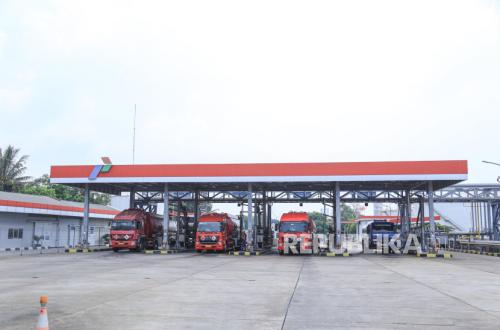
PT Pertamina (Persero) is implementing a tangible commitment to energy conservation in its workplace and operational environments as part of its cultural programme. Through various initiatives, Pertamina is promoting an energy-saving culture while encouraging the public to participate in more prudent energy use.
Vice President of Corporate Communication at PT Pertamina (Persero), Muhammad Baron, stated that the company’s energy-saving measures are part of its commitment to supporting energy sustainability.
“The collective movement to save energy is increasingly necessary to support the government’s efforts in maintaining energy sustainability amid the current global geopolitical dynamics,” said Baron.
Wise use of energy, particularly fuels like BBM and LPG, is now an urgent matter. This aligns with recent directives from the President and the Minister of Energy and Mineral Resources, as a joint effort to mitigate geopolitical implications on global energy supply chains.
A series of energy-saving initiatives within Pertamina includes encouraging employees to use public transport. To facilitate this, Pertamina provides shuttle bus services from its offices to public transport locations such as stations, bus stops, and others. This facility makes it easier for Pertamina employees to access public transport like the commuter line train.
Facilitating Access to Mass Transport
Not only in Jakarta, this mass transport access is also practised in various Pertamina work units in the regions, providing shared services to residential complexes or other strategic gathering points.
For work activities within the city, employees are also encouraged to use company vehicles together to reduce individual vehicle usage.
In addition, said Baron, energy efficiency is applied as a healthy lifestyle culture. Through the “Sehat Bugar dan Senang” (SEBUSE) programme, Pertamina employees incorporate exercise into their activities, such as walking from the office to strategic points like bus stops and stations, and vice versa. Some employees also participate in Bike to Work.
“Various programmes are being developed by Pertamina as an internal employee culture, so that in addition to impacting physical fitness, they also save energy, which has been implemented for a long time,” said Baron.
The culture of energy efficiency is also passed on to the public through various activities. For instance, the ongoing effort to promote energy saving includes Pertamina’s Mudik Bersama and Balik Bersama programme, allowing the public to use comfortable, safe, and energy-efficient public transport.
“Mudik Bersama is a routine Pertamina programme. This year, Pertamina is also providing four bus fleets for the return to Jakarta, thus contributing to energy saving,” said Baron.
The return of holidaymakers to Jakarta will be carried out simultaneously from four cities on Saturday, 28 March 2026.
Besides transport efficiency, energy saving is also part of the culture in Pertamina’s office environment. According to him, employees are encouraged to turn off lights and electrical equipment when not in use. The office building design that maximises glass usage also allows for the utilisation of natural light, thereby reducing electricity consumption during the day.
On the operational side, Pertamina also utilises renewable energy through the installation of solar panels at several petrol stations as well as operational assets and offices.
Not only within the company, Pertamina is also continuously developing transition energy programmes for the public. Through the Desa Energi Berdikari programme, which is currently present in 252 locations, Pertamina helps communities utilise new renewable energy independently.
In addition, Pertamina is continuously expanding the construction of household gas networks to provide cleaner, more efficient, and environmentally friendly energy.
“In line with energy-saving efforts to maintain current energy availability, Pertamina strives to start from the internal environment and employees’ families, which is hoped to build collective awareness for wise energy use according to needs. This energy-saving movement will become a culture that strengthens the nation’s energy self-sufficiency,” said Baron.