
Pertamina Streamlines 31 Entities, Economist: In Line with Prabowo's Directive
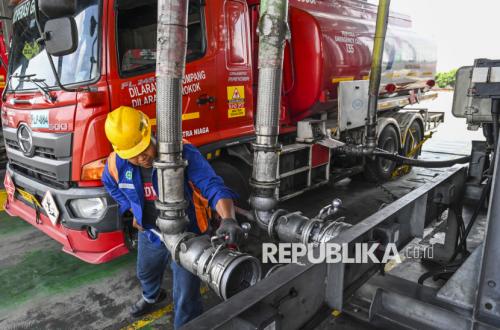
Pertamina has streamlined 31 business entities by the first half of 2026, in line with the government’s policy to simplify the structure of state-owned enterprises (BUMN). The move is considered capable of improving the company’s efficiency without disrupting the fuel oil (BBM) supply chain.
President Prabowo Subianto previously mentioned the streamlining of BUMN during the Annual Session of the MPR RI and the Joint Session of the DPR-DPD RI at the Parliamentary Complex, Senayan, on 14 August 2026. Prabowo stated that BUMN restructuring needs to be carried out by taking into account productivity and the company’s ability to create added value.
The government has also set a target of 300 business entities remaining by the end of 2026. In that context, Pertamina has implemented a programme to reorganise its subsidiaries through a number of restructuring measures.
Professor at the Faculty of Economics and Business, Universitas Airlangga, Imron Mawardi, said Pertamina’s move is in line with the government’s policy to reorganise the structure of BUMN, including subsidiaries and sub-subsidiaries.
“Yes, it is indeed in line (with the President’s mandate). The reorganisation of subsidiaries and sub-subsidiaries is already inline with the policy to reorganise BUMN,” said Imron on Monday (17/8/2026).
According to Imron, the streamlining of Pertamina’s structure will not disrupt the BBM supply chain because the entities affected by the programme are not directly related to the company’s core business. “In fact, it is hoped that through streamlining, the BBM supply chain will become more efficient and even stronger,” said Imron.
Imron said the streamlining is carried out through at least three mechanisms: merger, divestment of companies outside the core business, and liquidation of dormant or inactive companies.
According to him, mergers can reduce overlapping business activities while enlarging the company’s business scale. Consolidation can also reduce costs because the management structure becomes simpler.
“Yes, because a merger will create efficiency. They (similar subsidiaries) will not compete with each other. Then, from the size of business perspective, it also becomes larger,” said Imron.
Imron illustrated that if there are 10 subsidiaries with overlapping businesses, each with five directors and five commissioners, there would be 50 directors and commissioners. After the companies are merged, that number can be reduced to five directors and five commissioners.
In addition to reducing the management structure, consolidation also makes the business scale larger because business activities that were previously spread out are now in one entity.
Meanwhile, divestment of companies outside the core business is considered to provide financial benefits if the company’s assets or shares still have a sale value. For dormant companies, Imron believes liquidation can still be carried out by considering the utilisation of the assets owned by the company.
He also believes that involving auditors, shareholders, Danantara, and trade unions in the reorganisation process can help determine the appropriate scheme for each entity. The options can be merger, divestment, or liquidation.
According to Imron, involving law enforcement officials can also be done to ensure the process runs in accordance with regulations. However, he emphasised that business decisions still need to refer to the business judgment rule principle.