
Pertamina Reveals Reasons Behind Pertamax Fuel Price Hike
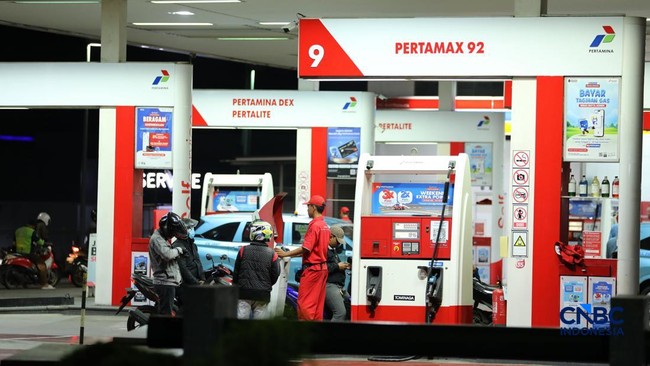
PT Pertamina Patra Niaga has disclosed the reasons behind the price increase for non-subsidised Pertamax (RON 92) fuel, which rose to Rp16,250 per litre effective from 10 June 2026. The move aims to maintain a balance between affordability for the public and the sustainability of the national fuel supply.
Sigit Setiawan, VP of Commercial & Shipping Business Development at Pertamina Patra Niability, explained that global fuel prices have experienced a significant increase due to rising international geopolitical tensions, which have driven a surge in world crude oil prices. He noted that Pertamina has previously endeavoured to suppress price increases for non-subsidised fuel, particularly Pertamax, even though import procurement costs had already exceeded the retail price at petrol stations.
This price hike for Pertamax is the first following the surge in global oil prices caused by the Israel-Iran conflict, which broke out on 28 February 2026. While other non-subsidised fuel prices had been adjusted since 18 April 2026, the price of Pertamax had remained unchanged until now.
Furthermore, he stated that the economic price of Pertamax (RON 92) is currently in the range of Rp20,000 to Rp21,000 per litre. This means that although the price of Pertamax has risen to Rp16,250 per litre, it remains below its economic value. “The market price for RON 92 has risen due to recent geopolitical conditions; in the market, it is already around Rp20,000 to Rp21,000. We have been trying to hold it at Rp12,300,” he explained during the DEN Energy Seminar at IPB University, Bogor.
He noted that, by regulation, the determination of domestic non-subsidised fuel prices follows market prices and does not receive fiscal assistance from the government. Therefore, Pertamina emphasised that price adjustments are crucial to ensure the company’s ability to repurchase fuel raw materials on the international market to maintain national stock resilience. “The logic is, we buy goods at high prices in the import market, but sell them domestically at a lower price. The revenue we receive is insufficient to purchase the same volume in the market. Consequently, the volume will decrease, leading to a drop in stock availability,” he added.
Sigit assessed that if prices continue to be maintained below economic value, it could trigger obstacles that directly impact the public. Therefore, after coordinating with the government, Pertamina decided to implement a measured price adjustment. “We do not want a situation where energy product availability decreases in the community. If there is a peak in demand, it will become a problem,” he added.
Separately, the Corporate Secretary of Pertamina Patra Niaga, Roberth MV Dumatubun, explained that the price adjustment for Pertamax was conducted while still considering purchasing power and the national economy. On the other hand, subsidised fuel prices remain unchanged and continue to be sold according to existing regulations.
He stated that market prices and economic value were key reasons for the adjustment. Following coordination with regulators, the Pertamax price adjustment was finalised. “It is more about the upstream-to-downstream energy supply business process, which, in coordination with regulators, needs to be dynamic and adaptive to current conditions in response to present phenomena,” he said.
List of Pertamina Non-Subsidised Fuel Prices as of 11 June 2026:
Pertamax Series:
Pertamax (RON 92): increased from Rp12,300 per litre to Rp16,250 per litre.
Pertamax Green 95 (RON 95): increased from Rp12,900 per litre to Rp17,000 per litre.
Pertamax Turbo (RON 98): remains at Rp20,750 per litre.
Dex Series:
Dexlite (CN 51): remains at Rp23,000 per litre.
Pertamina Dex (CN 53): remains at Rp24,800 per litre.