
Pertamina Ready to Lead Development of Carbon Capture Storage Ecosystem
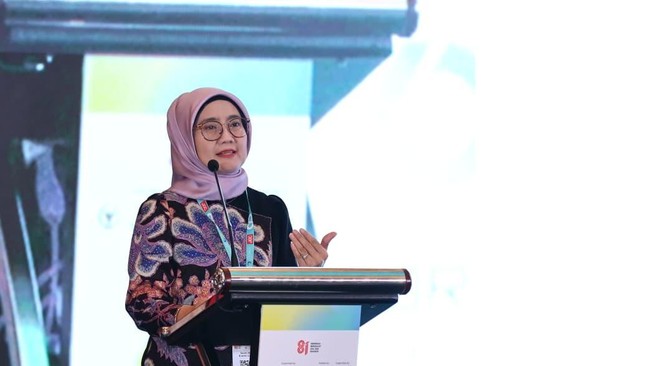
PT Pertamina (Persero) has reaffirmed its commitment to leading the development of the carbon capture and storage (CCS) and Carbon Capture, Utilization, and Storage (CCUS) ecosystem in Indonesia. This strategic move forms a key part of the company’s Dual Growth Strategy to support achieving Net Zero Emission (NZE) by 2060 or sooner, while aligning with the Asta Cita agenda. Director of Strategy, Portfolio and Business Development at PT Pertamina (Persero), Emma Sri Martini, explained that Pertamina is adapting and responding to global geopolitical dynamics, climate change, and technological disruption within its Long-Term Corporate Plan (RJPP).
“The global community is currently striving to preserve the earth while extending the life cycle of the fossil fuel business. Through the Dual Growth Strategy, Pertamina divides its focus into two main pillars by maximising its legacy business and building a low carbon business,” said Emma in a written statement on Friday (28/8/2026).
She stated that the first pillar of Pertamina’s Dual Growth Strategy focuses on strengthening the core business through increased upstream oil and gas production and lifting, including the application of CCUS or CO2 EOR technology to boost upstream production, revamping and increasing the flexibility of six refineries, transforming the fuel and retail business to anticipate the electric vehicle (EV) era, and strengthening the gas and shipping supply chain.
The second pillar focuses on developing low carbon businesses to strengthen energy security and downstream national industry as outlined in Asta Cita points 2 and 5. This includes expanding biofuels such as B50 biodiesel, developing Sustainable Aviation Fuel (SAF) and bioethanol, expanding geothermal capacity through PT Pertamina Geothermal Energy (PGE), which controls nearly a third of national reserves, and developing the carbon ecosystem, including CCS/CCUS and carbon trading.
Ultimately, Pertamina’s business integration gives the company a significant role across the entire CCS value chain, from emission sources, capture, liquefaction, and sea transport, to storage injection and carbon monetisation.
Pertamina has currently identified around 13 CCS/CCUS study locations spread across Sumatra, Java, Kalimantan, and Sulawesi, with a potential CO2 storage capacity reaching 7.3 gigatonnes (GT). One of the main projects under development is the Asri Basin CCS Hub, which has a potential storage capacity of up to 2.9 GT to accommodate both domestic and regional emissions.
“CCS is one of the key elements in decarbonising Pertamina’s operations and expanding its low carbon portfolio. To reduce CCS unit costs, we are applying the concept of shared infrastructure through regional hubs, so that carbon emitters can share storage facilities,” explained Emma.
Vice President of Corporate Communication at PT Pertamina (Persero), Muhammad Baron, said that CCS/CCUS development is part of Pertamina’s efforts to build a low carbon business by leveraging the integrated capabilities of the Pertamina Group from upstream to downstream.
“With its large carbon storage potential, Indonesia has the opportunity to become one of the CCS development centres in the region. Pertamina continues to encourage collaboration with the government, industry, and strategic partners so that this potential can provide added value for Indonesia while supporting decarbonisation targets,” said Baron.
To accelerate a commercially viable CCS ecosystem, Pertamina emphasised the importance of cross-industry collaboration, certainty of project financing schemes, and regulatory support, including domestic regulations, fiscal incentives, streamlined permitting, and alignment of bilateral standards between countries, including Measurement, Reporting, and Verification (MRV) systems, to support cross-border carbon transfer.