
Pertamina Patra Niaga Regional Sulawesi Promotes Independence for People with Disabilities through Bitung Terminal
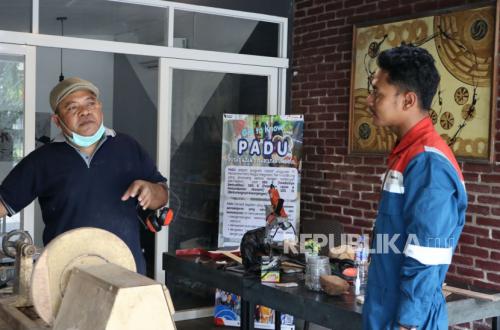
As a national energy distributor, Pertamina Patra Niaga remains committed to social and environmental responsibility that delivers tangible benefits to communities. One initiative is the Pusat Ajar Disabilitas Unggul (PADU) programme, run by Pertamina Patra Niaga Regional Sulawesi through its Integrated Terminal (IT) Bitung.
Together with its supported group, KALEB Community, the programme turns coconut waste, often regarded as leftover material, into handicrafts with economic value. The initiative also provides a space for people with disabilities to develop skills, create products and pursue inclusive, sustainable business opportunities.
The effort includes a Trainers of Trainers (ToT) programme and training in making handicrafts from coconut waste. Tutors first receive instruction from professionals, equipping them with the skills and knowledge to support group members during production. The programme then moves on to practical craft-making sessions involving people with disabilities, including deaf people and people with physical disabilities.
Roles are assigned according to each member’s skills, interests and accessibility needs. Deaf participants make handicrafts alongside facilitators, while other members can contribute to marketing, product communications and business activities in ways suited to their abilities. Adaptations to the workplace and equipment are also considered to ensure comfort, safety and accessibility during activities.
Lilik Hardiyanto, Area Manager for Communications, Relations and CSR at Pertamina Patra Niaga Regional Sulawesi, said PADU aims to create wider opportunities for people with disabilities to develop skills and participate actively in economic activities.
“Sustainable empowerment needs to give everyone room to develop their potential and take on roles suited to their abilities. Through PADU, Pertamina supports skills development for people with disabilities while encouraging the growth of economically valuable businesses. We hope this assistance can provide a foundation for KALEB Community to become more independent and reach wider markets,” Lilik said.
Mega Yanti Makaminang, a next-generation local hero for Pertamina Patra Niaga IT Bitung’s PADU programme, said it creates opportunities for people with disabilities to learn, develop skills and take part in productive business activities. She said ongoing support is important to help the potential of the group’s members flourish.
“Through PADU, we want to ensure people with disabilities have the opportunity to learn, create and develop their potential. Turning coconut waste into handicrafts gives the supported group a new experience, while also creating opportunities for their work to become better known and gain economic value. We hope this activity can continue to grow and become a step towards business independence for KALEB Community,” Mega said.
One of the resources being developed through the programme is coconut wood, shells and husks, which are used as craft materials. These materials, familiar in the daily lives of people in North Sulawesi, are turned into creative products using KALEB Community members’ skills. The group currently uses around 20 kilogrammes of coconut waste each month, depending on product demand. If maintained consistently for a year, the amount used is expected to reach 240 kilogrammes.
The initiative adds value to discarded materials while introducing circular-economy principles into community business activities. By reprocessing coconut waste into handicrafts, the material can be used more effectively and create income opportunities for the supported group.
Pertamina Patra Niaga Regional Sulawesi, through IT Bitung, also plans to help KALEB Community develop broader business opportunities and reach more customers. One idea under consideration is to establish the group as an educational tourism destination, showcasing handicrafts made from coconut waste and offering visitors an inclusive opportunity to interact with people with disabilities.
The concept is planned to combine craft-making workshops, an introduction to sign language with deaf participants, and coffee served by Cue Cafe, one of KALEB Community’s business units. Visitors would also be able to take home handicrafts made by group members. The project is expected to open up new markets, expand business networks and offer a tourism experience combining local creativity, environmental education and inclusion, through collaboration with local government, relevant agencies and other stakeholders.
PADU aligns with several Sustainable Development Goals (SDGs): SDG 4 on Quality Education, through training and skills development; SDG 8 on Decent Work and Economic Growth, through productive capacity-building and business opportunities; SDG 10 on Reduced Inequalities, through expanded inclusive economic opportunities; SDG 12 on Responsible Consumption and Production, through the conversion of coconut waste into higher-value products; and SDG 17 on Partnerships for the Goals, through prospective collaboration with local government and stakeholders to develop businesses and educational tourism.
Through PADU, Pertamina Patra Niaga Regional Sulawesi continues to promote community empowerment that combines capacity-building, economic opportunities and the use of local resources. The development of KALEB Community is expected to progress from training activities to productive, sustainable business, while expanding opportunities for people with disabilities to create and contribute to social and economic development in Bitung.
Source: jawawa.id (https://jawawa.id/newsitem/pertamina-patra-niaga-regional-sulawesi-promotes-independence-for-people-with-disabilities-through-bitung-1792072259)
Originally published by Republika (https://esgnow.republika.co.id/berita/tmy8bq522/pertamina-patra-niaga-regional-sulawesi-melalui-it-bitung-dorong-kemandirian-penyandang-disabilitas), translated from Indonesian