
Pertamina Patra Niaga Promotes Education and Coastal Community Empowerment through Nature School
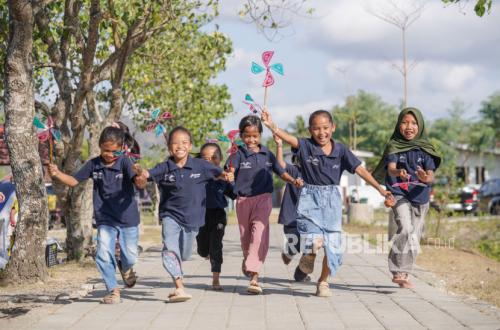
LOMBOK – PT Pertamina Patra Niaga is continuing to empower coastal communities through the Coastal Children’s Nature School programme in Cendi Manik village, West Nusa Tenggara. Launched in 2024, the programme was visited by media representatives on 8 October to observe an initiative that integrates education, environmental conservation and stronger local livelihoods.
The programme reaches 135 beneficiaries and uses nature as a learning space for coastal children. As well as classroom knowledge, children learn about mangrove ecosystems, environmental protection, creativity and the economic potential of the area where they live.
Dian Hapsari Firasati, vice-president for Community Involvement Development at PT Pertamina Patra Niaga, said the programme was part of the company’s efforts to deliver lasting benefits by developing community potential and improving access to education.
“Through the Coastal Children’s Nature School programme, we want to provide a learning space that not only imparts knowledge, but also fosters environmental awareness, creativity and independence among children. We believe empowerment that integrates education, ecology and the economy can create a lasting impact for coastal communities,” Dian said.
On the environmental front, the programme has supported the planting of 4,500 mangrove seedlings for coastal rehabilitation, with a potential carbon storage capacity of 80.763 tonnes of CO₂ per hectare. In education, 1,772 participants have taken part in 11 coastal learning activities, while mangrove and coastal education destinations receive 860 visits a year.
Economically, the programme has generated an additional Rp24 million in annual income for groups working with local resources and saved Rp6.6 million a year in energy costs through the use of solar power plants. It has also strengthened community collaboration and participation in managing coastal areas.
The Coastal Children’s Nature School is distinctive for its 3E learning approach: Ecology, Education and Economy. Mangrove areas, the coast and open spaces are used for hands-on learning, including planting and caring for mangroves, exploring coastal ecosystems, playing traditional games and learning about local economic potential.
The programme has been developed in stages. In 2024, activities focused on forming groups, building the Rumah Literasi (Literacy House) as a learning space and strengthening capacity through a benchmarking visit to Anak Alam Learning House in Sumbawa, West Nusa Tenggara. In 2025, the programme developed the 3E Curriculum as a learning framework. In 2026, it is developing Pertakid as a learning resource for students at the Coastal Children’s Nature School.
Behind the programme is Zahit Idris, founder of the Sanggar Belajar Jalan Pulang community learning group, who has been developing an education initiative for children in Cendi Manik since 2022. In response to children dropping out of school, the classes initially had only eight pupils and were held in a prayer room because there was no permanent classroom or curriculum.
“Sanggar Belajar Jalan Pulang aims to be a learning space and a place to return to for coastal children in Cendi Manik who have limited access to education. Through the Coastal Children’s Nature School programme, children can learn to protect the environment, develop their creativity and themselves, and broaden their understanding of nature,” Zahit said.
Through the Coastal Children’s Nature School programme, Pertamina Patra Niaga continues to work with the community to develop local potential, widen access to learning and safeguard the sustainability of the coastal environment.
Source: jawawa.id (https://jawawa.id/newsitem/pertamina-patra-niaga-promotes-education-and-coastal-community-empowerment-through-nature-school-1791683438)
Originally published by Republika (https://esgnow.republika.co.id/berita/tmpy6o522/pertamina-patra-niaga-dorong-pendidikan-dan-pemberdayaan-masyarakat-pesisir-melalui-sekolah-alam), translated from Indonesian