
Pertamina Patra Niaga Promotes Circular Economy
Jakarta (ANTARA) - PT Pertamina Patra Niaga is implementing sustainable waste and residue management programmes as part of the company’s efforts to promote a circular economy in Indonesia.
Corporate Secretary of Pertamina Patra Niaga, Roberth MV Dumatubun, stated in Jakarta on Monday that amidst the increasingly complex challenges of waste management, the company is introducing various innovations to convert residual materials into valuable resources. According to him, the application of a circular economy is one of the company’s efforts to create a lasting positive impact on the environment and society.
“Pertamina Patra Niaga is committed to continuously providing innovations capable of addressing environmental challenges while simultaneously delivering social and economic benefits to the community,” he said. Through a circular economy approach, he continued, Pertamina encourages waste management that focuses not only on reducing waste generation but also on creating sustainable added value.
Roberth added that one such programme is the Community Involvement and Development (CID) Pelita, or Integrated Borneo Environmental Management, operated by Pertamina Patra Niaga Balikpapan Refinery. This programme processes household plastic waste, such as sachets and food packaging, into useful products like roster blocks, paving blocks, and LDPE sheets without using incineration processes. Additionally, the programme encourages the processing of organic waste into compost and the conversion of used cooking oil into solid soap, liquid soap, and candles.
These initiatives not only help reduce the volume of household waste but also open economic opportunities for the community by utilising materials that previously held no value.
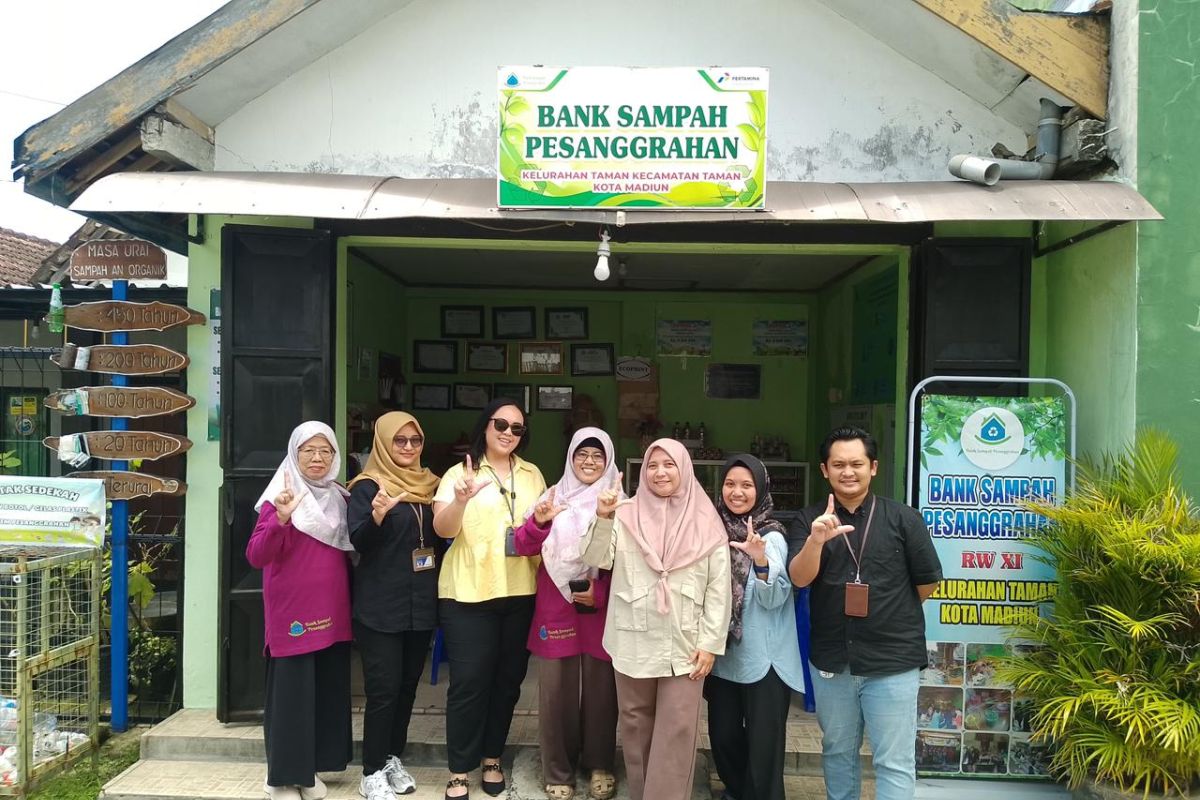
In East Java, through the Madiun Fuel Terminal, Pertamina is promoting community-based waste management via the Pesanggrahan Waste Bank and the Sokrosok digital application. This innovation facilitates the collection and pickup of inorganic waste for the public while increasing the transparency of waste bank administrative records through a digital system. Collected inorganic waste is also reprocessed into various economically valuable products through 3R (reduce, reuse, recycle) workshops, such as plaques, fans, tables, keychains, and plastic brooms.
The Pesanggrahan Climate Village Programme (Proklim) has recorded a reduction of 16,000 kg of organic waste and 1,380 kg of inorganic waste. The programme also contributes to reducing methane emissions by 2,013 kilograms per year and absorbing up to 13,000 kilograms of carbon per year. From an economic perspective, this community group has recorded a cumulative income increase of Rp14.6 million, alongside electricity cost savings of approximately Rp700,000 per month through the use of solar energy. The programme involves around 40 active members and provides indirect benefits to more than 3,000 people in the surrounding Pesanggrahan area.
Kurnia Fidia Wati, one of the driving figures of Proklim Pesanggrahan, stated that the collaboration between the community and Pertamina Patra Niaga has built a culture of sustainable waste management. “Together with Pertamina Patra Niaga, we have proven that waste management can become a collective movement that benefits both the environment and the community,” she said.