
Pertamina Patra Niaga engages communities in waste and refuse processing
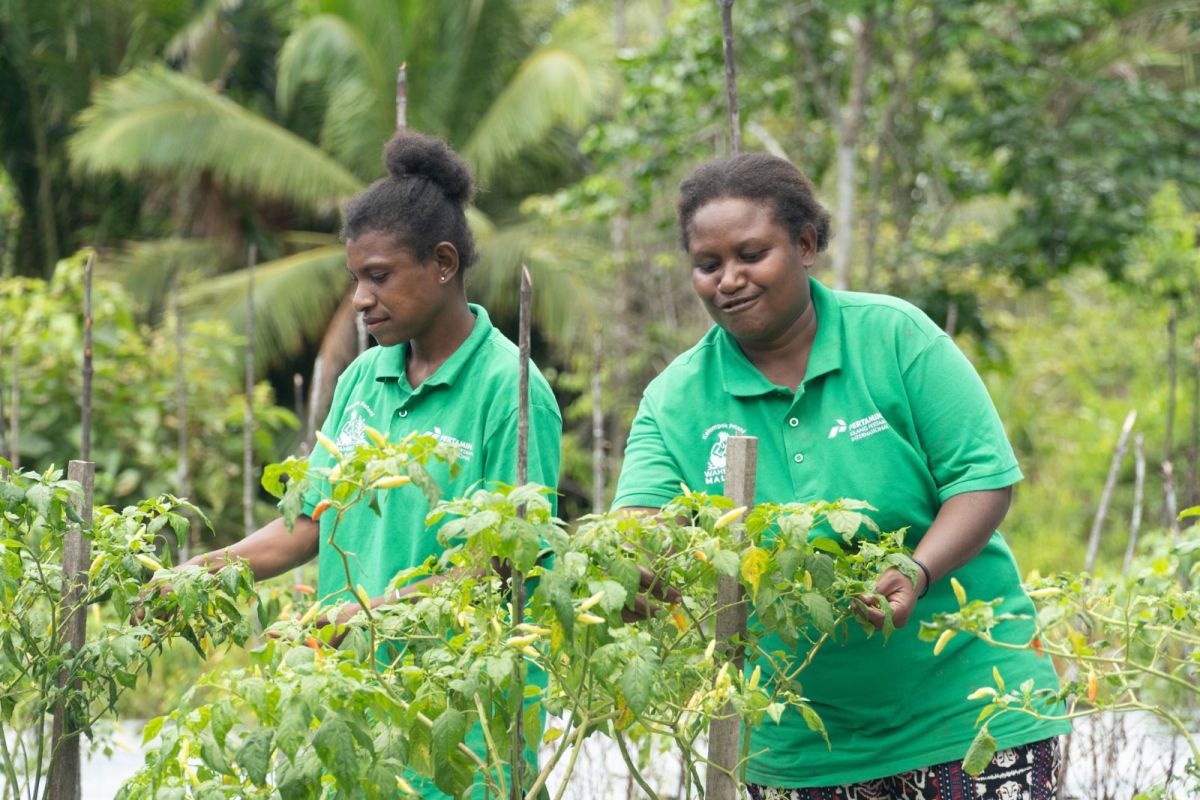
PT Pertamina Patra Niaga is involving communities near its operational areas to process waste and household residue into value-added resources.
Corporate Secretary of Pertamina Patra Niaga, Roberth MV Dumatubun, stated in Jakarta on Sunday that the company maintains a strong commitment to environmental preservation and community empowerment through activities across various operational regions.
According to him, this commitment is implemented through community involvement and development programmes in several areas, including Dumai, Riau; Kasim, Southwest Papua; and Makassar, South Sulawesi.
“We are partnering with communities around our operational areas to process waste and household residue, which not only contributes positively to nature’s preservation but also serves as a form of long-term community empowerment,” said Roberth.
In the Tanjung Palas ward, Riau, the Pertamina Patra Niaga Dumai Refinery initiated the ‘Posyandu Sehati’ programme, which allows residents to exchange used cooking oil for supplementary food for pregnant women and toddlers.
In the same region, the Wirani Rejosari Group is also actively processing organic waste into liquid organic fertiliser.
In Southwest Papua, organic waste processing is conducted by the Kasim Refinery in Malabam Village, Seget, Sorong. Through the MOI (Mandiri, Optimal, and Integrasi) programme, the Wahimu Farmers Group processes organic waste from food scraps and vegetable harvests into pig feed for the Kamisalun Livestock Group.
Furthermore, pig manure is processed back into organic fertiliser to support the Wahimu Farmers Group’s agricultural activities.
Commitment to the environment and community empowerment is also realised through the ‘Kampung BERLIAN’ Programme, managed by the Makassar Integrated Terminal in collaboration with the residents of Tamalabba Ward.
This programme serves as a solution to high levels of household waste through an integrated approach, ranging from waste sorting and maggot cultivation via the Tamalabba Organic Centre (TOC), to the management of the Tasberlin waste bank, and the development of urban agriculture based on hydroponics, aquaponics, and fish farming.
Currently, Kampung BERLIAN is able to reduce household waste by up to 6.7 tonnes per month, utilises 4 litres of used cooking oil per month, and saves 4,380 kWh of energy through the use of solar energy in its hydroponic systems.
The programme also generates a Social Return on Investment (SROI) of 1.50 times, meaning every Rp1 invested by the company produces social, economic, and environmental benefits worth Rp1.50 for the community.
“With tangible achievements in waste reduction, more productive waste management, and active community involvement, this initiative serves as proof that environmental management can be a driver for sustainability at the local level,” he said.
Roberth added that effective waste management is not only an environmental solution but also a foundation for a more sustainable future.