
Pertamina Patra Niaga Encourages Its Partner Waste Banks to Collect Used Cooking Oil for the Environment
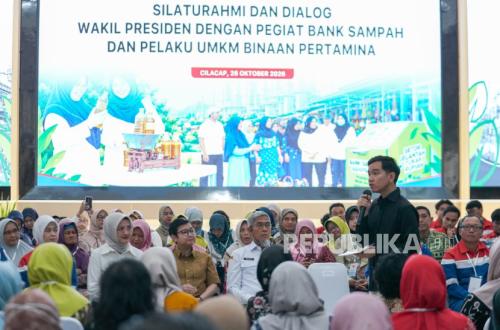
CILACAP – PT Pertamina Patra Niaga is continuing its support for environmental management and improved community welfare by mentoring waste banks in Cilacap Regency, Central Java. The collection of used cooking oil by several waste banks supported by Pertamina Patra Niaga was praised by Indonesian Vice-President Gibran Rakabuming Raka during his visit to the Pertamina Patra Niaga Cilacap Refinery on Monday (26 October).
During the visit, the Vice-President praised the involvement of local women and community groups in managing used cooking oil. He said the household-level initiative showed that caring for the environment could go hand in hand with creating economic value.
“I commend the role of women and communities in Cilacap who have contributed to used cooking oil management. This shows that a simple activity begun at home can be connected to national energy innovation and bring wider benefits to the community,” he said.
By collecting used cooking oil, residents gain economic value from household waste while also helping to reduce environmental pollution. The initiative is in line with Pertamina Patra Niaga’s efforts to use used cooking oil as a feedstock for environmentally friendly bio-aviation fuel, or sustainable aviation fuel (SAF).
Rumdani Prapti Sumiwi, head of the Cahaya Asri Waste Bank in Tegal Kamulyan sub-district, Cilacap, said the collection scheme was initially developed to address environmental problems.
“We initially did not know what used cooking oil could be used for. After Pertamina Patra Niaga explained that it had a sale value, we became more enthusiastic about collecting it. Thankfully, the environment is cleaner, the oil is no longer discarded carelessly, our group’s income has increased and we have more members,” Rumdani said.
Cahaya Asri Waste Bank has developed an approach that involves a range of community groups. Residents can exchange the used cooking oil they collect for money or food staples such as eggs. The bank collects around 50–60 kilogrammes of used cooking oil each month, which is then channelled through a collection partner.
Similar economic benefits have been experienced by Abhipraya Waste Bank in Kutawaru sub-district. Its head, Herry Yanto, said the group had been sorting waste since 2019 before developing its used cooking oil collection activities through Pertamina Patra Niaga’s mentoring programme.
“People used to throw used cooking oil away, but now they can collect it and earn an income. We thank Pertamina Patra Niaga because our members have received education, guidance and support that have greatly helped the waste bank develop,” Herry said.
Meanwhile, Sri Widowati, director of Beo Asri Waste Bank, said the group had been managing household waste since 2012. In 2023, it expanded its activities to include collecting used cooking oil, which residents had not previously made optimal use of.
She said Pertamina Patra Niaga had provided mentoring, training, and equipment and infrastructure support to strengthen the group’s capacity.
“We are very grateful that Pertamina Patra Niaga has not only provided assistance but also given us attention and guidance. We hope this support will continue so that the waste bank can grow further and improve the welfare of its members and the people in our neighbourhood,” Sri said.
In addition to collecting used cooking oil, Beo Asri Waste Bank processes plastic waste and repurposes leftover pallets to make products such as chairs, tables and shelves.
Pertamina Patra Niaga Vice-President of Corporate Communication Kitty Andhora said the experiences of the three waste banks showed that successful used cooking oil management depended on the involvement of various parties.
“Managing used cooking oil requires active community participation, ongoing guidance and access to channels for distributing the collected material. Through this collaboration, household waste can be managed more responsibly and put to greater use,” Kitty said.