
Pertamina Patra Niaga Boosts Community Empowerment by Turning Water Hyacinth into Economic Asset
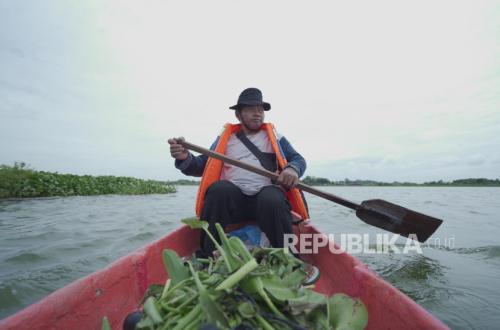
In the hands of communities supported by Pertamina Patra Niaga, the water hyacinth—long regarded as an aquatic weed—has been successfully turned into a source of economic value as well as an environmental solution. This has been demonstrated through Community Involvement & Development (CID) programmes in South Sumatra and Central Java.
“Through the various empowerment programmes we run, we strive to transform environmental challenges into opportunities that can improve community welfare and encourage innovation based on local potential,” said Pertamina Patra Niaga Corporate Secretary Roberth MV Dumatubun.
One such programme is the Eceng Gondok Research and Creative Center (ERCC) run by Pertamina Patra Niaga Kilang Plaju together with the Anak-Anak Kreatif Untuk Bangsa (Ankubas) group in South Sumatra since 2023. ERCC processes water hyacinth biomass into a room fragrance called Ankubas Scents.
Through a research and innovation approach, Ankubas Scents is available in various aroma variants such as Lemon, Lavender, Berry, Coffee, Strawberry, and Vanilla. The product is also marketed through local business networks, carwash partners, and digital platforms.
By 2025, sales turnover reached Rp50 million, with market coverage in Palembang City, Banyuasin Regency, and Lahat Regency. This innovation was also introduced at the Indonesia International Environmental Technology and Innovation Expo & Conference (INVIROTECH) on 11–13 June 2026 as an example of community empowerment based on environmental management.
Moving to Central Java, Pertamina Patra Niaga Aviation Fuel Terminal (AFT) Adi Sumarmo has been running the Ecobiz Cengklik programme since 2022 in Sobokerto Village, Boyolali. This programme converts water hyacinth into organic fertiliser, animal feed, fish feed, and biogas.
The programme also supports sustainable agriculture through the construction of solar-powered submersible wells for irrigation and the BERSIH (Hygienic Vegetable Washing Tank) innovation. To date, Ecobiz Cengklik has benefited 88 direct recipients, formed one new farmers’ group, and contributed to improving the environmental quality of the reservoir.
The success of the programme has also been supported by the emergence of various local heroes who have become drivers of change at the community level. One of them is Khoirul Huda.
“Farmers are the ‘Pillars of the Indonesian State Order’; we play a role in safeguarding food security yet are often marginalised and live unworthy lives. Nowadays, fewer people are choosing to become farmers. Together with my friends, I want farmers to be prosperous and for farming to be a choice,” said Khoirul.
According to Roberth, the success of ERCC and Ecobiz Cengklik aligns with Environmental, Social and Governance (ESG) principles. Both programmes demonstrate how social innovation based on community empowerment can create a sustainable impact.
“Through ERCC and Ecobiz Cengklik, we see how communities can become the main actors in creating change. These programmes prove that environmental conservation and improved welfare can go hand in hand. This is the embodiment of Pertamina Patra Niaga’s commitment to grow together with communities and create a sustainable impact,” Roberth concluded.